Juan Carlos I Becomes King of Spain: November 22, 1975
1975 · Madrid, Spain
Juan Carlos I was declared King of Spain following the death of dictator Francisco Franco, marking the beginning of Spain's transition to democracy.
March 30, 1939
In the aftermath of the Spanish Civil War, the Francoist regime is established as dictator Francisco Franco enters Madrid, with the city officially surrendering to Franco’s Nationalist forces, marking the effective end of the Spanish Civil War.
Madrid, Spain | Francoist regime
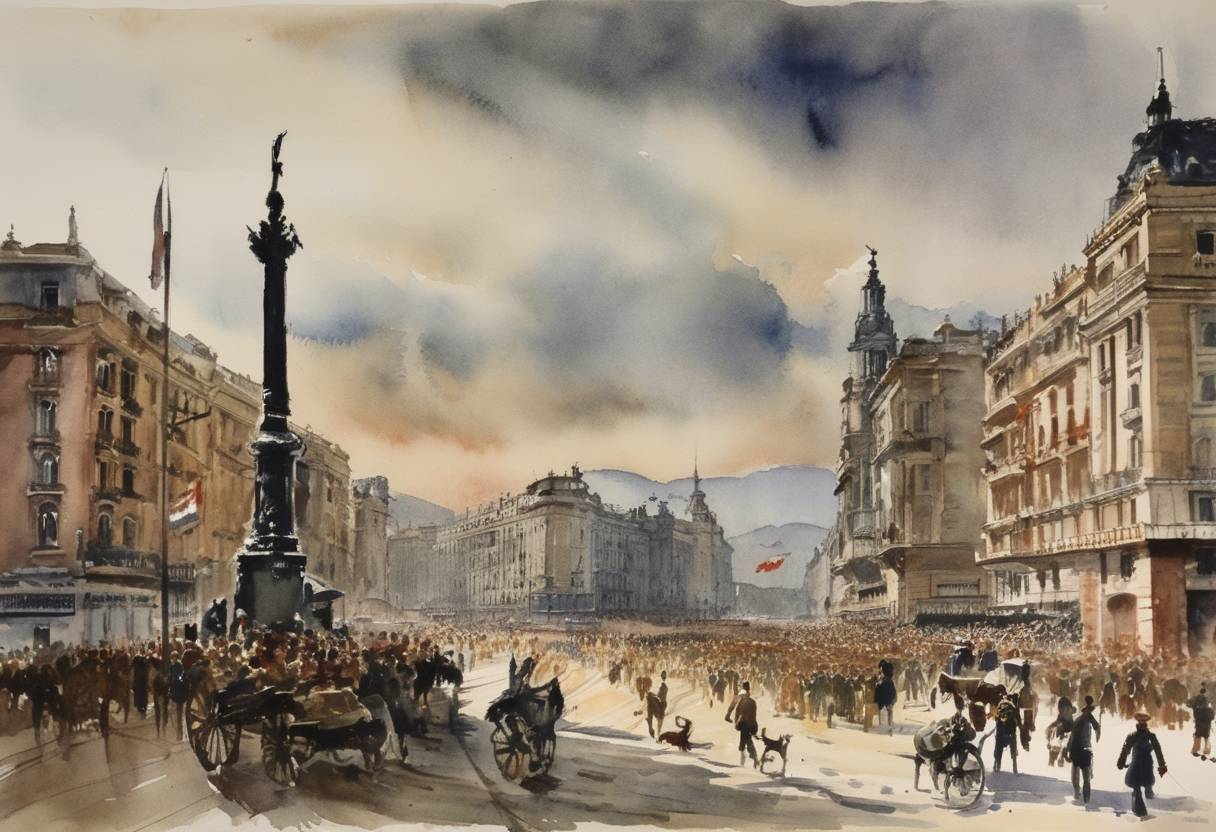
On March 30, 1939, the Spanish Civil War effectively concluded as Francisco Franco’s Nationalist forces entered the city of Madrid, leading to its surrender. This moment marked the culmination of a brutal conflict that had persisted for nearly three years, from July 1936 until March 1939.
The Spanish Civil War began after a coup attempt by the Nationalist faction, a coalition of conservative, monarchist, and Fascist groups, against the Republican government, which was composed of an alliance of leftist parties, anarchists, and communists. This internal struggle soon escalated into a proxy battleground: the Nationalists received support from Nazi Germany and Fascist Italy, while the Republicans were bolstered by the Soviet Union and international brigades composed of volunteers from various countries.
The siege of Madrid was one of the central conflicts of the civil war, beginning in the autumn of 1936. Despite the Republican forces’ initial resilience, prolonged attrition took its toll. The city’s defenses were weakened by shortages in resources, internal divisions, and the loss of key territories.
In late March 1939, the collapse of the Republican regime became imminent. By March 28, Nationalist forces had begun entering Madrid without significant resistance. The city’s formal surrender two days later, on March 30, was part of Franco’s broader efforts to consolidate power throughout Spain.
Franco’s entry into Madrid and the city’s surrender marked the definitive victory for the Nationalists and the establishment of Francisco Franco’s authoritarian regime, known as Francoist Spain. Franco’s dictatorship was characterized by its harsh repression of political dissent, centralized control, and a protracted period of economic hardship and autarky.
Franco would rule Spain until his death in 1975, with his regime leaving lasting impacts on the country’s political and social structures. The victory in Madrid paved the way for his regime to shape Spain’s mid-20th-century history significantly, setting the stage for both the domestic policies and international isolation experienced under Franco’s rule.
The fall of Madrid and the end of the civil war had profound implications. It sealed the fate of Spanish democracy for the subsequent decades and reshaped the nation’s socio-political landscape. Moreover, the civil war served as a prelude to the larger conflicts of World War II, with the ideological battles in Spain mirroring the growing divides across Europe. The war’s brutal nature, marked by immense casualties and human rights violations, left a legacy of unresolved trauma that Spain would continue to grapple with long after Franco’s death.
Source: www.britannica.com