The Battle of Old Byland: Securing Scottish Independence
1322 · Old Byland, England
Robert the Bruce of Scotland defeated King Edward II of England at the Battle of Old Byland, securing Scottish independence.
July 23, 1319
The Battle of Myton, also known as the 'White Battle' of Myton, took place during the First War of Scottish Independence between Scottish forces under Sir James Douglas and Thomas Randolph, 1st Earl of Moray, against English forces led by the Archbishop of York, William Melton. The Scottish forces secured a victory.
Myton, England | Scottish forces
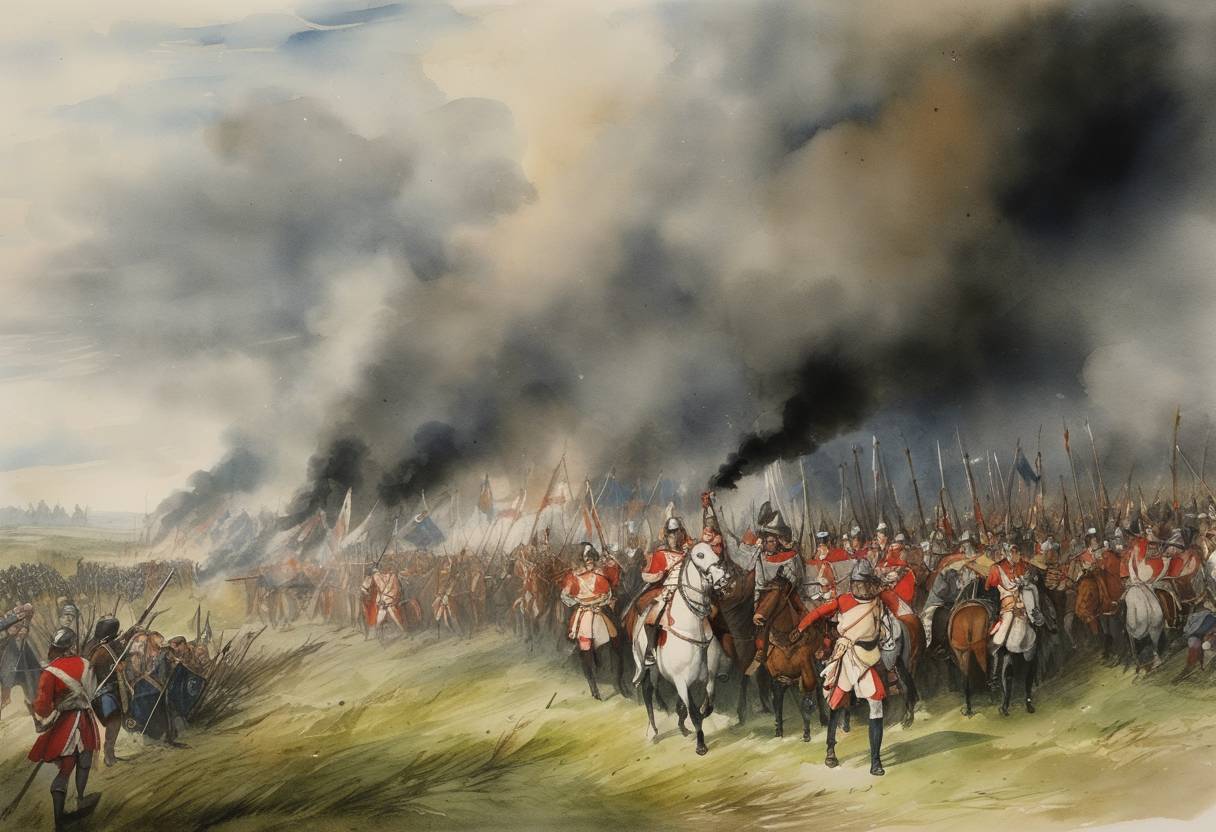
The Battle of Myton, also known as the ‘White Battle’ of Myton, took place on September 20, 1319, during the First War of Scottish Independence. It occurred at Myton-on-Swale in North Yorkshire, England, and was characterized by the unexpected defeat of English forces commanded largely by non-military leaders, which contributed to its enduring legacy.
In the early 14th century, the First War of Scottish Independence was underway, with Scottish forces seeking to assert their independence from English rule. Following the success of Robert the Bruce at the Battle of Bannockburn in 1314, the Scots effectively used guerilla tactics and raids to undermine English holdings and press their advantage.
In 1319, the Scottish commanders Sir James Douglas and Thomas Randolph, 1st Earl of Moray, aimed to divert English attention from their siege at Berwick-upon-Tweed by inciting chaos in northern England. The Scottish tactics were motivated by a strategic objective: to relieve pressure on Berwick by forcing the English to respond to raids in Yorkshire.
On September 20, the poorly coordinated and inadequately mobilized English forces confronted a seasoned Scottish army. The English contingent, assembled hastily under the leadership of William Melton, the Archbishop of York, consisted primarily of clerics and inexperienced local levies rather than trained soldiers. This unusual setup led to the battle being mockingly dubbed the ‘White Battle’ due to the clerical insignia worn by many of Melton’s men.
The Scottish army, employing experienced combatants, executed a tactical and formidable offense. Douglas and Randolph employed strategies that capitalized on their troops’ superior mobility and experience. They effectively scattered the English forces, leading to significant casualties and a disorganized retreat by English defenders.
The Scottish victory at Myton showcased their tactical prowess and had several immediate outcomes:
Relief of Berwick: It successfully diverted English military resources, offering relief and respite to the besieged town of Berwick.
Psychological Impact: The defeat embarrassed and demoralized English leadership, highlighting vulnerabilities in their military capabilities.
Negotiation Leverage: The victory increased Scottish leverage in any subsequent negotiations or interactions with English authorities, bolstering their campaign for recognition as an independent kingdom.
The Battle of Myton underscored the effectiveness of guerilla-style tactics and psychological warfare employed by the Scots, as well as exposing the occasional ineffectiveness of English military responses. It added to the chain of successes that strengthened Scottish resolve and contributed to their long-term quest for independence.
This engagement remains an illustrative episode, reflecting the complex dynamics of the broader struggle for Scottish independence during the early 14th century, and it highlights the importance of strategic, rather than sheer numerical, advantage in medieval warfare.
Source: en.wikipedia.org