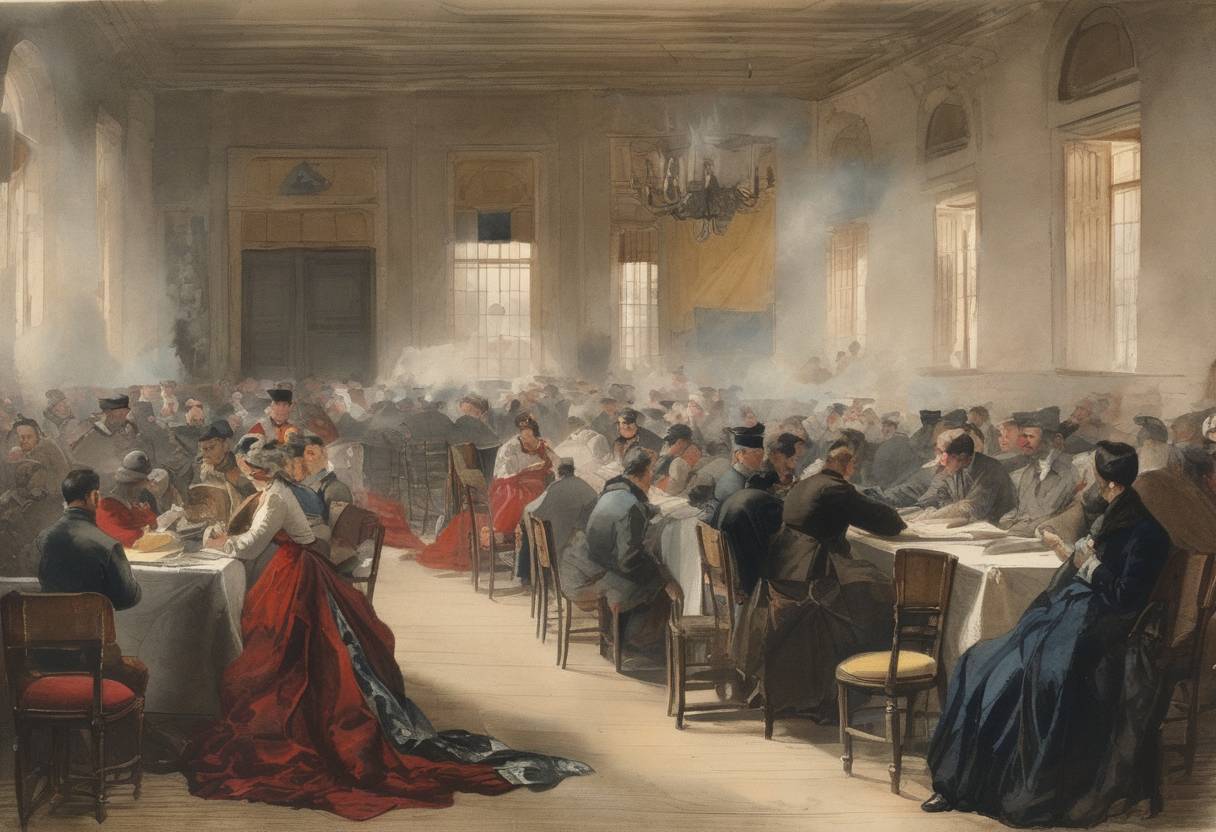
The First Geneva Convention of the International Red Cross - October 29, 1863
On October 29, 1863, the groundwork was laid for what would become one of the most important humanitarian organizations in the world—the International Red Cross—through a pivotal convention in Geneva, Switzerland. This date marks the conclusion of the first international conference organized by the foundation’s predecessors, which aimed to establish criteria for the treatment of wounded soldiers and medical personnel during wartime. Though not directly a full convention of the Red Cross itself, this meeting set essential precedents and principles that would guide future humanitarian law.
Context and Build-Up
The idea for such an organization was conceived by Henry Dunant, a Swiss businessman who was profoundly affected by the suffering he observed during the Battle of Solferino in 1859. His book, “A Memory of Solferino,” published in 1862, highlighted the need for non-partisan medical services during armed conflict and spurred international interest.
In response, the Geneva Society for Public Welfare adopted Dunant’s proposals and formed the International Committee for the Relief to the Wounded, composed of five members including Dunant. This would eventually become the International Committee of the Red Cross (ICRC).
Key Events of the Convention
The meeting in October 1863 invited representatives from multiple countries to discuss and formulate guidelines for humanitarian relief during war:
- Participants: Official delegates from 14 countries, including France, Great Britain, Prussia, and the United States.
- Agreements Reached: The assembly agreed upon ten resolutions that focused on the care for the wounded without discrimination and the neutrality of medical staff.
- Symbols and Protocols: It was during this time that the emblem of a red cross on a white background was adopted as a protective symbol for medical personnel and facilities, underscoring the protection they should be accorded in conflict zones.
Aftermath and Significance
This foundational event and its outcomes fundamentally shaped the course of international humanitarian law and established key principles that continue to be embodied by the Red Cross and Red Crescent movements around the world. The focus on neutrality and impartial aid set vital standards for wartime conduct and humanitarian assistance, highlighting the critical importance of protecting human dignity amid the chaos of warfare.
The principles and resolutions adopted during this initial meeting paved the way for the First Geneva Convention of 1864, which formally codified international military humanitarian law. Through these efforts, the enduring legacy of the Red Cross as a cornerstone in global humanitarian work was firmly established.