Voice of America Broadcasts to the Soviet Union – February 17, 1947
1947 · Washington D.C., United States
Voice of America, the official external radio and television service of the U.S. government, started broadcasting to the Soviet Union.
June 11, 1942
World War II: The United States established the Office of War Information (OWI), which played a crucial role in propaganda and information dissemination throughout the war.
Washington D.C., United States | Office of War Information
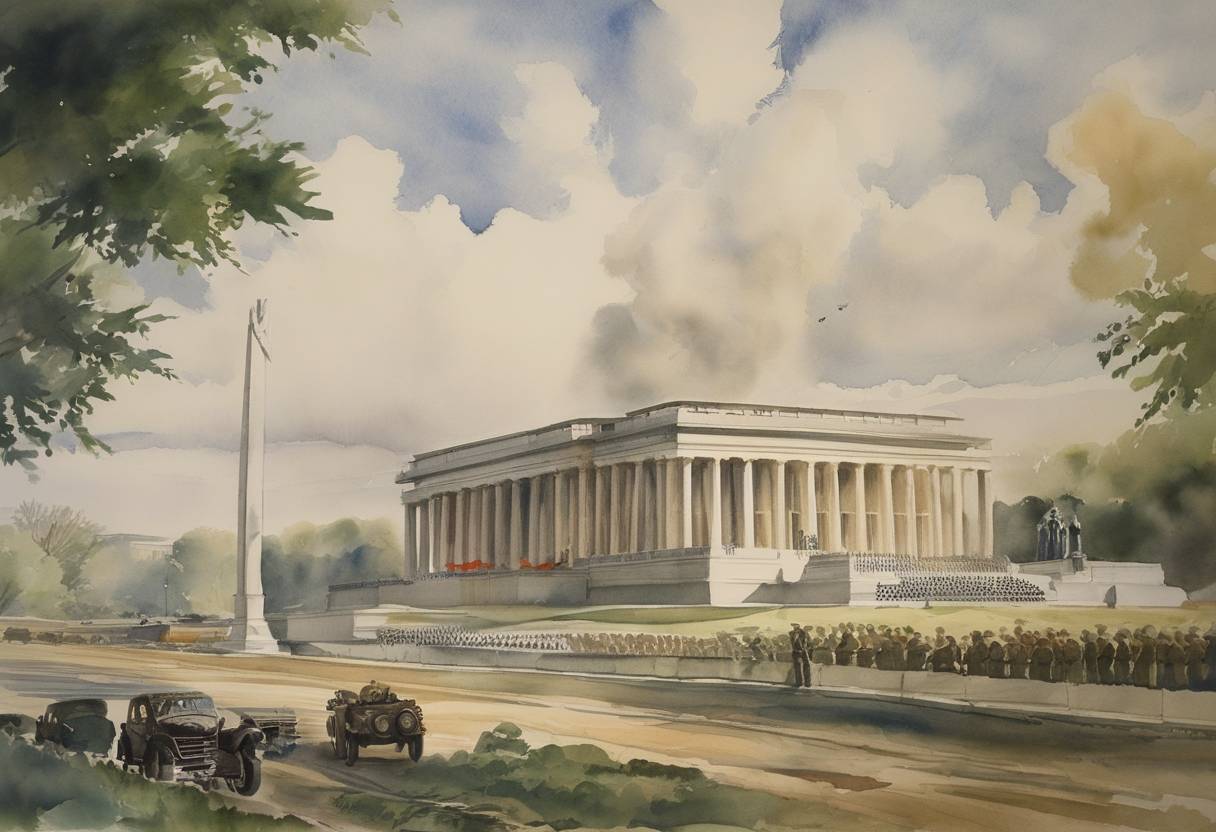
On June 11, 1942, during World War II, the United States government established the Office of War Information (OWI), a crucial agency in the coordination and dissemination of government propaganda and information both domestically and internationally. This agency was pivotal in molding public perception and maintaining civilian and military morale throughout the war.
Prior to the establishment of the OWI, the U.S. propaganda activities were fragmented and lacked coordination among various existing government bodies. With America deeply engaged in World War II, there was a pressing need for a coherent strategy to manage and disseminate information to the American public and to communicate with international allies and adversaries. This necessity led to the creation of the OWI.
The OWI was tasked with several key functions:
Information Dissemination: The agency coordinated news about the war effort, issuing guidelines to the press, and producing radio broadcasts which included news updates, commentary, and dramatizations of military events.
Propaganda: The OWI produced motivational materials including posters, films, and pamphlets, to encourage support for the war effort, promote war bonds, and foster uniform public opinion against the Axis powers.
Coordination of Domestic and Overseas Information Strategy: It worked closely with other agencies like the Office of Censorship and the War Department to ensure that information released was not only beneficial for morale but also secure from aiding enemy forces.
Psychological Warfare: The agency engaged in psychological warfare intended to demoralize enemy troops and civilians while boosting the morale of the Allies.
Voice of America: The OWI managed the broadcasting service known as Voice of America, which delivered news and entertained roles to international audiences, emphasizing the objectives and values of the Allied nations.
United Newsreel: These were produced by the OWI to be shown before feature films in theaters, providing viewers with visual representations of the wartime activities and progress.
The OWI played an essential role in uniting American public opinion on the war effort and maintaining a steady flow of information that supported the national interest. The agency’s work was instrumental in providing the rationale and motivation for the war efforts and reinforcing the perseverance necessary for the eventual success of the Allies.
When World War II concluded in 1945, the necessity for such an extensive information agency waned, leading to the disbanding of the OWI in 1945. Its legacy, however, persisted in both the methodologies devised for government public information campaigns and in the formative influence on media practices in the post-war period.
Source: www.archives.gov