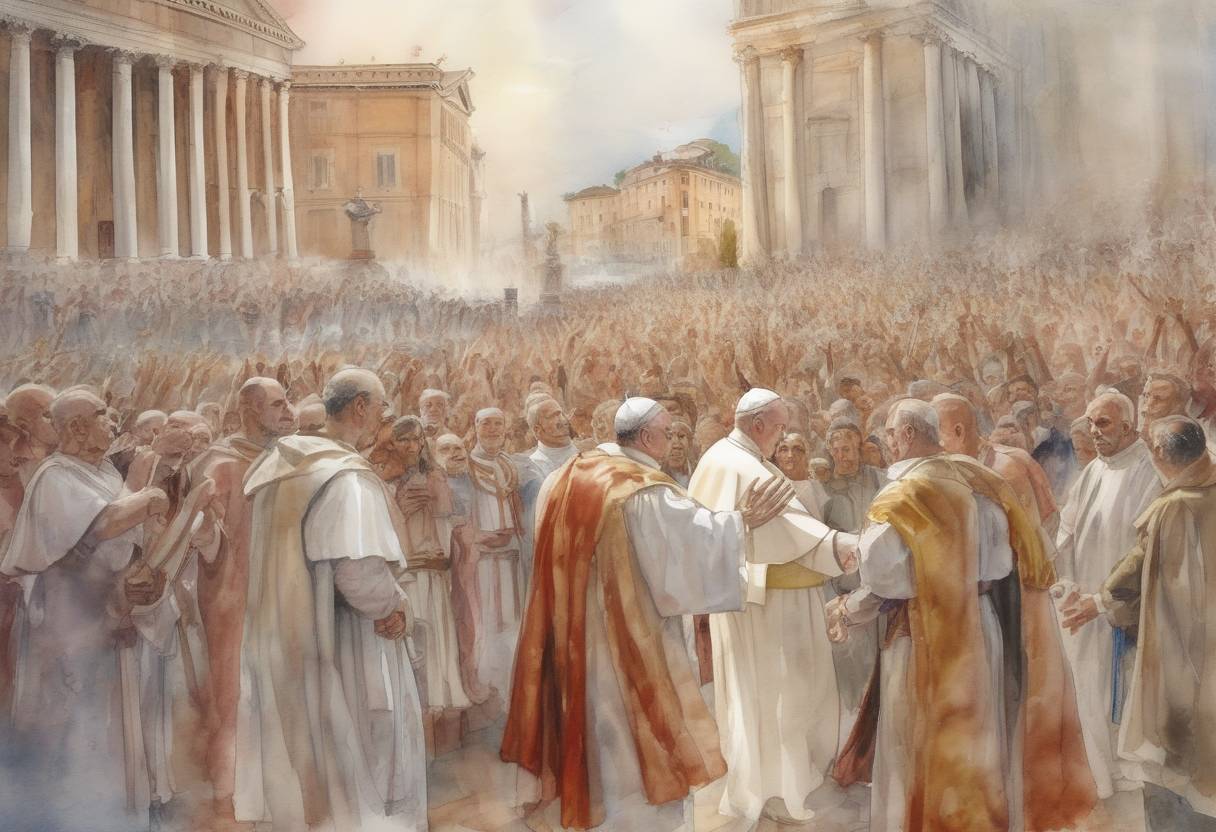
Pope Zosimus Dies: Succession Crisis in the Catholic Church
On December 26, 418, Pope Zosimus passed away, leading to a significant succession crisis within the Catholic Church. His death marked the end of a papacy that was both controversial and influential, and it set the stage for a contentious period of transition in the early 5th century Church.
Background
Pope Zosimus was elected as the Bishop of Rome on March 18, 417, succeeding Pope Innocent I. His papacy was marked by several contentious issues, particularly involving the Pelagian controversy. Pelagianism, a theological doctrine that emphasized human free will and denied original sin, was a significant point of contention during this period.
Zosimus initially showed leniency towards Pelagius and his followers, which caused friction with the African bishops who were staunchly opposed to Pelagianism. This led to a complex relationship between the papacy and the African Church, culminating in Zosimus eventually condemning Pelagianism under pressure from the African bishops.
The Succession Crisis
The death of Pope Zosimus on December 26, 418, left the Church in a state of uncertainty. The process of electing a new pope was fraught with challenges, as different factions within the Church vied for influence. The primary issue was the lack of a clear and universally accepted procedure for papal elections, which often led to disputes and rival claims.
Key Events
Election of Boniface I: Shortly after Zosimus’s death, Boniface I was elected as the new pope. However, his election was contested due to the simultaneous election of another candidate, Eulalius, by a rival faction.
The Rival Papacy of Eulalius: Eulalius was consecrated as pope by his supporters, leading to a schism within the Church. Both Boniface and Eulalius claimed the papal throne, resulting in a period of dual papacy.
Intervention by Emperor Honorius: The Roman Emperor Honorius intervened in the dispute, initially supporting Eulalius. However, after Eulalius’s supporters caused disturbances in Rome, Honorius shifted his support to Boniface I.
Resolution: The crisis was eventually resolved in favor of Boniface I, who was recognized as the legitimate pope. Eulalius was exiled, and the schism was brought to an end.
Aftermath and Significance
The succession crisis following the death of Pope Zosimus highlighted the need for clearer procedures in papal elections, a challenge that would persist in the Church for centuries. The resolution of the crisis reinforced the authority of the Roman Emperor in ecclesiastical matters, a dynamic that would continue to influence Church-state relations.
The events surrounding Zosimus’s death and the subsequent succession crisis also underscored the growing importance of theological orthodoxy and the central role of the papacy in maintaining doctrinal unity within the Church. This period set important precedents for the future governance of the Catholic Church and its interactions with secular powers.