The Wright Brothers' First Flight: December 17, 1903
1903 · Kitty Hawk, United States
The Wright brothers made the first controlled, sustained flight of a powered, heavier-than-air aircraft at Kitty Hawk, North Carolina.
September 17, 1908
Lieutenant Thomas Selfridge became the first person to die in an airplane crash, during a demonstration flight piloted by Orville Wright.
Fort Myer, United States | Wright Brothers
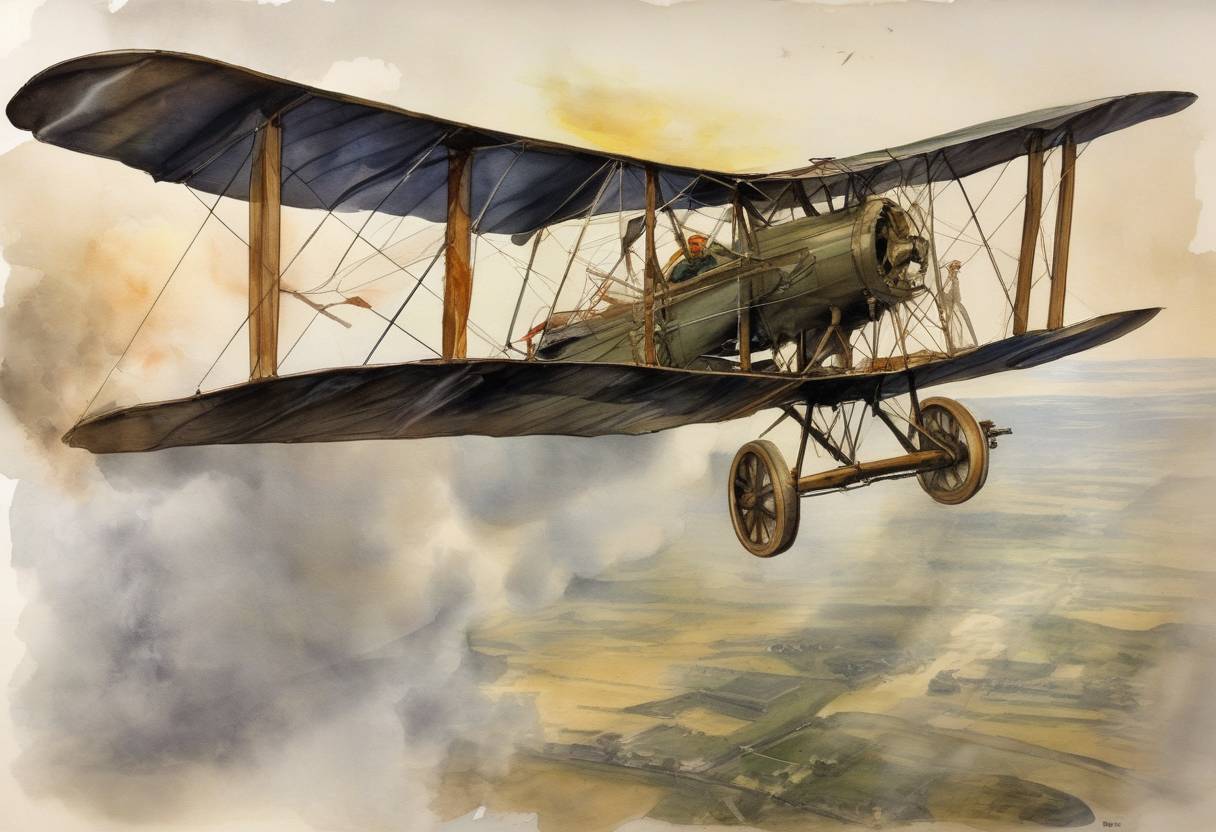
On September 17, 1908, a tragic milestone in aviation history occurred when Lieutenant Thomas E. Selfridge became the first person to die in an airplane crash. This unfortunate event took place during a demonstration flight at Fort Myer, Virginia, piloted by Orville Wright, one of the pioneering Wright brothers.
The early 20th century was a period of rapid advancements in aviation technology. The Wright brothers, Orville and Wilbur, had made significant strides since their first powered flight in 1903. By 1908, they were demonstrating their aircraft to military officials in hopes of securing contracts for their flying machines.
Lieutenant Thomas Selfridge, an officer in the U.S. Army Signal Corps and a member of the Aerial Experiment Association, was an enthusiastic advocate for aviation. He was involved in early experiments with aircraft and was keenly interested in the potential military applications of flight.
On the day of the accident, Orville Wright was conducting demonstration flights at Fort Myer to showcase the capabilities of the Wright Flyer to the U.S. Army. Lieutenant Selfridge was selected to be a passenger on one of these flights.
During the flight, the aircraft reached an altitude of about 150 feet when a propeller blade unexpectedly broke. This caused the aircraft to lose control and crash. Orville Wright, despite being injured, survived the crash, but Lieutenant Selfridge suffered a fractured skull and succumbed to his injuries later that evening.
The crash had several immediate and long-term impacts:
Safety Improvements: The accident prompted the Wright brothers and other aviation pioneers to focus more on safety and reliability in aircraft design. This included improvements in materials and construction techniques to prevent similar failures.
Military Aviation: Despite the tragedy, the U.S. Army continued to pursue the development of military aviation. The Wright brothers eventually secured a contract with the Army, leading to further advancements in military aircraft.
Public Perception: The crash highlighted the inherent risks of early aviation but also underscored the potential of flight. It drew significant public attention to the field of aviation, spurring interest and investment.
Lieutenant Thomas Selfridge’s death marked a somber moment in aviation history, serving as a reminder of the challenges faced by early aviators. His legacy is remembered as part of the pioneering spirit that drove the development of modern aviation.
Source: en.wikipedia.org