The Battle of Satala - September 22, 530
530 · Satala, Byzantine Empire
The Battle of Satala takes place, where the Byzantine forces under Sittas defeat the Sassanid Persians.
September 22, 0530
The Battle of Dara concludes with a decisive victory for the Byzantine Empire over the Sassanid Empire.
Dara, Byzantine Empire | Byzantine Army
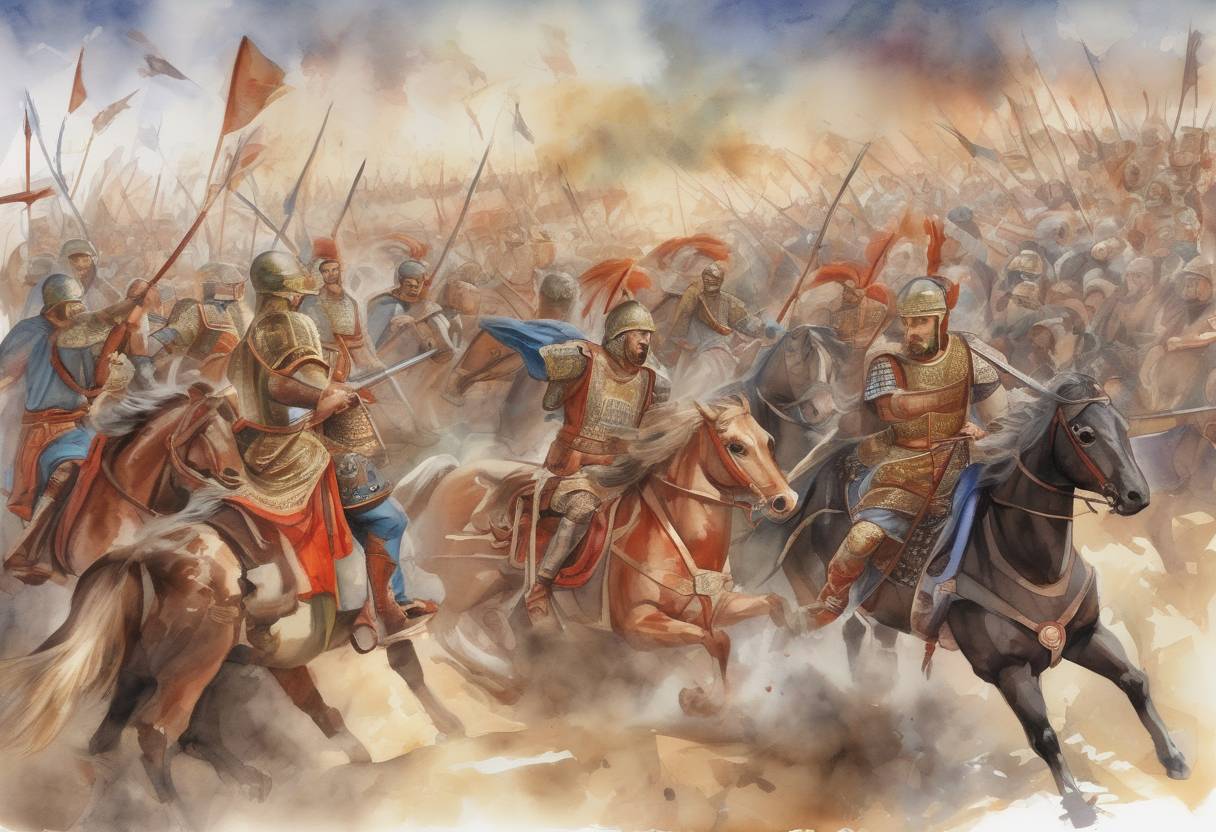
The Battle of Dara, which concluded on September 22, 530, was a significant military engagement between the Byzantine Empire and the Sassanid Empire. This battle was part of the larger Iberian War, which was fought over control of the Caucasus region. The conflict was rooted in the strategic and economic interests of both empires, as well as religious and cultural tensions.
Byzantine-Sassanid Rivalry: The Byzantine Empire, under Emperor Justinian I, sought to consolidate its power and influence in the eastern territories. The Sassanid Empire, led by King Kavadh I, aimed to expand its dominion and counter Byzantine influence.
Strategic Importance of Dara: The town of Dara, located in modern-day Turkey, was a fortified Byzantine stronghold near the border with the Sassanid Empire. Its strategic location made it a focal point for military operations in the region.
Prelude to Battle: In the spring of 530, the Sassanid forces, commanded by General Perozes, advanced towards Dara with the intention of capturing it. The Byzantine forces, led by General Belisarius, prepared to defend the town.
Forces and Tactics: The Byzantine army, although smaller in number, was well-prepared and strategically positioned. Belisarius employed innovative tactics, including the use of trenches and fortified positions, to counter the numerically superior Sassanid forces.
Engagement: The battle unfolded over two days. On the first day, skirmishes and probing attacks occurred, with neither side gaining a decisive advantage. On the second day, Belisarius executed a well-coordinated counterattack, exploiting weaknesses in the Sassanid lines.
Decisive Victory: The Byzantine forces successfully repelled the Sassanid assault, inflicting heavy casualties. The disciplined and strategic approach of Belisarius proved crucial in securing a decisive victory for the Byzantines.
Byzantine Prestige: The victory at Dara bolstered the prestige of the Byzantine Empire and solidified Belisarius’s reputation as a skilled military commander.
Impact on the Iberian War: While the battle did not immediately end the Iberian War, it shifted the momentum in favor of the Byzantines and demonstrated their military capabilities.
Long-term Significance: The Battle of Dara exemplified the tactical innovations and strategic acumen that characterized Byzantine military doctrine during Justinian’s reign. It also highlighted the ongoing struggle for dominance between the Byzantine and Sassanid empires, a rivalry that would continue to shape the geopolitical landscape of the region.
In summary, the Battle of Dara was a pivotal moment in the Byzantine-Sassanid conflicts, showcasing the military prowess of the Byzantine Empire and setting the stage for future engagements in the protracted struggle between these two great powers.
Source: en.wikipedia.org