The Viking Great Heathen Army Captures York - February 3, 865
865 · York, England
The Viking Great Heathen Army, led by Ivar the Boneless, captures the city of York.
September 19, 0866
The Viking Great Heathen Army, led by Ivar the Boneless, captures the city of York, establishing a stronghold in Northumbria.
York, England | Viking Great Heathen Army
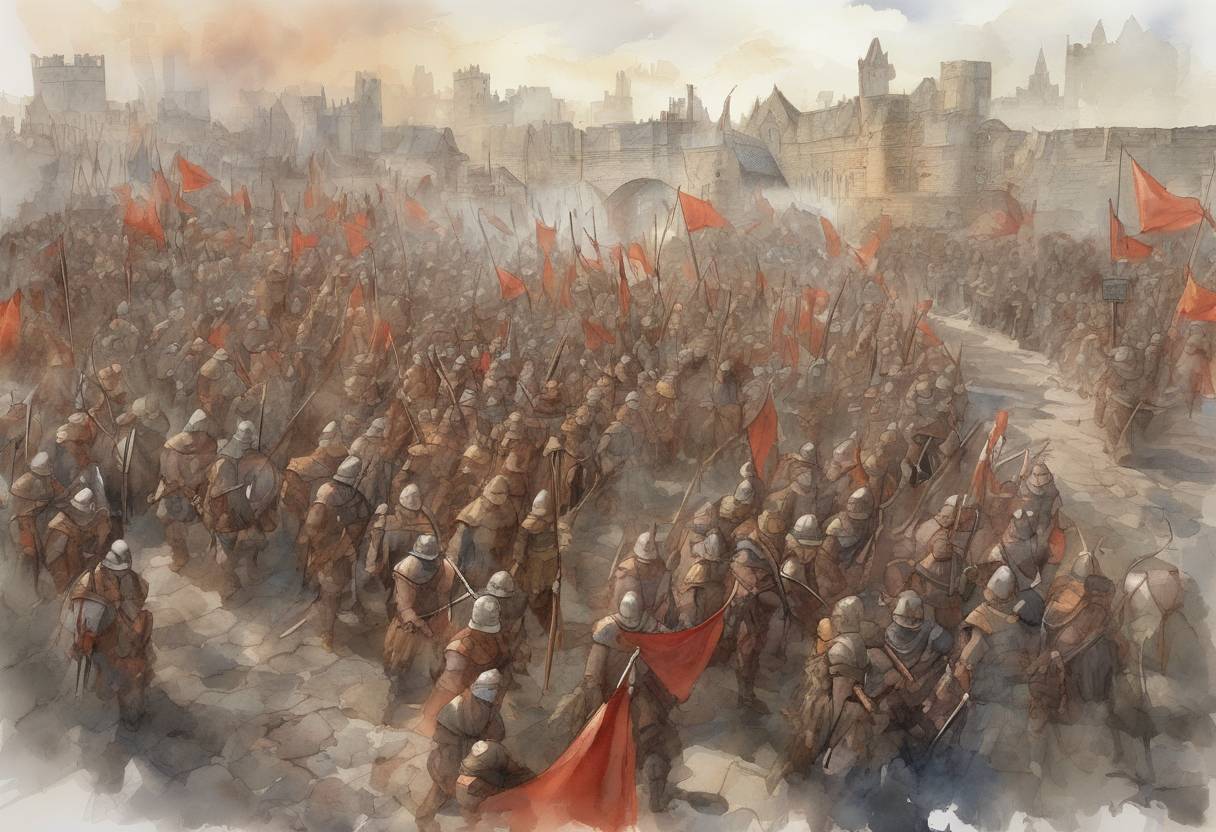
On September 19, 866, a significant event unfolded in the history of England when the Viking Great Heathen Army, led by the formidable Ivar the Boneless, captured the city of York. This event marked a pivotal moment in the Viking invasions of England and had lasting impacts on the region’s political landscape.
The Viking Great Heathen Army was a coalition of Norse warriors from Denmark, Norway, and Sweden. Unlike earlier Viking raids, which were primarily hit-and-run attacks, this invasion was a coordinated effort to conquer and settle in England. The army was led by several notable Viking leaders, including Ivar the Boneless, a legendary figure known for his cunning and strategic prowess.
Viking Raids: Prior to 866, Viking raids on the British Isles had been ongoing for several decades. These raids were initially seasonal and focused on plundering monasteries and settlements along the coast.
Political Instability in Northumbria: The Kingdom of Northumbria, where York was located, was experiencing internal strife and political instability. This made it vulnerable to external threats like the Viking incursions.
Strategic Importance of York: York, known as Eoforwic in Old English, was a major economic and political center in Northumbria. Its capture was crucial for establishing a Viking foothold in the region.
On September 19, 866, the Great Heathen Army launched a surprise attack on York. The city’s defenses were overwhelmed by the sheer size and ferocity of the Viking force. The capture of York was swift and decisive, with the Vikings establishing control over the city and using it as a strategic base for further operations in England.
Ivar the Boneless: As one of the leaders of the Great Heathen Army, Ivar played a crucial role in the planning and execution of the attack on York. His leadership was instrumental in the Vikings’ success.
Ælla of Northumbria: The reigning king of Northumbria at the time, Ælla, was unable to defend York against the Viking onslaught. His rule was significantly weakened following the loss of the city.
Viking Stronghold: The capture of York allowed the Vikings to establish a stronghold in Northumbria, from which they could launch further campaigns into other parts of England.
Cultural and Political Impact: The Viking presence in York led to significant cultural exchanges and influenced the political landscape of the region. The city became a center of Norse culture and commerce.
Continued Viking Campaigns: The success at York emboldened the Great Heathen Army to continue their campaigns across England, leading to further conquests and settlements.
The capture of York by the Viking Great Heathen Army was a turning point in the Viking Age, illustrating the shift from raiding to settlement and conquest. It set the stage for the eventual integration of Viking and Anglo-Saxon cultures in England.
Source: en.wikipedia.org