Construction of the Berlin Wall Begins
1961 · Berlin, Germany
Construction of the Berlin Wall begins, dividing East and West Berlin and symbolizing the Cold War's division of East and West Europe.
October 7, 1949
The German Democratic Republic (East Germany) was officially established as a separate state in the Soviet-occupied zone of Germany, with its capital in East Berlin.
Berlin, Germany | German Democratic Republic
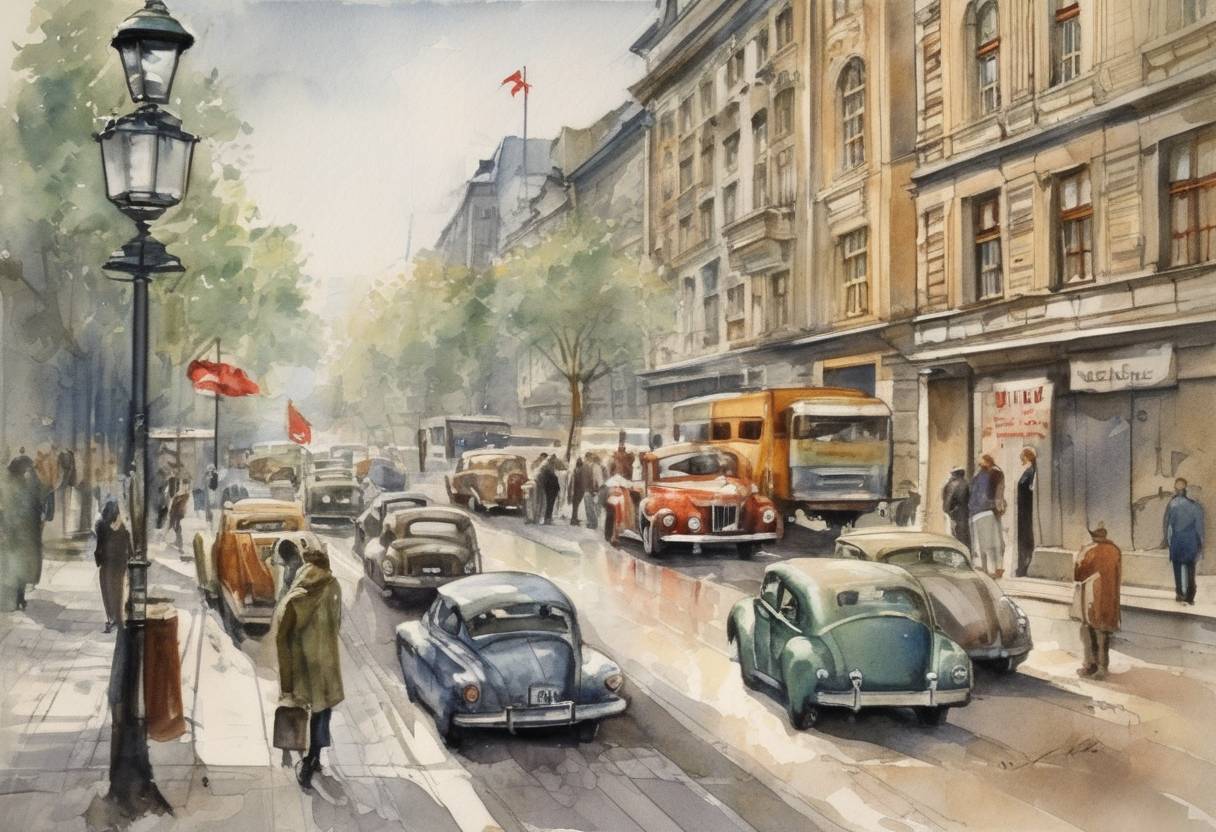
On October 7, 1949, the German Democratic Republic (GDR), commonly known as East Germany, was officially established as a separate state in the Soviet-occupied zone of post-World War II Germany. This event marked a significant moment in the early Cold War era, as it solidified the division of Germany into two distinct entities: the Federal Republic of Germany (FRG or West Germany) and the GDR.
Following the defeat of Nazi Germany in 1945, the country was divided into four occupation zones controlled by the Allied powers: the United States, the United Kingdom, France, and the Soviet Union. Berlin, the capital, was similarly divided despite being located entirely within the Soviet zone. Tensions between the Western Allies and the Soviet Union soon escalated, leading to the Cold War.
In 1948, the Western Allies initiated the process of establishing a separate West German state by merging their occupation zones, culminating in the formation of the Federal Republic of Germany on May 23, 1949. In response, the Soviet Union facilitated the creation of the GDR in its zone, with East Berlin as its capital.
The creation of the GDR was a pivotal moment in the Cold War, representing the ideological and physical division of Europe. It remained a separate state until the fall of the Berlin Wall in 1989 and the subsequent reunification of Germany on October 3, 1990. The legacy of the GDR continues to influence German society and politics today, as the country reflects on its divided past and the challenges of reunification.
Source: en.wikipedia.org