Bishopsgate Bombing - April 17, 1993
1993 · London, United Kingdom
A Provisional Irish Republican Army (IRA) bomb is detonated in Bishopsgate, London, causing extensive damage in the City of London and killing one person.
February 18, 1991
The IRA launches a mortar attack on 10 Downing Street in London, targeting British Prime Minister John Major and his cabinet during a meeting.
London, United Kingdom | Provisional Irish Republican Army
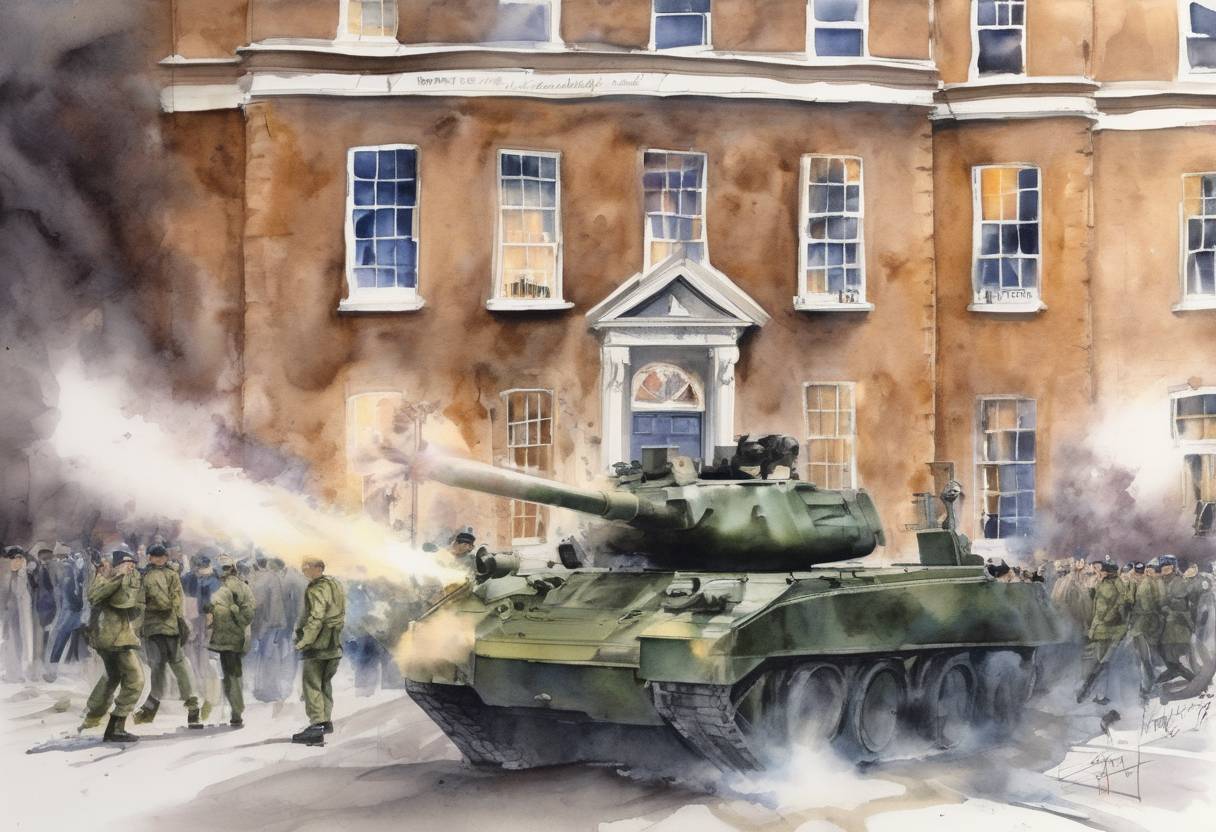
On February 18, 1991, the Provisional Irish Republican Army (IRA) executed a daring mortar attack on 10 Downing Street, the official residence of the British Prime Minister, in London. This attack was part of the IRA’s ongoing campaign against British rule in Northern Ireland.
The attack occurred during a period of intense conflict known as “The Troubles,” which spanned from the late 1960s to 1998. This period was marked by violent clashes between those who wanted Northern Ireland to remain part of the United Kingdom (primarily Unionists and Loyalists, who were mostly Protestant) and those who sought its unification with the Republic of Ireland (primarily Nationalists and Republicans, who were mostly Catholic). The IRA, a paramilitary organization, was one of the most prominent groups fighting for Irish unification.
The mortar attack on 10 Downing Street was a stark reminder of the reach and determination of the IRA during The Troubles. It highlighted the complexities of the Northern Ireland conflict and the challenges faced by the British government in addressing the demands of various factions. The event is often cited as a catalyst that pushed both sides towards seeking a peaceful resolution, eventually leading to the peace process that significantly reduced violence in the region.
Source: en.wikipedia.org