November 9, 2018

The Camp Fire, the deadliest and most destructive wildfire in California's history, began in Butte County, eventually killing 85 people and destroying thousands of structures.


Paradise, United States | Cal Fire
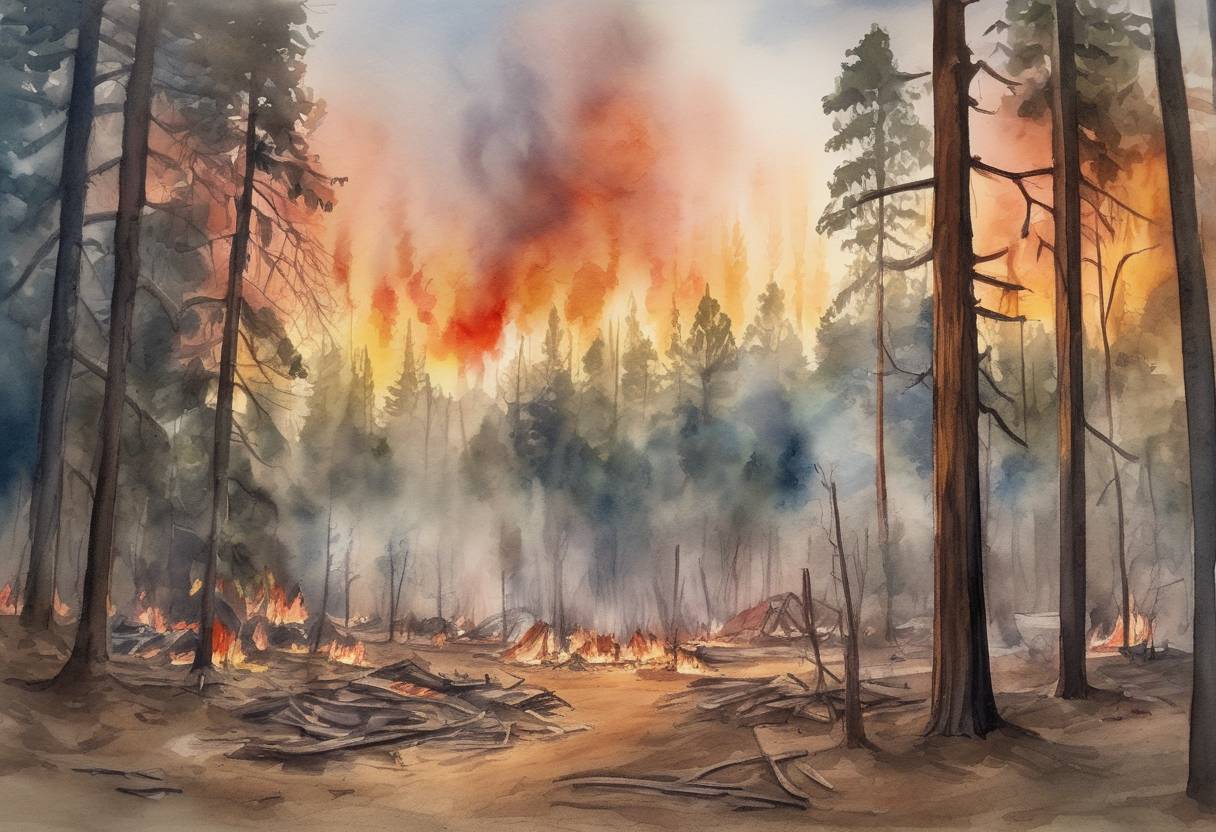
Watercolor painting based depiction of The Camp Fire, the deadliest and most destructive wildfire in California's history, began in Butte County, eventually killing 85 people and destroying thousands of structures. (2018)

The Camp Fire: A Historical Account

Overview

On November 8, 2018, the Camp Fire ignited in Butte County, Northern California, marking the beginning of the deadliest and most destructive wildfire in California’s history. The fire resulted in the tragic loss of 85 lives and the destruction of thousands of structures, primarily affecting the town of Paradise.

Context and Causes

The Camp Fire’s origins can be traced to a combination of environmental and infrastructural factors:

  • Drought Conditions: California had been experiencing prolonged drought conditions, which left forests and vegetation extremely dry and susceptible to fire.
  • High Winds: Strong Diablo winds, common in Northern California during the fall, exacerbated the spread of the fire.
  • Electrical Infrastructure: Investigations later revealed that the fire was sparked by electrical transmission lines owned by Pacific Gas and Electric Company (PG&E).

Key Events

  • Ignition: The fire started in the early morning hours of November 8, near the community of Pulga in Butte County.
  • Rapid Spread: Fueled by dry conditions and high winds, the fire spread rapidly, covering approximately 10,000 acres within the first few hours.
  • Evacuation and Impact: The town of Paradise, with a population of around 26,000, was particularly hard-hit. Residents had little time to evacuate, leading to chaotic and congested escape routes.
  • Destruction: By the time the fire was fully contained on November 25, it had burned 153,336 acres and destroyed over 18,800 structures, including homes, businesses, and critical infrastructure.

Aftermath and Consequences

  • Human Toll: The Camp Fire claimed 85 lives, making it the deadliest wildfire in California’s recorded history.
  • Economic Impact: The fire caused an estimated \(16.5 billion in damages, including \)4 billion in insured losses.
  • Legal and Regulatory Changes: PG&E faced significant legal repercussions, including bankruptcy filings and settlements. The disaster prompted increased scrutiny of utility companies and led to changes in California’s wildfire prevention and response strategies.
  • Community Rebuilding: Efforts to rebuild Paradise and surrounding areas have been ongoing, with a focus on fire-resistant construction and improved evacuation planning.

Broader Significance

The Camp Fire highlighted the growing threat of wildfires in the context of climate change, underscoring the need for comprehensive strategies to mitigate fire risks and enhance community resilience. It also spurred discussions on infrastructure maintenance and the responsibilities of utility companies in preventing such disasters.

The Camp Fire remains a poignant reminder of the devastating impact of wildfires and the importance of preparedness and adaptation in the face of environmental challenges.