Hindi Declared the Official Language of India
1965 · New Delhi, India
Hindi was declared the official language of India, alongside English.
January 26, 1950
India officially became a republic, adopting its constitution and marking Republic Day.
New Delhi, India | Government of India
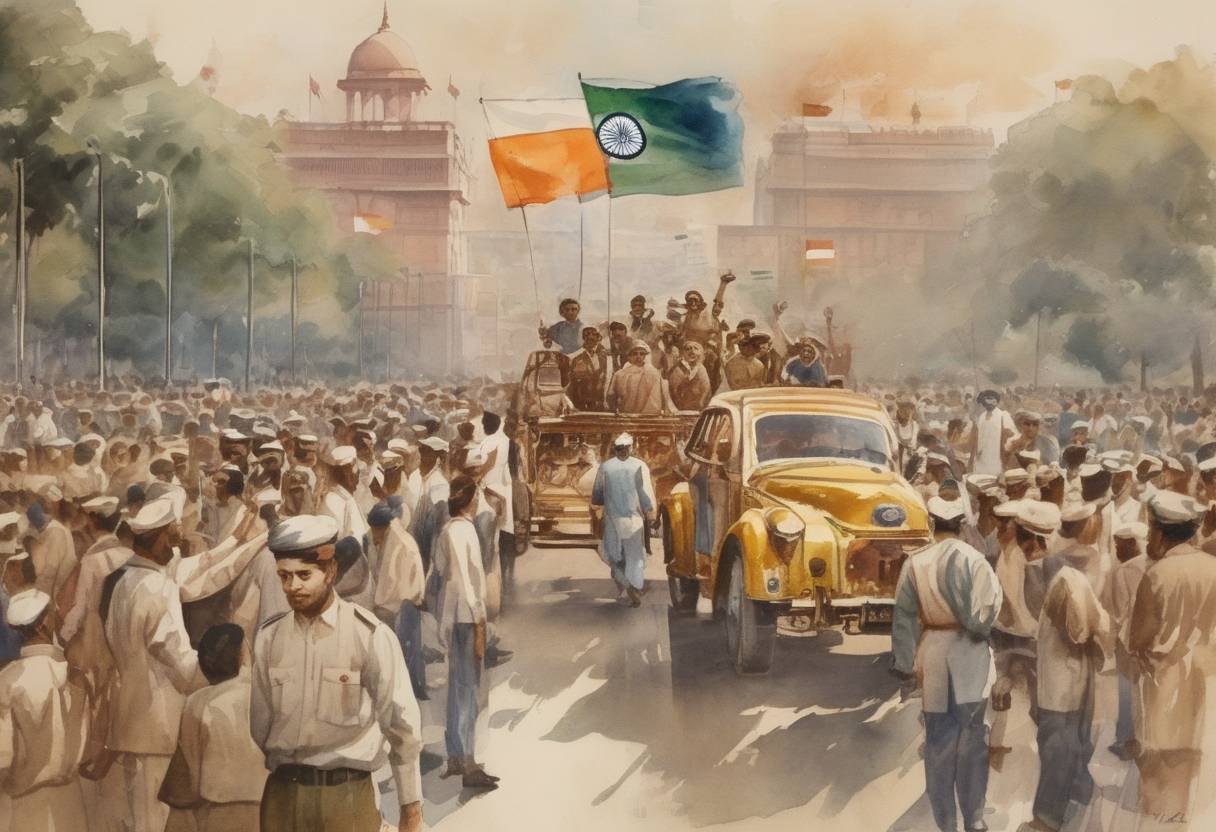
On January 26, 1950, India officially became a republic, marking a pivotal moment in its history as it adopted its new constitution. This day is celebrated annually as Republic Day, commemorating the establishment of India as a sovereign, democratic republic.
Independence from British Rule: India gained independence from British colonial rule on August 15, 1947. However, it initially remained a dominion within the British Commonwealth, with King George VI as the head of state and the Governor-General as his representative in India.
Constituent Assembly: The process of drafting a new constitution began even before independence. The Constituent Assembly of India was formed in December 1946, tasked with framing a constitution for the newly independent nation.
Drafting the Constitution: Dr. B.R. Ambedkar, a prominent jurist and social reformer, chaired the drafting committee. The assembly debated and revised the draft over nearly three years, ensuring it reflected the aspirations and diversity of the Indian populace.
Adoption of the Constitution: The Constitution of India came into effect, replacing the Government of India Act 1935 as the governing document. This marked the transition of India from a British dominion to a republic.
Dr. Rajendra Prasad: On this day, Dr. Rajendra Prasad was sworn in as the first President of India, symbolizing the end of the British monarchy’s role in India.
Significance of the Date: January 26 was chosen to honor the declaration of Purna Swaraj (complete independence) made by the Indian National Congress on the same date in 1930.
Length and Detail: The Indian Constitution is one of the longest written constitutions in the world, comprising a preamble, 395 articles, and 8 schedules at the time of its adoption.
Democratic Framework: It established India as a sovereign, socialist, secular, and democratic republic, ensuring justice, liberty, equality, and fraternity among its citizens.
Federal Structure: The constitution provided for a federal structure with a strong central government, balancing the powers between the central and state governments.
Republic Day Celebrations: Republic Day is celebrated with grandeur across India, featuring a grand parade in the capital, New Delhi, showcasing India’s cultural diversity and military prowess.
Constitutional Amendments: Since its adoption, the Indian Constitution has been amended multiple times to address changing needs and challenges, reflecting its dynamic nature.
Legacy: The adoption of the constitution laid the foundation for India’s democratic governance and legal framework, playing a crucial role in shaping the nation’s identity and political landscape.
India’s transition to a republic on January 26, 1950, remains a cornerstone of its modern history, symbolizing the country’s commitment to democracy and constitutional governance.
Source: en.wikipedia.org