Thomas Jefferson Appointed First United States Secretary of State
1789 · New York City, United States
Thomas Jefferson is appointed the first United States Secretary of State.
September 11, 1789
Alexander Hamilton was appointed as the first Secretary of the Treasury of the United States.
New York City, United States | United States Government
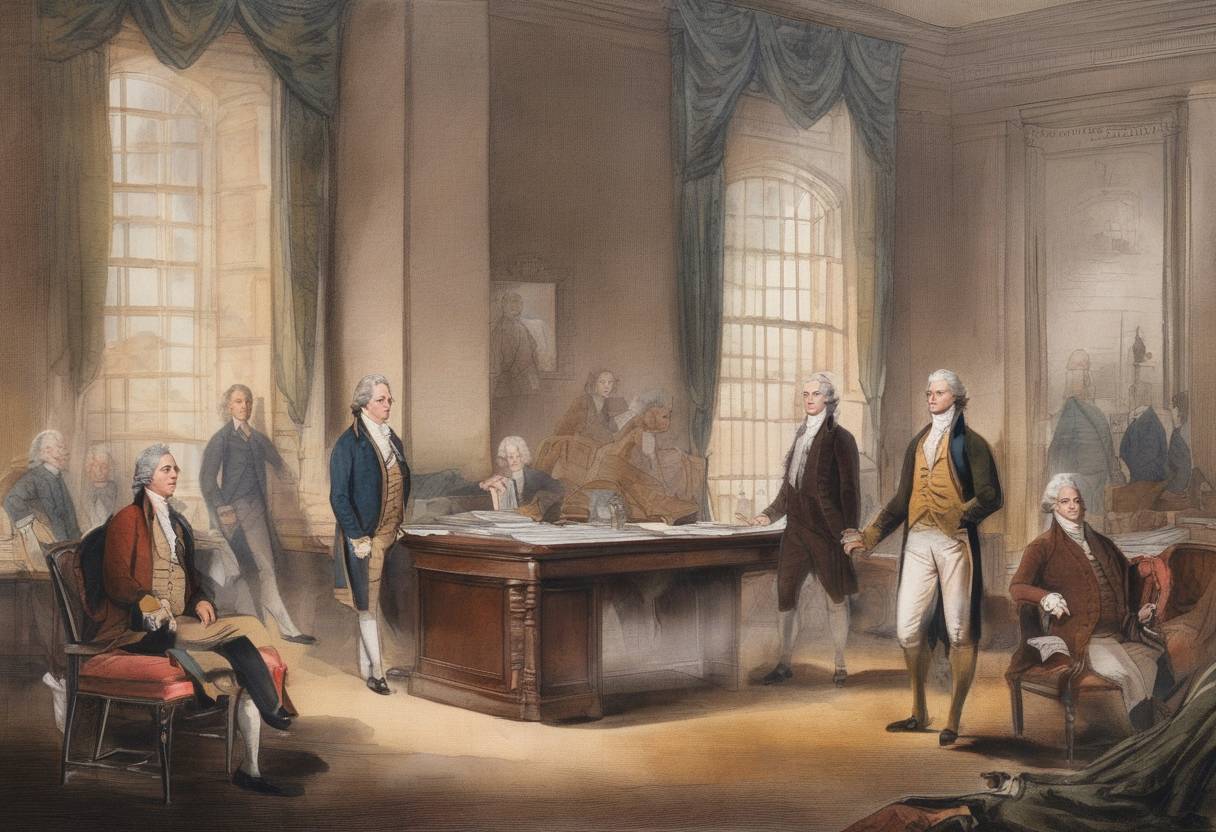
On September 11, 1789, Alexander Hamilton was appointed as the first Secretary of the Treasury of the United States, marking a pivotal moment in the establishment of the nation’s financial system. This appointment was made by President George Washington, who recognized Hamilton’s exceptional skills and vision for the economic future of the fledgling republic.
Post-Revolutionary War Debt: The United States was grappling with substantial debt following the Revolutionary War. The new nation needed a robust financial strategy to stabilize its economy and establish creditworthiness.
Constitutional Framework: The U.S. Constitution, ratified in 1788, provided the federal government with the authority to manage fiscal policy, laying the groundwork for the creation of the Treasury Department.
Hamilton’s Background: Alexander Hamilton, a key figure in the American Revolution and a co-author of the Federalist Papers, was known for his strong advocacy of a centralized federal government. His financial acumen and previous experience as an aide to General Washington made him an ideal candidate for the role.
Report on Public Credit: Hamilton’s first major policy proposal, presented in 1790, aimed to address the national debt by consolidating state and federal debts and establishing a system of public credit.
Creation of the Bank of the United States: Hamilton proposed the establishment of a national bank to stabilize and improve the nation’s credit and handle government funds. This was realized with the creation of the First Bank of the United States in 1791.
Excise Taxes and Tariffs: To generate revenue, Hamilton introduced excise taxes, including the controversial whiskey tax, and advocated for tariffs on imported goods to protect burgeoning American industries.
Foundation of American Financial System: Hamilton’s policies laid the foundation for the modern American financial system, influencing economic policy for generations.
Federal vs. State Power: His tenure highlighted the ongoing debate between federal and state powers, a central theme in American political discourse.
Legacy: Hamilton’s vision and policies significantly contributed to the economic stability and growth of the United States, cementing his legacy as a key architect of American government.
Hamilton’s appointment and subsequent actions as Secretary of the Treasury were instrumental in shaping the economic landscape of the United States, demonstrating the critical role of effective financial management in the success of a nation.
Source: en.wikipedia.org