Mount Vesuvius Eruption of November 23, 1733
1733 · Naples, Italy
The 'Gentleman’s Magazine' reports an eruption of Mount Vesuvius, a significant volcanic event in Italy.
August 24, 0079
Mount Vesuvius erupted, leading to the destruction of the Roman cities of Pompeii, Herculaneum, and several other settlements. The eruption buried these cities under volcanic ash and pumice, preserving them for centuries and providing valuable archaeological insights into Roman life.
Pompeii, Roman Empire (modern-day Italy) | N/A
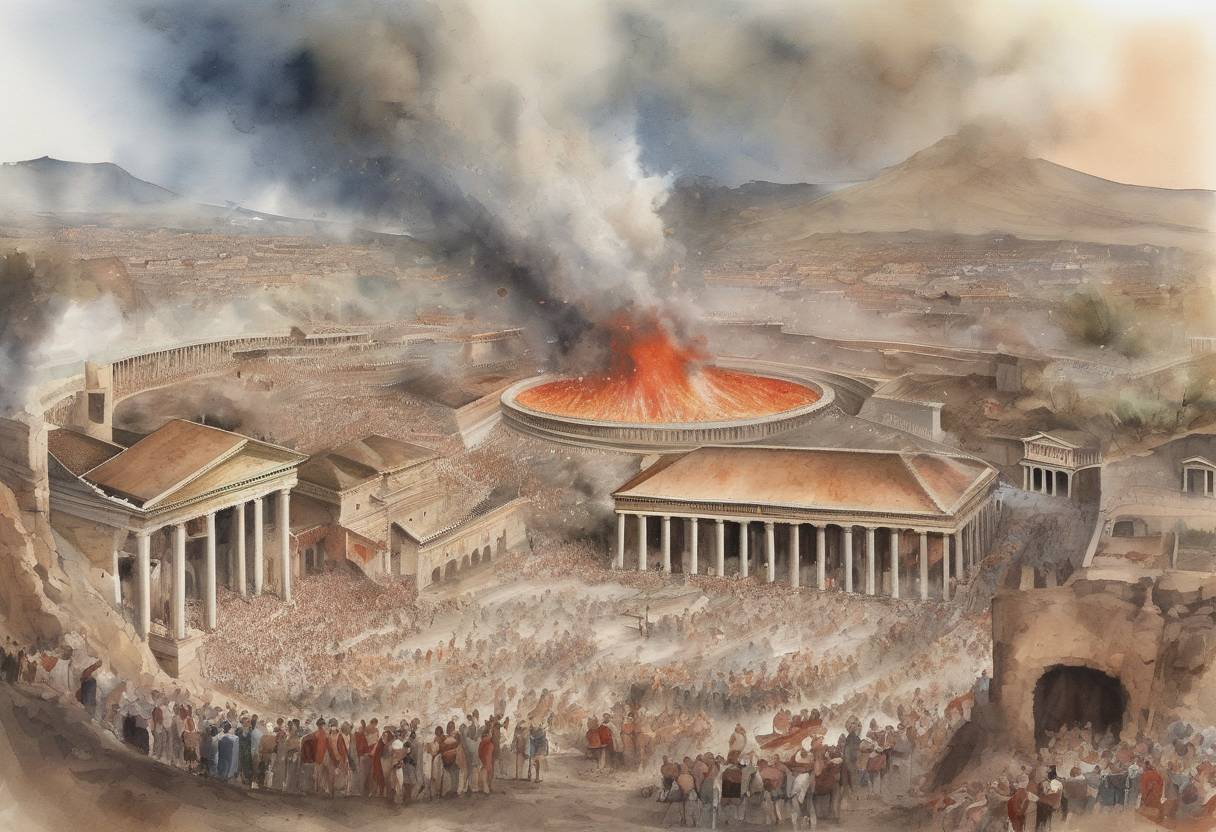
On August 24, 79 AD, Mount Vesuvius, a stratovolcano located in the Gulf of Naples in Italy, erupted catastrophically. This eruption led to the destruction and burial of several Roman cities, most notably Pompeii and Herculaneum, along with other settlements such as Stabiae and Oplontis. The event is one of the most famous volcanic eruptions in history due to its impact and the preservation of the cities it buried.
Mount Vesuvius had been dormant for centuries before the eruption in 79 AD. The region around the volcano was densely populated, with thriving Roman cities that were centers of commerce and culture. The area was known for its fertile land, which was ideal for agriculture, due to the rich volcanic soil.
In the days leading up to the eruption, there were signs of volcanic activity, including earthquakes. However, the residents of the area were largely unprepared for the scale of the disaster that was about to unfold.
The eruption began on the afternoon of August 24 and lasted for approximately two days. It is described in detail by Pliny the Younger, a Roman author and administrator, in letters to the historian Tacitus. Pliny’s account provides a vivid description of the eruption’s phases, which are now referred to as “Plinian” due to his detailed observations.
Initial Explosion: A massive column of volcanic ash and pumice was ejected into the sky, reaching heights of up to 33 kilometers (20 miles). This column eventually collapsed, causing pyroclastic flows—fast-moving currents of hot gas and volcanic matter.
Ash Fall: The cities of Pompeii and Herculaneum were buried under several meters of ash and pumice. Pompeii was covered by about 4 to 6 meters (13 to 20 feet) of ash, while Herculaneum was buried under approximately 20 meters (66 feet) of material.
Pyroclastic Surges: These surges were particularly devastating to Herculaneum, where the intense heat and speed of the flows caused instant death to those who had not evacuated.
The eruption resulted in the deaths of thousands of people and the complete destruction of the affected cities. The exact death toll is unknown, but estimates suggest that around 16,000 people perished.
The cities remained buried and largely forgotten until their rediscovery in the 18th century. Excavations began in earnest in the 19th and 20th centuries, revealing remarkably well-preserved buildings, artifacts, and even the remains of the victims. These findings have provided invaluable insights into Roman life, culture, and society.
The eruption of Mount Vesuvius is a pivotal event in the study of volcanology and Roman history. It serves as a stark reminder of the power of natural disasters and their ability to shape human history. The preservation of Pompeii and Herculaneum offers a unique window into the past, allowing historians and archaeologists to reconstruct aspects of Roman life with remarkable detail.
The event also underscores the importance of understanding and preparing for volcanic activity, as it continues to pose a threat to communities living near active volcanoes today.
Source: en.wikipedia.org