Founding of Munich by Henry the Lion on June 14, 1158
1158 · Munich, Germany
Munich is founded by Henry the Lion on the banks of the river Isar.
October 12, 1810
The first Oktoberfest was held in Munich, Germany, to celebrate the marriage of Crown Prince Ludwig of Bavaria to Princess Therese of Saxe-Hildburghausen.
Munich, Germany | Bavarian Royal Family
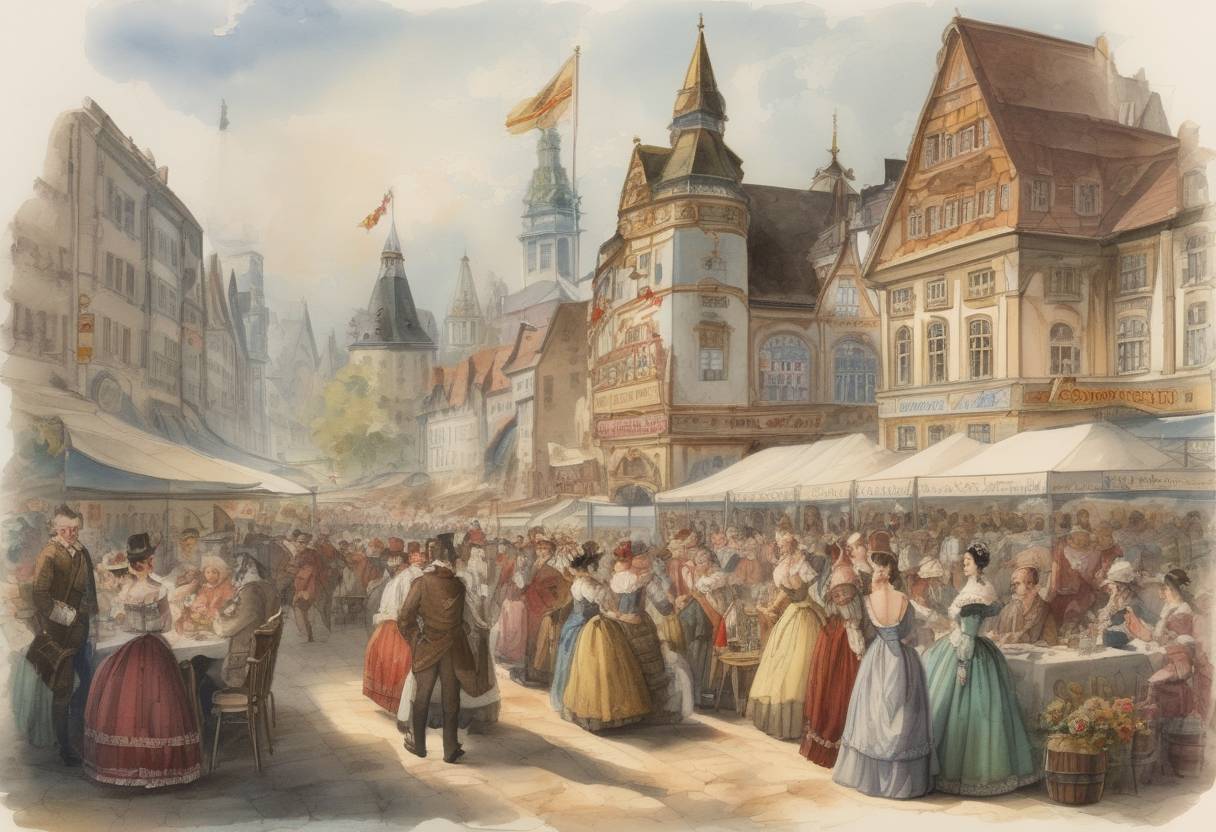
The inaugural Oktoberfest took place on October 12, 1810, in Munich, Germany, marking a significant cultural event that has since evolved into one of the world’s largest and most famous folk festivals. This celebration was originally held to honor the marriage of Crown Prince Ludwig of Bavaria, who later became King Ludwig I, to Princess Therese of Saxe-Hildburghausen.
Crown Prince Ludwig: Born on August 25, 1786, Ludwig was the son of King Maximilian I Joseph of Bavaria. His marriage to Princess Therese was a significant event for the Bavarian royal family and the state.
Princess Therese: Born on July 8, 1792, Therese was a member of the House of Saxe-Hildburghausen, a duchy in what is now modern-day Thuringia, Germany.
Bavaria in 1810: At the time, Bavaria was a kingdom within the Holy Roman Empire, having been elevated from an electorate in 1806. The marriage was seen as a unifying event for the Bavarian people.
Location: The festivities took place on the fields in front of the city gates of Munich, which were later named “Theresienwiese” (Therese’s Meadow) in honor of the bride. This location remains the site of Oktoberfest to this day.
Celebrations: The original event was a grand affair, featuring horse races as the main attraction. It was organized by Andreas Michael Dall’Armi, a member of the Bavarian National Guard, who proposed the idea to celebrate the royal wedding with a public festival.
Public Participation: The event was open to the public, allowing citizens of Munich and surrounding areas to partake in the festivities, which included music, dancing, and food.
Annual Tradition: The success of the first Oktoberfest led to the decision to make it an annual event. Over the years, it expanded to include agricultural shows, parades, and eventually, the beer tents that are now synonymous with the festival.
Cultural Significance: Oktoberfest has grown into a global phenomenon, attracting millions of visitors from around the world each year. It serves as a celebration of Bavarian culture and heritage, showcasing traditional music, costumes, and cuisine.
Economic Impact: Today, Oktoberfest is a major economic driver for Munich, generating significant revenue for the city and local businesses.
In conclusion, the first Oktoberfest in 1810 was a pivotal event that not only celebrated a royal marriage but also laid the foundation for a cultural tradition that continues to thrive over two centuries later. Its evolution from a local celebration to an international festival highlights its enduring appeal and significance in promoting Bavarian culture worldwide.
Source: en.wikipedia.org