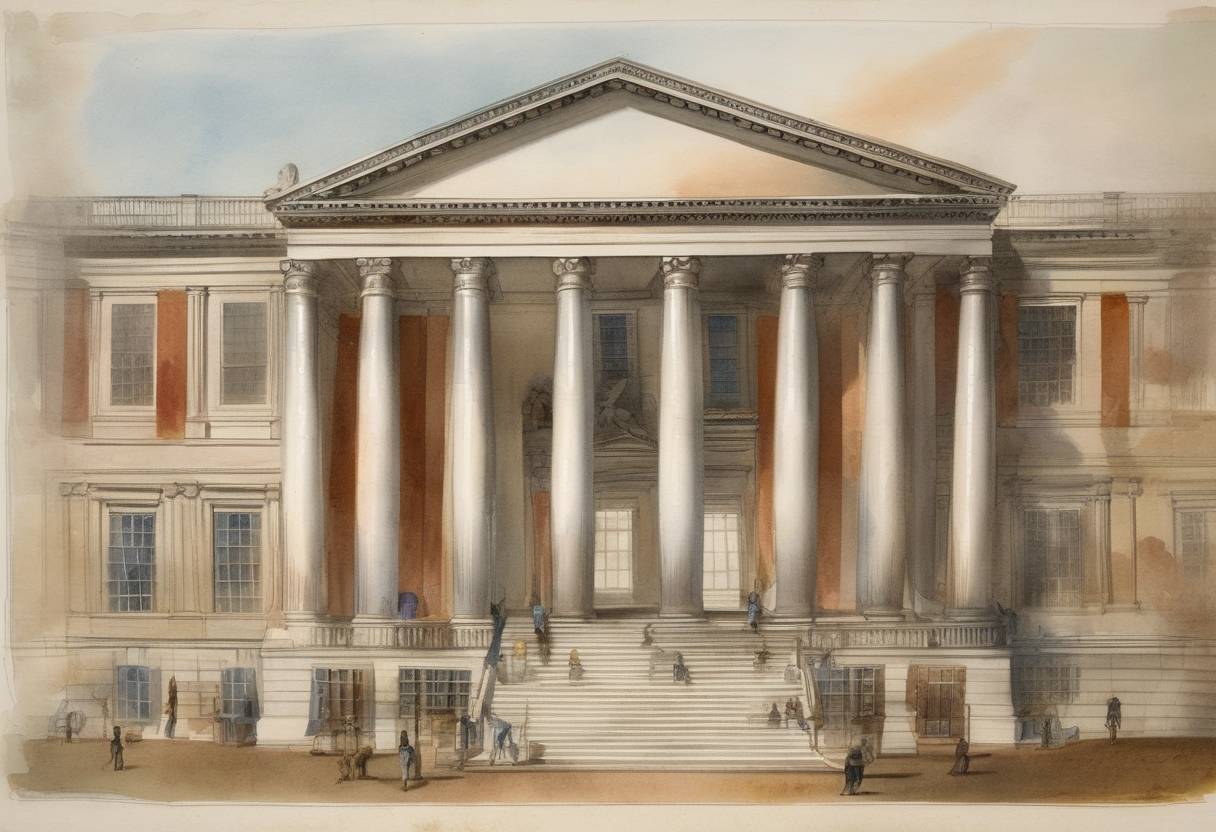
Establishment of the U.S. Mint
On April 2, 1792, the United States Congress passed a pivotal resolution that led to the creation of the U.S. Mint, which was subsequently signed into law by President George Washington. This event marked a significant development in the financial history of the United States, laying the foundation for a standardized national currency.
Context and Background
Post-Revolutionary War Economy: Following the American Revolutionary War, the United States faced significant economic challenges. The lack of a unified currency system led to widespread confusion and inefficiency in trade and commerce.
Constitutional Mandate: The U.S. Constitution, ratified in 1788, granted Congress the power to coin money and regulate its value. This provision underscored the need for a national mint to produce a standardized currency.
Alexander Hamilton’s Influence: As the first Secretary of the Treasury, Alexander Hamilton played a crucial role in advocating for a national mint. His vision for a strong federal financial system included the establishment of a mint to produce coins that would facilitate trade and economic stability.
Key Provisions of the Coinage Act of 1792
Establishment of the Mint: The Coinage Act of 1792 formally established the U.S. Mint in Philadelphia, which was then the capital of the United States.
Coinage System: The Act introduced a decimal-based currency system, which was innovative at the time. It authorized the production of various coins, including gold eagles, silver dollars, and copper cents.
Design and Standards: The Act specified the design and weight standards for each coin, ensuring consistency and reliability. It also included provisions for the minting of coins with inscriptions and symbols representing the United States.
Significance and Impact
Economic Stability: The creation of the U.S. Mint and the introduction of a standardized currency helped stabilize the American economy by facilitating trade and reducing reliance on foreign currencies and barter systems.
National Identity: The coins produced by the U.S. Mint became symbols of national identity and sovereignty, reflecting the values and aspirations of the young republic.
Legacy: The U.S. Mint has continued to evolve, becoming one of the most respected mints in the world. It plays a crucial role in producing currency and commemorative coins that celebrate American history and culture.
The establishment of the U.S. Mint was a foundational step in the development of the United States’ financial infrastructure, contributing to the nation’s growth and prosperity.