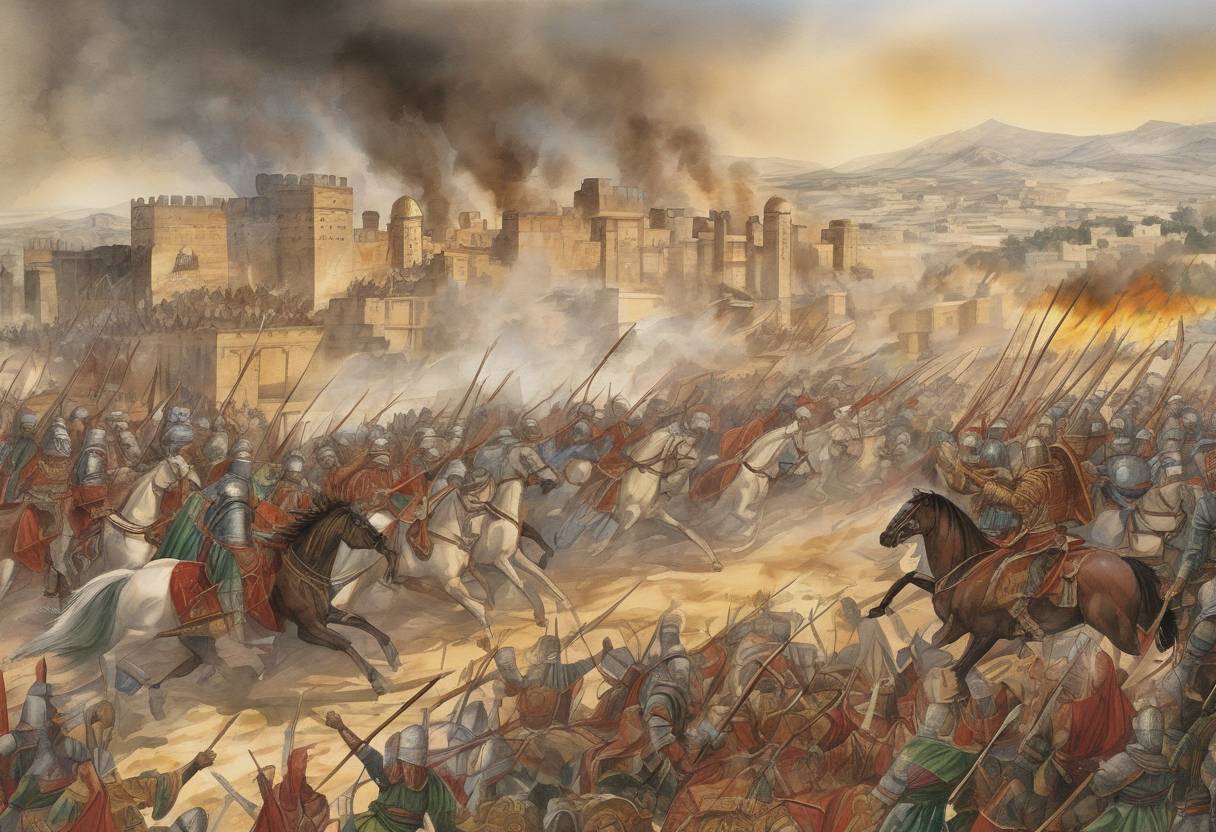
The Battle of Anzen (July 22, 838)
The Battle of Anzen, fought on July 22, 838, was a significant conflict between the Byzantine Empire and the Abbasid Caliphate, forming part of the protracted Byzantine-Arab Wars. This battle is notable for its strategic implications and its role in the subsequent capture of Amorium, a key Byzantine city.
Background
The Byzantine-Arab Wars were a series of military engagements that spanned several centuries, characterized by territorial disputes and religious tensions between the Christian Byzantine Empire and the Muslim Abbasid Caliphate. By the early 9th century, these conflicts had become a defining feature of the regional power dynamics.
In 838, the Abbasid Caliphate, under Caliph al-Mu’tasim, launched a major campaign against the Byzantine Empire. This was partly in response to Byzantine raids into Abbasid territories and the capture of the city of Zapetra by Emperor Theophilos. Theophilos’s actions provoked a strong retaliatory response from al-Mu’tasim, who sought to demonstrate the might of the Abbasid military.
The Battle
The Battle of Anzen took place near Dazimon (modern-day Turkey) and was a critical encounter during this campaign. The Byzantine forces, led by Emperor Theophilos himself, were well-prepared and motivated to defend their territory. However, the Abbasid army, commanded by al-Mu’tasim, was larger and better organized.
Key Events
- Tactical Movements: Theophilos attempted to use the terrain to his advantage, positioning his forces on elevated ground. Despite this strategic positioning, the Byzantine army was outnumbered.
- Abbasid Strategy: Al-Mu’tasim’s forces employed effective military tactics, including feigned retreats and encirclement maneuvers, which eventually overwhelmed the Byzantine defenses.
- Byzantine Retreat: As the battle progressed, the Byzantine forces began to falter. Emperor Theophilos, recognizing the dire situation, ordered a retreat to avoid complete annihilation.
Aftermath
The defeat at Anzen had significant repercussions for the Byzantine Empire:
- Capture of Amorium: Following their victory at Anzen, the Abbasid forces advanced towards Amorium, one of the most important cities in the Byzantine Empire. The city was besieged and captured, marking a major triumph for the Abbasids.
- Political and Military Impact: The loss of Amorium was a severe blow to Byzantine prestige and morale. It underscored the vulnerability of Byzantine defenses and prompted a reevaluation of military strategies.
- Religious and Cultural Consequences: The fall of Amorium, a city with deep religious significance, had a profound impact on Byzantine society, influencing both religious discourse and cultural narratives.
Historical Significance
The Battle of Anzen and the subsequent capture of Amorium highlighted the shifting balance of power between the Byzantine Empire and the Abbasid Caliphate during the 9th century. It underscored the ongoing struggle for dominance in the region and the complex interplay of military, political, and religious factors that characterized this period of history. The battle remains a poignant example of the challenges faced by the Byzantine Empire in maintaining its territorial integrity against formidable adversaries.