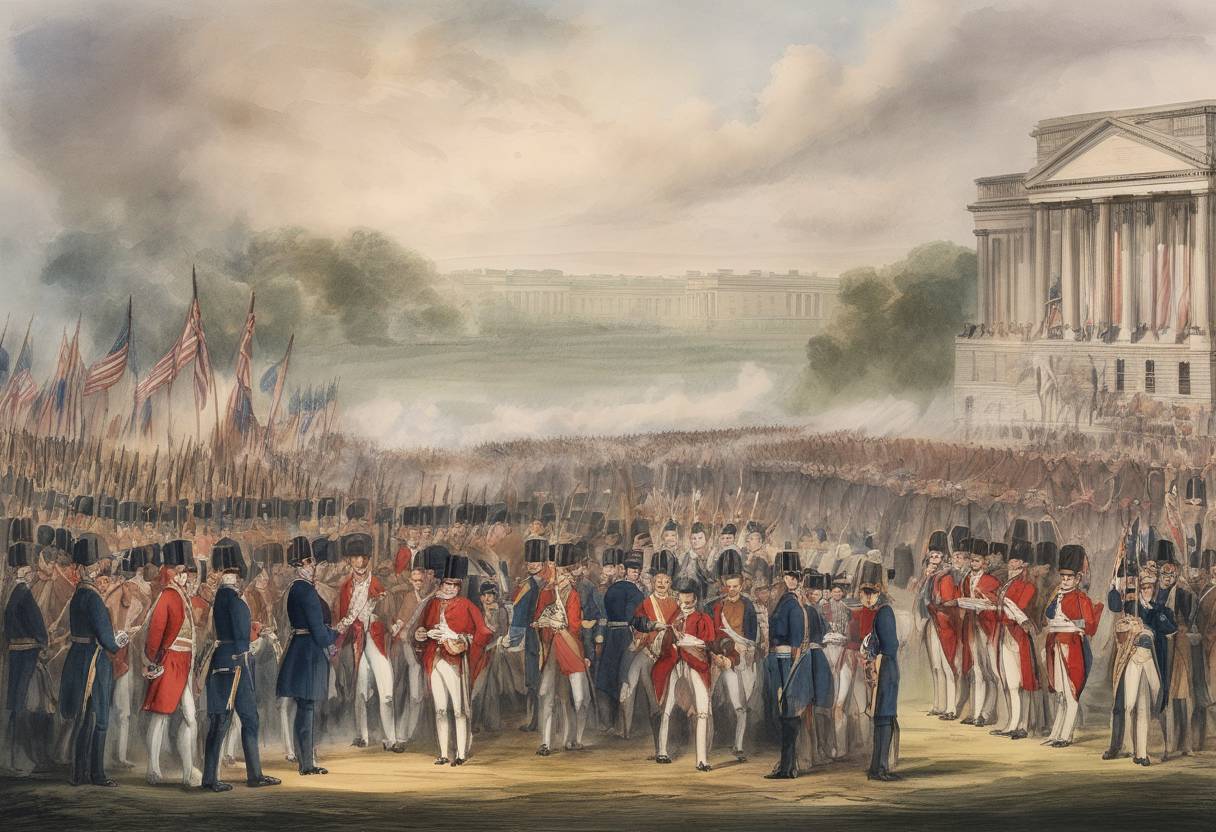
The United States Declares War on Great Britain: The War of 1812
On June 18, 1812, the United States formally declared war on Great Britain, marking the beginning of the War of 1812. This conflict arose from a combination of longstanding grievances and immediate provocations that had been simmering between the two nations. Below is a detailed account of the key factors that led to this declaration and the broader historical context.
Context and Causes
Trade Restrictions
- Napoleonic Wars: At the time, Great Britain was embroiled in the Napoleonic Wars against France. To weaken France, Britain imposed a series of trade restrictions known as the Orders in Council, which severely limited American trade with Europe.
- Impact on American Economy: These restrictions disrupted American commerce and were perceived as violations of neutral trading rights, causing significant economic distress in the United States.
Impressment of American Sailors
- British Naval Practices: The British Royal Navy, in need of manpower, routinely stopped American ships to search for deserters. This practice often led to the impressment of American sailors into British service, a direct affront to American sovereignty.
- Public Outrage: The impressment issue fueled public anger and nationalist sentiments in the United States, as it was seen as an attack on American independence and personal liberties.
British Support of Native American Tribes
- Frontier Conflicts: American settlers moving westward encountered resistance from Native American tribes. The United States accused Britain of supplying arms and support to these tribes to hinder American expansion.
- Tecumseh’s Confederacy: The Shawnee leader Tecumseh and his brother, Tenskwatawa, sought to form a confederation of tribes to resist American encroachment, allegedly with British backing.
The Declaration of War
- President James Madison: On June 1, 1812, President James Madison sent a message to Congress outlining the grievances against Britain, emphasizing the issues of trade restrictions, impressment, and British incitement of Native American hostilities.
- Congressional Approval: After heated debates, Congress approved the declaration of war on June 18, 1812, marking the first time the United States declared war on another nation.
Consequences and Significance
- Military Engagements: The War of 1812 saw several key battles, including the burning of Washington D.C., the defense of Fort McHenry (which inspired “The Star-Spangled Banner”), and the Battle of New Orleans.
- Treaty of Ghent: The war concluded with the Treaty of Ghent, signed on December 24, 1814, which effectively restored relations between the United States and Britain to their pre-war status.
- National Identity: The war fostered a sense of national identity and pride in the United States, despite the lack of clear victory. It also marked the decline of Native American resistance in the Northwest Territory.
The War of 1812, often called the “Second War of Independence,” was a pivotal moment in American history, underscoring the young nation’s determination to assert its sovereignty and protect its interests on the global stage.