James Naismith Invents Basketball
1891 · Springfield, United States
James Naismith invents the game of basketball in Springfield, Massachusetts.
February 9, 1895
William G. Morgan invented a game called Mintonette, which later became known as volleyball.
Holyoke, United States | YMCA
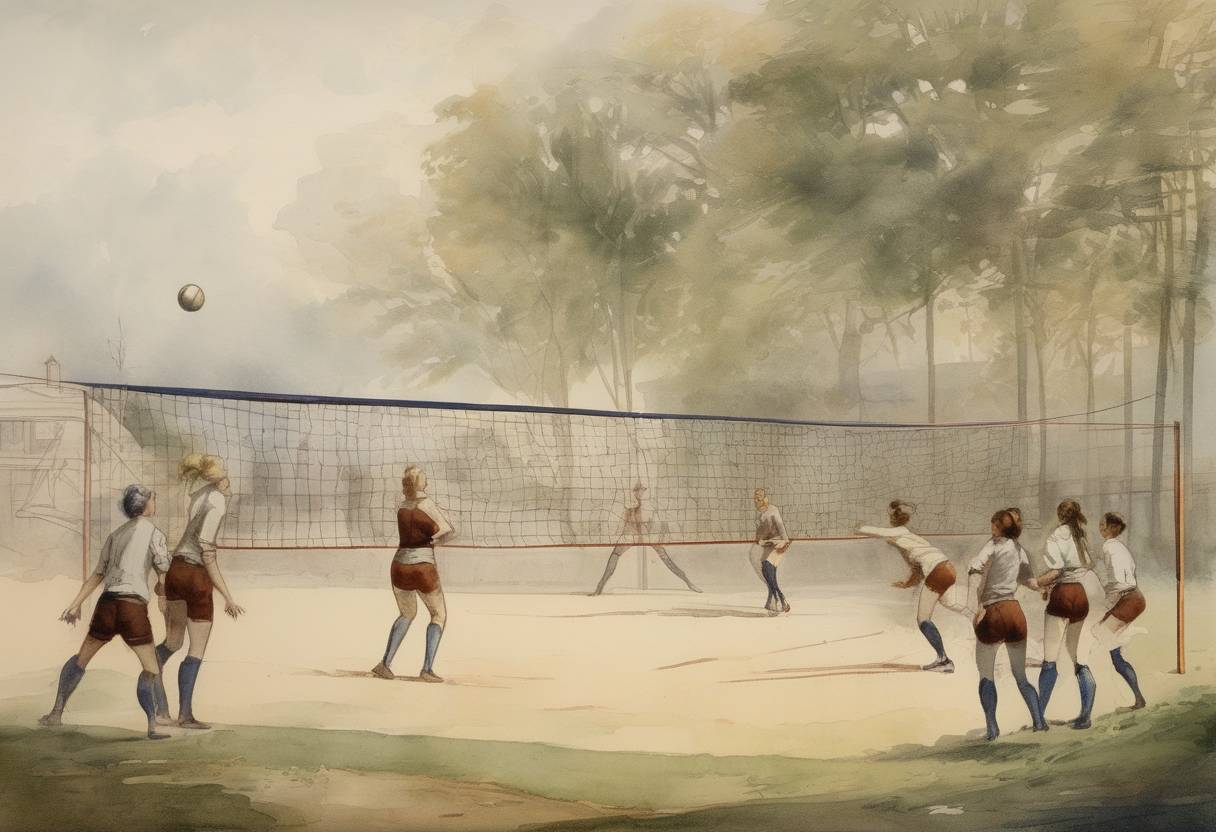
On February 9, 1895, William G. Morgan, a physical education instructor at the YMCA in Holyoke, Massachusetts, introduced a new game called “Mintonette.” This game was designed as a less physically demanding alternative to basketball, which had been invented just four years earlier by Morgan’s colleague, James Naismith.
Morgan’s creation of Mintonette was influenced by his desire to develop a sport that would be suitable for older members of the YMCA, providing a form of exercise that was less intense than basketball. Drawing inspiration from various sports, including tennis, handball, and badminton, Morgan crafted a game that could be played indoors and required minimal equipment.
The name “Mintonette” was short-lived. During a demonstration of the game at a YMCA conference in 1896, a spectator suggested the name “volleyball” to better describe the primary action of the game—volleying the ball back and forth over the net. The name was adopted, and the sport began to gain popularity.
The invention of volleyball marked a significant development in the world of sports, offering a versatile and accessible game that could be enjoyed by people of all ages and skill levels. Today, volleyball is one of the most popular sports worldwide, played both recreationally and competitively, with millions of enthusiasts participating in indoor, beach, and even snow volleyball.
William G. Morgan’s innovative approach to creating a new sport has left a lasting legacy, demonstrating the enduring appeal of a game that emphasizes teamwork, agility, and strategy.
Source: en.wikipedia.org