Mary, Queen of Scots: Trial for Conspiracy Against Queen Elizabeth I
1586 · Fotheringhay, England
Mary, Queen of Scots, went on trial for conspiracy against Queen Elizabeth I of England.
February 8, 1587
Mary, Queen of Scots, was executed for her involvement in plots to assassinate Queen Elizabeth I of England.
Fotheringhay, England | English Crown
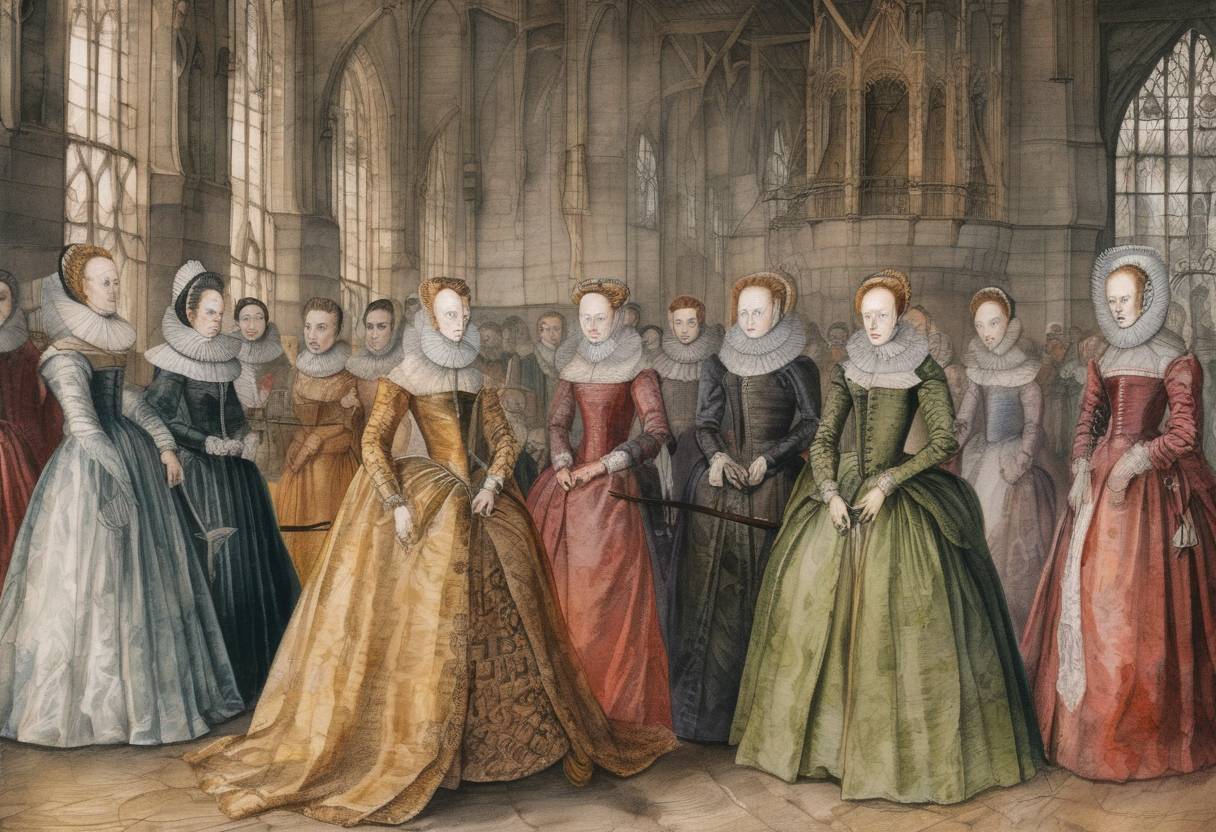
On February 8, 1587, Mary, Queen of Scots, was executed at Fotheringhay Castle in England. This event marked the culmination of a complex series of political and religious conflicts that had embroiled England and Scotland for decades.
Mary Stuart, born in 1542, became Queen of Scotland when she was just six days old. Her reign was fraught with challenges, including religious tensions between Catholics and Protestants, and political struggles with Scottish nobles. After a tumultuous period, including her forced abdication in 1567, Mary sought refuge in England, hoping for support from her cousin, Queen Elizabeth I.
However, Mary’s presence in England posed a significant threat to Elizabeth. As a Catholic with a legitimate claim to the English throne, Mary became the focal point for Catholic plots aiming to overthrow Elizabeth, a Protestant. The most notable of these was the Babington Plot, a plan to assassinate Elizabeth and place Mary on the English throne.
In 1586, the Babington Plot was uncovered by Elizabeth’s spymaster, Sir Francis Walsingham. The plot involved Anthony Babington and a group of conspirators who sought to kill Elizabeth and incite a Catholic uprising. Crucially, letters were intercepted that implicated Mary in the conspiracy, providing the evidence needed to charge her with treason.
Mary was tried and found guilty of treason in October 1586. Despite her protests that she was denied the right to defend herself adequately and that she was a sovereign queen, Elizabeth reluctantly signed her death warrant. The execution took place on February 8, 1587, at Fotheringhay Castle.
Mary was executed by beheading, and her death was a significant moment in English history. It eliminated a Catholic figurehead and potential rival to Elizabeth, but it also had broader implications.
The execution of Mary, Queen of Scots, had several important consequences:
Catholic Reaction: Mary’s execution angered Catholic monarchs across Europe, particularly King Philip II of Spain, contributing to the tensions that led to the Spanish Armada’s attempted invasion of England in 1588.
Elizabeth’s Legacy: Elizabeth’s decision to execute Mary was controversial and weighed heavily on her conscience. It underscored the precarious nature of her reign and the lengths she would go to secure her throne.
Succession: Mary’s son, James VI of Scotland, eventually succeeded Elizabeth as James I of England in 1603, uniting the crowns of England and Scotland. This union laid the groundwork for the future United Kingdom.
Mary’s life and death remain subjects of fascination and debate, symbolizing the intense religious and political struggles of the 16th century. Her execution is a poignant reminder of the turbulent relationship between England and Scotland and the complex dynamics of power, religion, and legitimacy during the era.
Source: en.wikipedia.org