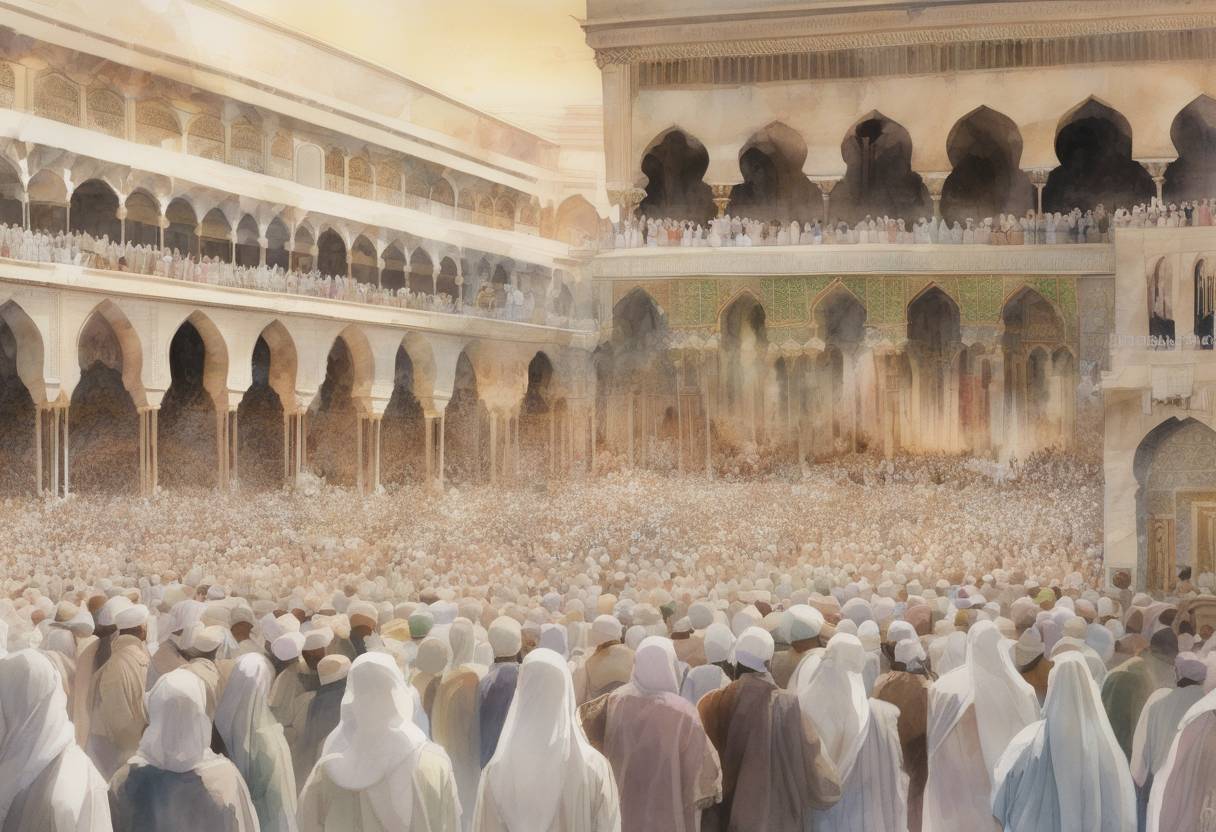
Muhammad’s Farewell Sermon - March 6, 632
On March 6, 632, during his final pilgrimage to Mecca, the Prophet Muhammad delivered what is known as the Farewell Sermon, or Khutbat al-Wada’. This sermon is considered one of the most significant speeches in Islamic history, as it encapsulates key principles of the Islamic faith and provides guidance for the Muslim community.
Context
- The Hajj of 632: This pilgrimage, known as the “Hajj al-Wada’” or the “Farewell Pilgrimage,” was the only Hajj performed by Muhammad after the migration to Medina. It was a pivotal moment as it marked the completion of the revelation of the Quran.
- Location: The sermon was delivered at Mount Arafat, a significant site in the Hajj rituals, where pilgrims gather to pray and reflect.
Key Principles Outlined in the Sermon
Equality and Brotherhood:
- Muhammad emphasized the equality of all Muslims, regardless of race or ethnicity, stating that no Arab is superior to a non-Arab, and vice versa, except in piety and good action.
- He called for the abolition of pre-Islamic practices of discrimination and tribalism.
Sanctity of Life and Property:
- The sermon underscored the inviolability of life and property, comparing their sanctity to the sacredness of the day and place of the sermon.
- Muhammad declared that all forms of usury (interest) were abolished, starting with debts owed to his own family.
Rights and Duties:
- The rights of women were highlighted, urging men to treat their wives with kindness and respect, and reminding women of their duties.
- He stressed the importance of fulfilling trusts and obligations.
Adherence to the Quran and Sunnah:
- Muhammad urged the community to adhere strictly to the Quran and his teachings (Sunnah) as the primary sources of guidance.
- He warned against deviating from these teachings after his death.
Unity of the Muslim Ummah:
- The sermon called for unity among Muslims, emphasizing that they are one community under God.
- He advised against internal strife and division.
Aftermath and Significance
- Completion of the Message: The Farewell Sermon is seen as the culmination of Muhammad’s prophetic mission, summarizing the core tenets of Islam.
- Legacy: The principles laid out in the sermon continue to influence Islamic thought and practice, serving as a moral and ethical guide for Muslims worldwide.
- Historical Impact: The sermon reinforced the social and legal reforms introduced by Islam, promoting justice, equality, and community cohesion.
Muhammad’s Farewell Sermon remains a foundational text in Islam, revered for its timeless message of justice, equality, and devotion to God. It serves as a reminder of the Prophet’s vision for a just and harmonious society.