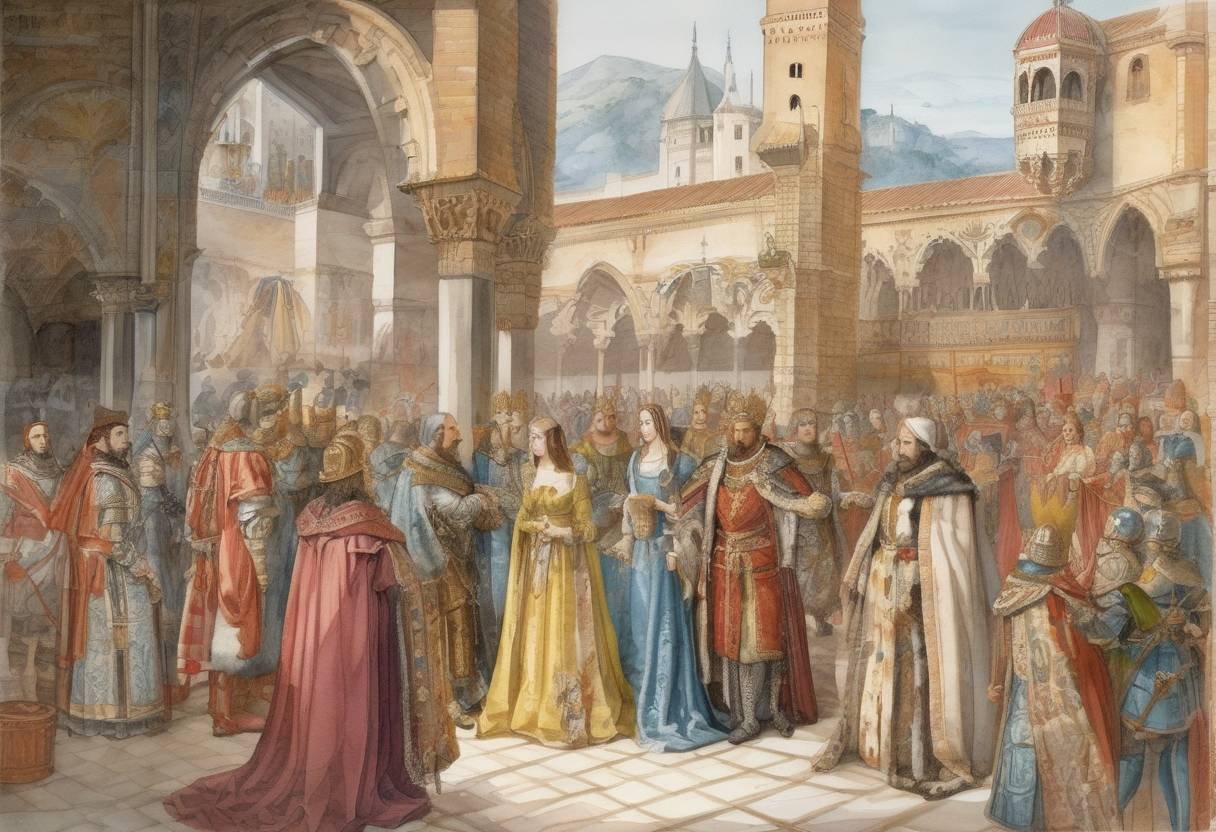
The Capture of Granada: January 2, 1492
On January 2, 1492, the Catholic Monarchs, Ferdinand II of Aragon and Isabella I of Castile, successfully captured Granada from the Nasrid dynasty, marking a pivotal moment in Spanish history and the conclusion of the centuries-long Reconquista.
Context and Background
The Reconquista was a protracted series of campaigns by Christian states to recapture territory taken by Muslims on the Iberian Peninsula. It began in the early 8th century and spanned over 700 years. By the late 15th century, the Kingdom of Granada was the last remaining Muslim stronghold in Spain.
Ferdinand and Isabella, through their marriage in 1469, united the crowns of Aragon and Castile, creating a powerful Christian alliance. Their reign was marked by a strong commitment to religious unity and territorial expansion, which included the completion of the Reconquista.
The Siege of Granada
The campaign against Granada began in 1482 and lasted for a decade. The Catholic Monarchs employed a combination of military force, strategic marriages, and political alliances to weaken the Nasrid kingdom. The siege of Granada itself started in the spring of 1491, with the Catholic forces encircling the city and cutting off supplies.
The Nasrid ruler, Muhammad XII, known as Boabdil, faced internal dissent and dwindling resources. Realizing the futility of prolonged resistance, he negotiated terms of surrender with Ferdinand and Isabella.
The Surrender and Aftermath
On January 2, 1492, Boabdil handed over the keys to the Alhambra Palace, symbolizing the end of Muslim rule in Spain. The terms of surrender were relatively generous; Muslims were allowed to continue practicing their religion and were promised protection for their property and rights. However, these terms were not fully honored in the long term, leading to forced conversions and eventual expulsion of Muslims from Spain.
The fall of Granada had significant consequences:
- Religious Unification: It marked the completion of the Christian reconquest of the Iberian Peninsula, reinforcing the Catholic Monarchs’ authority and religious homogeneity in Spain.
- Columbus’s Voyage: The same year, Ferdinand and Isabella sponsored Christopher Columbus’s expedition, which led to the European discovery of the Americas.
- Cultural Impact: The capture of Granada ended centuries of Muslim influence in Spain, which had contributed significantly to the region’s cultural and scientific development.
Broader Historical Significance
The capture of Granada was a turning point that not only reshaped the Iberian Peninsula but also set the stage for Spain’s emergence as a global power. It marked the beginning of Spain’s Golden Age, characterized by exploration, colonization, and cultural flourishing. The event also had lasting implications for religious and ethnic relations in Spain, influencing policies of religious intolerance and cultural assimilation.
In summary, the fall of Granada on January 2, 1492, was a defining moment in European history, symbolizing the end of Muslim rule in Spain and the dawn of a new era of exploration and expansion.