Pope Marcellinus Begins His Papacy
296 · Rome, Roman Empire
Pope Marcellinus begins his papacy.
May 12, 0254
Pope Stephen I begins his papacy.
Rome, Roman Empire | Catholic Church
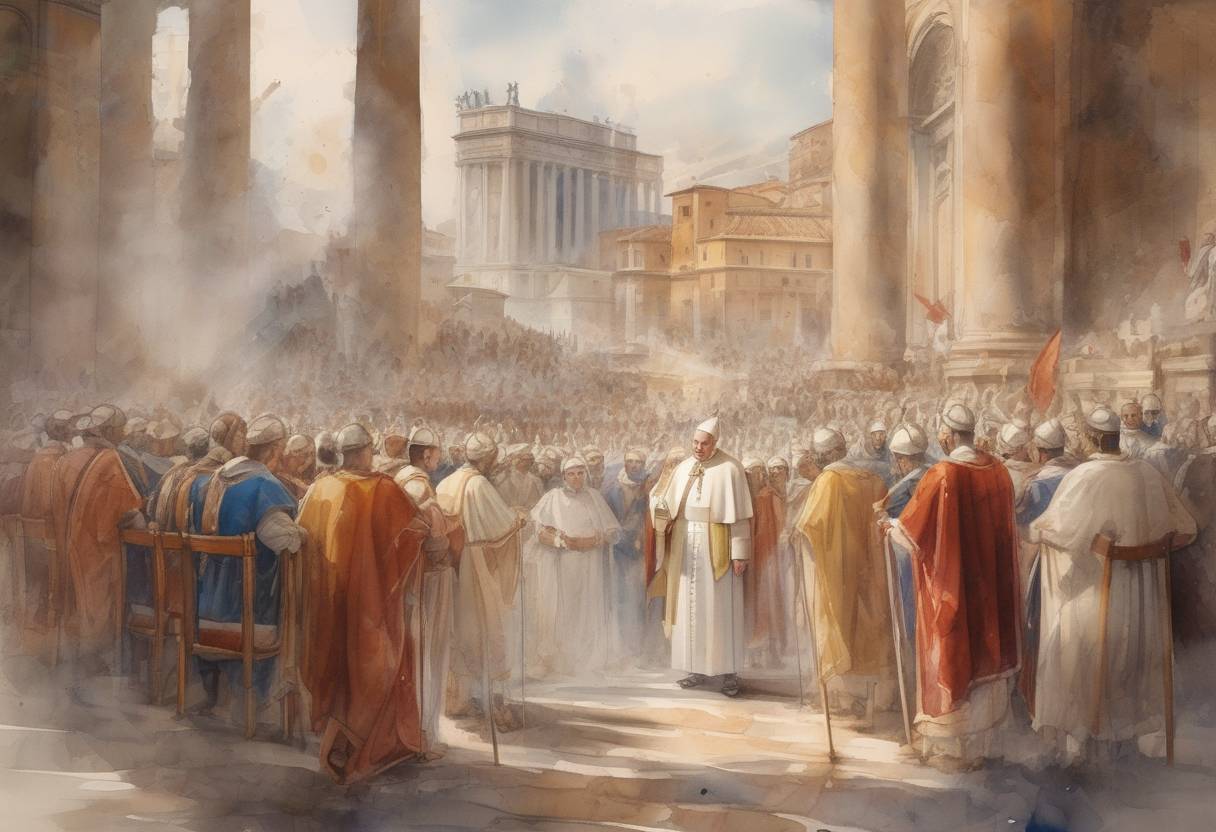
On May 12, 254, Stephen I ascended to the papacy, becoming the Bishop of Rome and the leader of the worldwide Catholic Church. His papacy, which lasted until his death in 257, was marked by significant theological and ecclesiastical challenges, particularly concerning issues of church unity and the treatment of lapsed Christians.
Predecessor: Pope Lucius I, who served as pope from 253 until his death in 254, was Stephen I’s immediate predecessor. Lucius I’s papacy was brief, but it was a period of relative peace for the Church following the Decian persecution.
Historical Setting: The mid-3rd century was a tumultuous time for the Christian Church. The Roman Empire, under Emperor Valerian, was experiencing political instability and external threats, which often led to sporadic persecutions of Christians.
Controversy Over Baptism: One of the most significant issues during Stephen I’s papacy was the debate over the validity of baptisms performed by heretics. Stephen I held the position that baptisms conducted outside the orthodox Christian community were valid, provided they were performed in the name of the Trinity. This stance put him at odds with other church leaders, notably Cyprian of Carthage, who argued that such baptisms were invalid and needed to be redone.
Efforts for Church Unity: Stephen I’s papacy was characterized by his efforts to maintain unity within the Church. He emphasized the authority of the Roman See and sought to resolve disputes through dialogue and adherence to established traditions.
Persecution Under Valerian: During Stephen I’s tenure, the Roman Emperor Valerian initiated a new wave of persecutions against Christians. Although Stephen I himself was not martyred, the environment was one of increasing hostility towards Christians, which would intensify after his death.
Legacy: Pope Stephen I’s insistence on the validity of heretical baptisms was a significant moment in the development of Church doctrine regarding sacraments. His efforts to assert the primacy of the Roman See laid groundwork for the centralization of ecclesiastical authority in Rome.
Death and Succession: Stephen I died on August 2, 257. He was succeeded by Pope Sixtus II, who continued to face the challenges of persecution and theological disputes.
Canonization: Stephen I is recognized as a saint in the Catholic Church, with his feast day celebrated on August 2.
Stephen I’s papacy was a pivotal period in early Church history, marked by theological debates that would shape Christian doctrine and the role of the papacy in maintaining ecclesiastical unity.
Source: en.wikipedia.org