The 1900 Summer Olympics: Games of the II Olympiad
1900 · Paris, France
The first modern-era Summer Olympic Games, known as the Games of the II Olympiad, open in Paris, France.
June 23, 1894
The International Olympic Committee (IOC) was founded at the Sorbonne in Paris, leading to the establishment of the modern Olympic Games.
Paris, France | International Olympic Committee
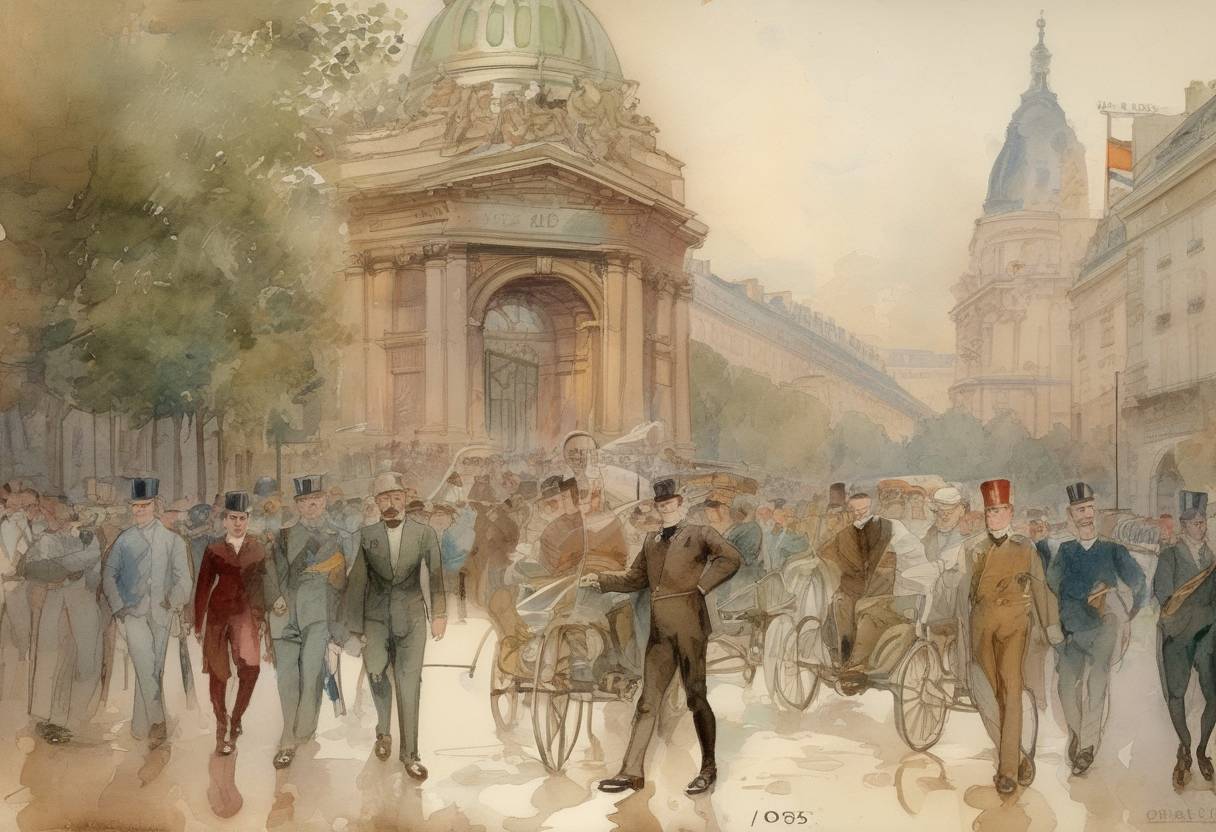
On June 23, 1894, a pivotal moment in the history of international sports occurred with the founding of the International Olympic Committee (IOC) at the Sorbonne in Paris. This event marked the beginning of the modern Olympic Games, a revival of the ancient Greek tradition that would grow to become a global celebration of athletic prowess and international unity.
The idea of reviving the Olympic Games was championed by Pierre de Coubertin, a French educator and historian who was inspired by the ancient Olympic Games held in Olympia, Greece. Coubertin believed that international sporting competitions could foster peace and understanding among nations. His vision was to create a platform where athletes from around the world could compete in a spirit of camaraderie and fair play.
The Congress for the Re-establishment of the Olympic Games was held from June 16 to June 23, 1894, at the Sorbonne, one of the most prestigious universities in Paris. The congress was attended by delegates from various countries, including representatives from sports organizations, educational institutions, and governments. The discussions focused on the logistics of organizing an international sporting event, the rules and regulations that would govern the competitions, and the formation of a governing body to oversee the games.
On the final day of the congress, June 23, 1894, the International Olympic Committee was officially founded. The IOC was tasked with organizing the first modern Olympic Games and ensuring the continuity of the event every four years. Demetrios Vikelas, a Greek businessman and writer, was elected as the first president of the IOC, reflecting the historical connection to the ancient Greek Olympics.
The efforts of the IOC culminated in the first modern Olympic Games, held in Athens, Greece, in 1896. The event featured athletes from 14 countries competing in 43 events across nine sports. The Athens Games were a significant success and set the stage for the growth and evolution of the Olympics into the global phenomenon it is today.
The founding of the IOC and the subsequent establishment of the modern Olympic Games had far-reaching impacts on international sports and diplomacy. The Olympics have become a symbol of global unity, showcasing the talents of athletes from diverse backgrounds and promoting values such as excellence, friendship, and respect. The IOC continues to play a crucial role in organizing the Games and upholding the Olympic Charter, ensuring that the spirit of the Olympics endures.
In summary, the founding of the International Olympic Committee on June 23, 1894, was a landmark event that laid the foundation for one of the world’s most celebrated sporting traditions, fostering international cooperation and cultural exchange through the universal language of sports.
Source: en.wikipedia.org