Space Shuttle Columbia's Final Mission: STS-107
2003 · Cape Canaveral, United States
The Space Shuttle Columbia launched on its final mission, STS-107, which tragically ended in disaster upon re-entry on February 1, 2003.
September 29, 2007
NASA launched the Dawn spacecraft, beginning a mission to the asteroid belt to study the protoplanet Vesta and the dwarf planet Ceres.
Cape Canaveral, United States | NASA
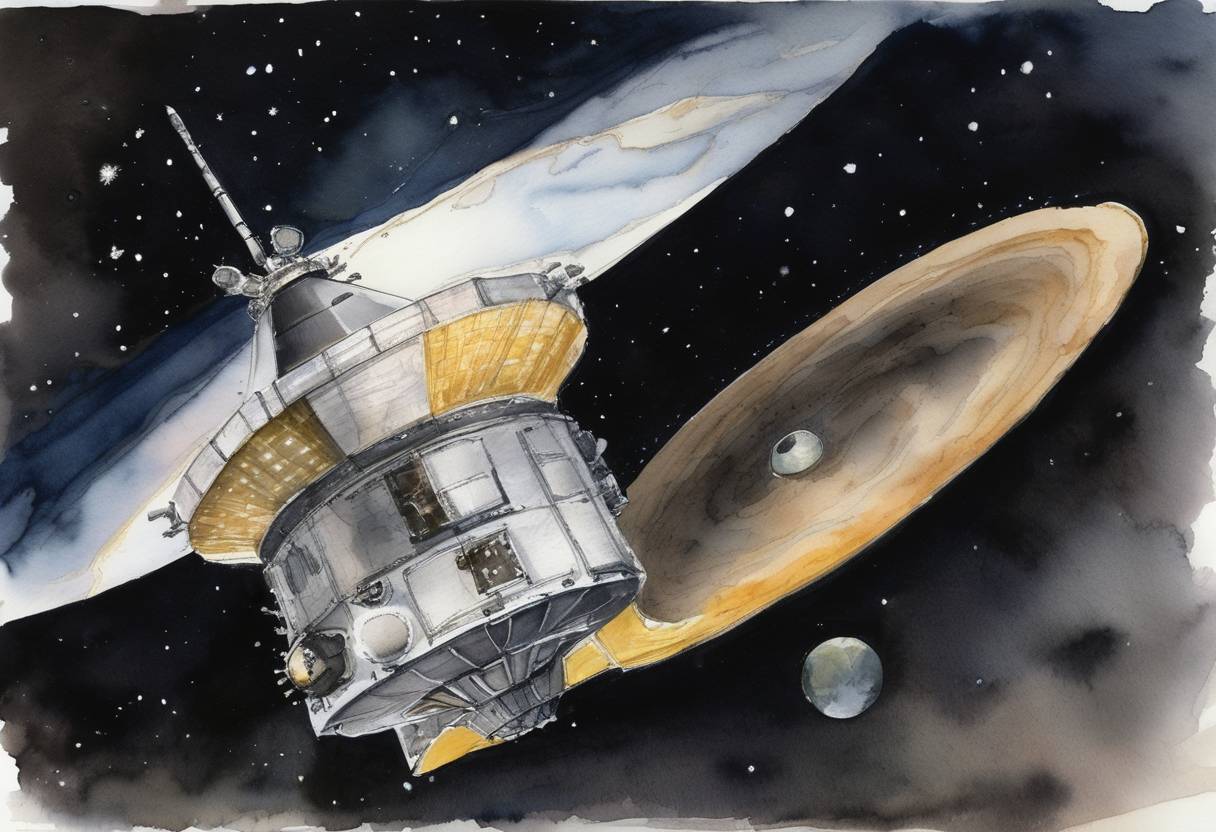
On September 27, 2007, NASA launched the Dawn spacecraft from Cape Canaveral Air Force Station in Florida on a mission to study two of the three known protoplanets—Vesta and Ceres—in the asteroid belt. The mission was managed by NASA’s Jet Propulsion Laboratory and embarked upon an unprecedented journey to provide insight into the structure and composition of these celestial bodies, offering clues about the early Solar System.
The primary objectives of the Dawn mission were to:
Vesta: Dawn entered orbit around Vesta on July 16, 2011, and spent over a year gathering detailed images and data. This visit revealed complex surface structures, including large impact basins and a massive mountain at the south pole.
Ceres: After departing Vesta, Dawn journeyed to Ceres, entering its orbit on March 6, 2015. The mission revealed mysterious bright spots within craters, later identified as salty deposits, hinting at subsurface water activity or ocean remnants.
The Dawn mission was a groundbreaking achievement in planetary science, providing crucial empirical data on the formation and evolution of the Solar System. By successfully visiting and studying both Vesta and Ceres, Dawn helped clarify scientific theories regarding planetary differentiation and the transition from rocky to icy bodies in the context similar to that of early Earth conditions. The data collected also enriched the understanding of the potential for life’s building blocks in various celestial environments.
Source: www.nasa.gov