Victory Day in the Soviet Union - May 9, 1945
1945 · Moscow, Soviet Union
Victory Day was celebrated in the Soviet Union, marking the defeat of Nazi Germany in World War II.
September 4, 1944
Finland exited World War II, signing an armistice with the Soviet Union.
Moscow, Soviet Union
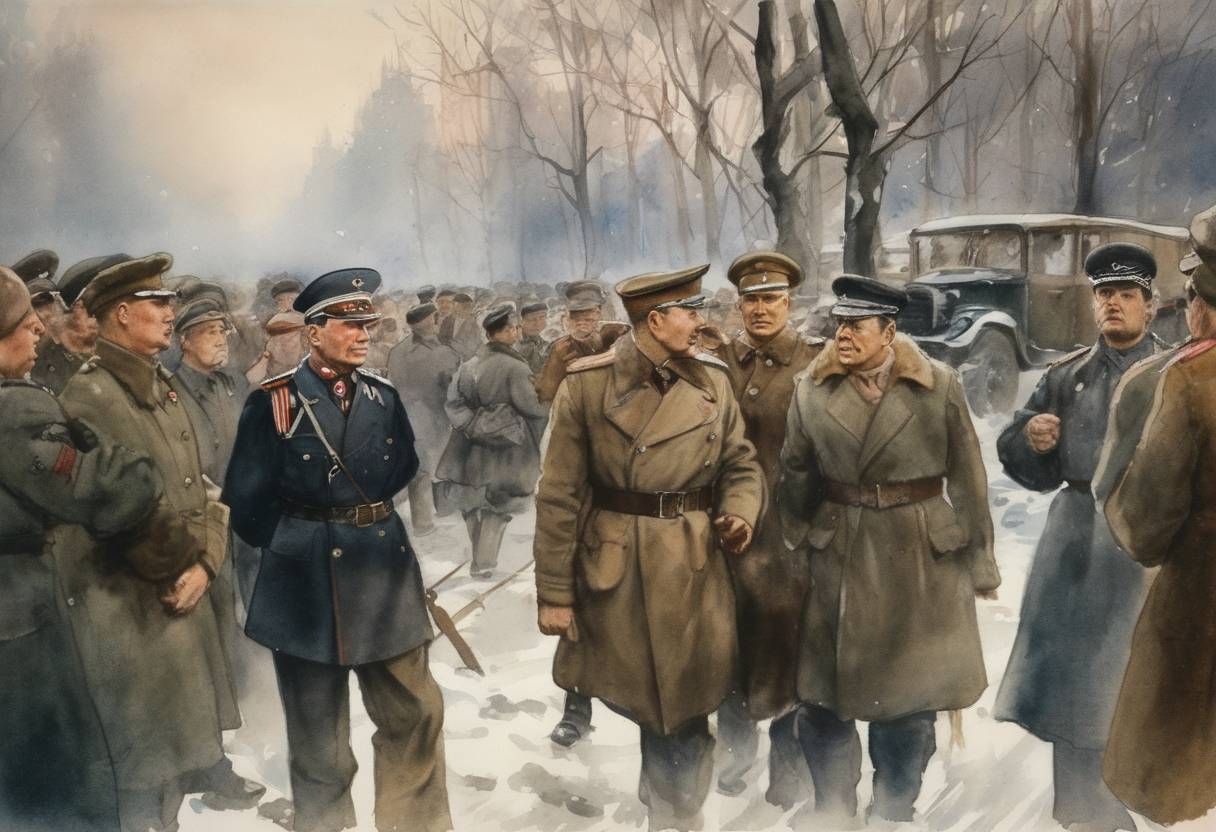
On September 4, 1944, Finland signed an armistice with the Soviet Union, marking the end of its involvement in World War II. This event came after a period of intense negotiations and significant military and political pressures.
Finland entered World War II in 1941 alongside Nazi Germany against the Soviet Union. This was primarily an effort to reclaim territories lost in the Winter War of 1939-1940. As the war progressed, the tide turned against Germany, and the Soviet Union launched offensives against Finnish positions.
Soviet Advancements: By mid-1944, the Soviet forces had gained substantial ground on the Eastern Front. The Red Army launched a massive offensive known as the Vyborg–Petrozavodsk Offensive in June 1944, putting enormous pressure on Finnish defenses.
Finnish Strategy Shift: Recognizing the changing dynamics of the war, Finland sought to extricate itself from the conflict to avoid further destruction.
Peace Negotiations: Finland’s political leadership began secret negotiations with the Soviet Union and the Western Allies to secure peace. The decline in German fortunes and the advancing Soviet forces made it increasingly urgent for Finland to conclude a separate peace.
The armistice agreement required Finland to comply with several conditions:
Territorial Concessions: Finland was compelled to cede territories occupied during the Continuation War and adhere to the borders established after the Winter War.
German Expulsion: Finland was obligated to expel German troops from its territory, leading to the Lapland War, a separate conflict with retreating German forces in northern Finland.
Reparations and Demilitarization: Finland agreed to pay reparations to the Soviet Union and significantly reduce its military capabilities.
Impact on Finland: The armistice brought an end to hostilities on the Finnish front and marked a turning point where Finland shifted from a wartime to a peacetime economy, beginning the process of rebuilding the country.
Lapland War: The requirement to expel German troops resulted in the Lapland War, where Finnish forces engaged the retreating German army in northern Finland, causing additional destruction.
Legacy in Finnish-Soviet Relations: The armistice laid the foundation for the 1947 Paris Peace Treaty and set the tone for Finland’s policy of neutrality and careful diplomacy between East and West during the Cold War.
The signing of the armistice on September 4, 1944, was pivotal for Finland, allowing it to exit World War II and focus on recovery and rebuilding, ultimately shaping its future during the latter half of the 20th century.
Source: en.wikipedia.org