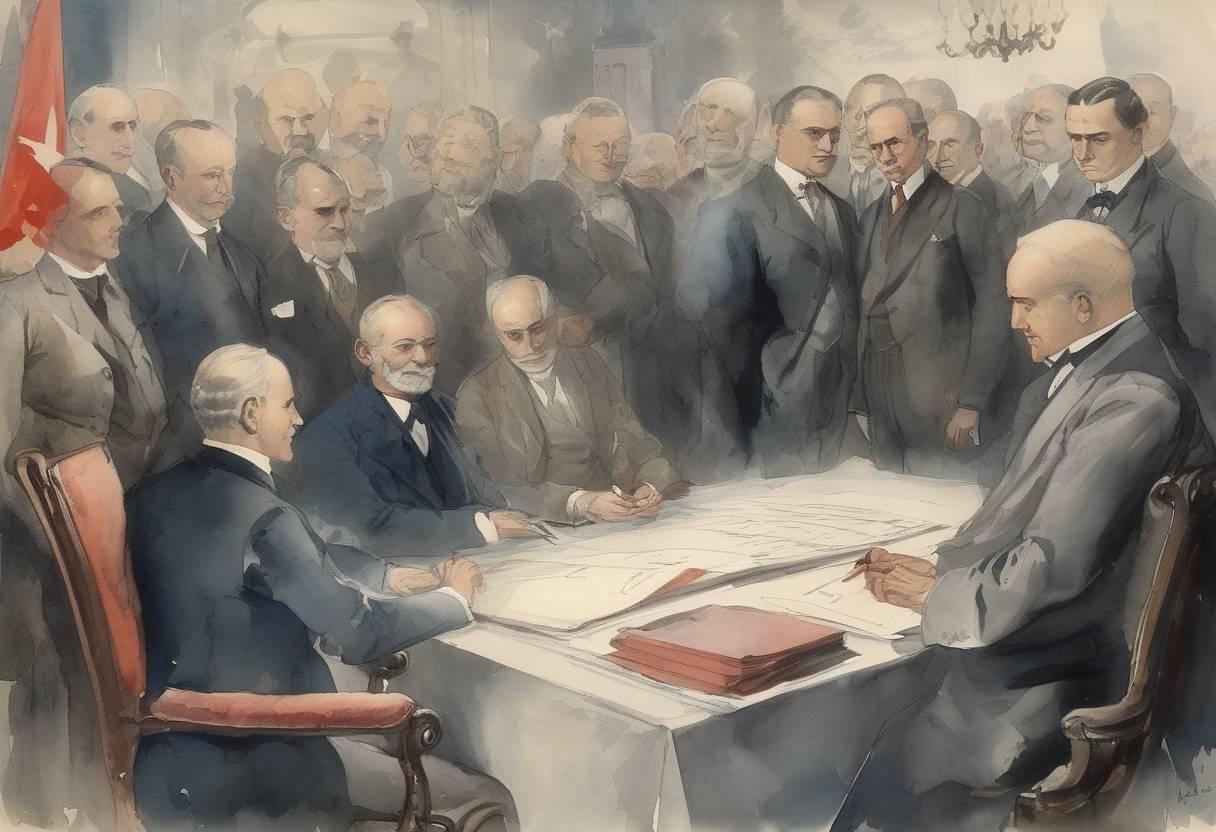
The Treaty of Lausanne: Establishing Modern Turkey’s Boundaries
On July 24, 1923, the Treaty of Lausanne was signed, marking a pivotal moment in the establishment of the modern Republic of Turkey. This treaty was the culmination of negotiations held in Lausanne, Switzerland, and it effectively settled the boundaries of Turkey following the tumultuous period of World War I and the subsequent Turkish War of Independence.
Historical Context
The Treaty of Lausanne followed the collapse of the Ottoman Empire, which had been significantly weakened by its defeat in World War I. The earlier Treaty of Sèvres, signed in 1920, had imposed harsh terms on the Ottoman Empire, including severe territorial losses. However, the Turkish nationalist movement, led by Mustafa Kemal Atatürk, rejected these terms and fought to establish a sovereign Turkish state.
Key Provisions of the Treaty
Territorial Adjustments: The treaty recognized the boundaries of the modern Turkish state. It involved the renunciation of Turkish claims to territories outside its new borders, including parts of the Middle East and North Africa.
Sovereignty and Independence: Turkey was recognized as a fully sovereign and independent nation, free from the control of the Allied powers.
Minority Rights: Provisions were included to protect the rights of minorities within Turkey, although these were often a source of tension and controversy in the following years.
Straits Convention: The treaty included a separate agreement concerning the Dardanelles and Bosporus straits, ensuring their demilitarization and guaranteeing free passage for all ships in peacetime.
Economic and Financial Clauses: The treaty addressed issues related to reparations and the handling of Ottoman debts, which were to be divided among the successor states of the Ottoman Empire.
Aftermath and Significance
The Treaty of Lausanne is considered a cornerstone in the foundation of the Republic of Turkey. It marked the international recognition of Turkey’s new borders and sovereignty, effectively nullifying the Treaty of Sèvres. Mustafa Kemal Atatürk’s leadership in the negotiations and subsequent reforms laid the groundwork for the modernization and secularization of Turkey.
The treaty also had broader implications for the Middle East and Europe, as it redrew boundaries and influenced the geopolitical landscape of the region. It remains a significant reference point in discussions about national sovereignty and international diplomacy.
In summary, the Treaty of Lausanne was a critical step in the establishment of modern Turkey, setting the stage for its development as a nation-state and reshaping the political map of the region in the aftermath of World War I.