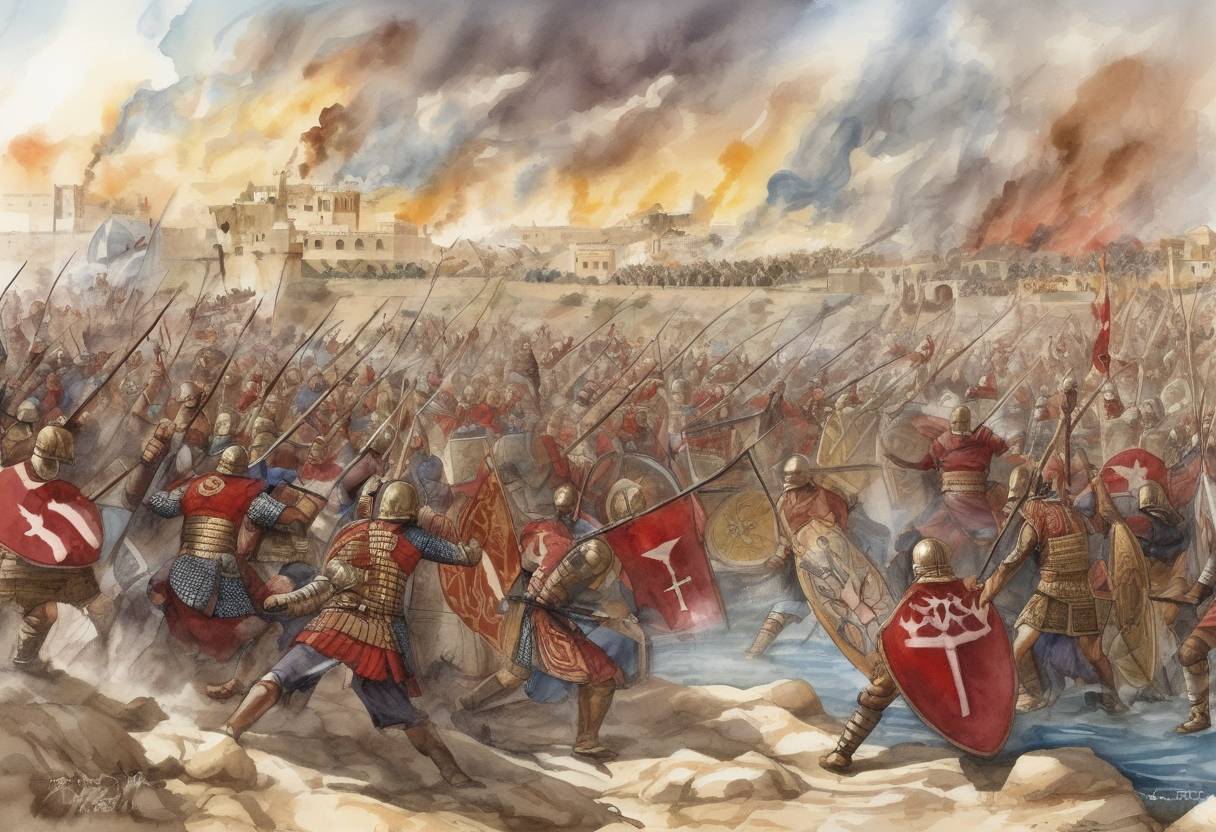
The Battle of the Bagradas River: April 13, 585
The Battle of the Bagradas River, fought on April 13, 585, was a significant military engagement between the Byzantine Empire and the Berber kingdom of Altava. This battle was a pivotal moment in the Byzantine efforts to consolidate control over North Africa during the reign of Emperor Maurice.
Context and Background
Byzantine North Africa: After the successful reconquest of North Africa from the Vandals by Emperor Justinian I in the mid-6th century, the region became a crucial part of the Byzantine Empire. However, maintaining control over this vast territory proved challenging due to internal strife and external threats.
Berber Resistance: The indigenous Berber tribes, including the kingdom of Altava, resisted Byzantine rule. These tribes were adept at guerrilla warfare and posed a significant challenge to Byzantine authority in the region.
General John Troglita: Appointed as the magister militum of Africa, John Troglita was tasked with suppressing Berber uprisings and stabilizing the region. His military acumen and leadership were instrumental in the Byzantine campaigns in North Africa.
The Battle
Location: The battle took place near the Bagradas River, a strategic location in modern-day Tunisia. The river was a vital geographical feature that influenced the movement and logistics of both armies.
Forces Involved: The Byzantine forces, led by General John Troglita, were composed of seasoned troops, including cavalry and infantry units. The Berber forces, under the leadership of the kingdom of Altava, were known for their mobility and knowledge of the local terrain.
Outcome: The Byzantines achieved a decisive victory over the Berber forces. This victory was crucial in quelling the Berber resistance and reasserting Byzantine dominance in the region.
Aftermath and Significance
Consolidation of Power: The victory at the Bagradas River allowed the Byzantines to consolidate their control over North Africa. It marked a turning point in the Byzantine efforts to stabilize the region and integrate it more fully into the empire.
Long-term Impact: The battle helped to secure the Byzantine presence in North Africa for several more decades, although the region would continue to face challenges from both internal dissent and external threats.
Legacy of John Troglita: General John Troglita’s successful campaigns in North Africa solidified his reputation as a capable military leader. His efforts were instrumental in maintaining Byzantine influence in the region during a turbulent period.
In summary, the Battle of the Bagradas River was a crucial event in the Byzantine Empire’s efforts to maintain control over North Africa. The victory not only demonstrated the military prowess of the Byzantines under General John Troglita but also had lasting implications for the stability and governance of the region.