First Rabbit Born via Artificial Insemination
1939 · Philadelphia, United States
The first rabbit born via artificial insemination is announced by scientists in the United States.
February 28, 1935
DuPont scientist Wallace Carothers invents nylon, a synthetic polymer that would revolutionize the textile industry.
Wilmington, United States | DuPont
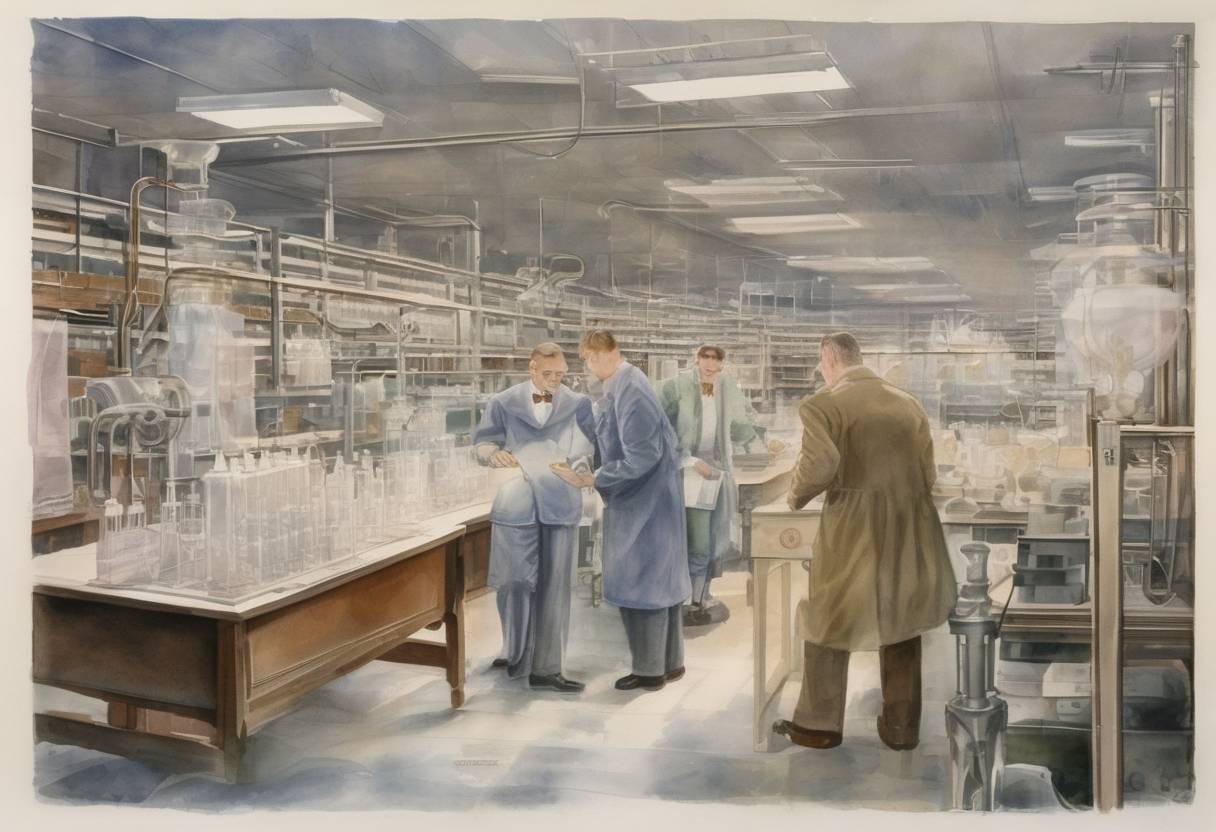
On February 28, 1935, Wallace Carothers, a chemist working for the DuPont Company, successfully synthesized nylon, marking a pivotal moment in the history of materials science and the textile industry. This invention would go on to revolutionize the production of fabrics and numerous other products.
Wallace Carothers was hired by DuPont in 1928 to lead a research team focused on polymer chemistry. At the time, the field of synthetic polymers was still in its infancy, with natural materials like silk and wool dominating the textile industry. DuPont aimed to develop new synthetic materials that could mimic or surpass the properties of these natural fibers.
Carothers and his team were tasked with exploring the potential of polyamides, a type of polymer. After years of research and experimentation, they succeeded in creating a synthetic fiber that was strong, elastic, and resistant to abrasion. This new material was named “nylon.”
The synthesis of nylon involved the polymerization of adipic acid and hexamethylenediamine, resulting in a long-chain polymer that could be drawn into fibers. The process was groundbreaking because it allowed for the production of a material that could be manufactured consistently and in large quantities.
Nylon’s introduction had a profound impact on various industries:
The invention of nylon marked the beginning of the synthetic fiber industry, leading to the development of other synthetic materials like polyester and spandex. It demonstrated the potential of polymer chemistry to create new materials with tailored properties, paving the way for innovations in various fields.
Wallace Carothers’ work laid the foundation for modern materials science, and his contributions continue to influence the development of new synthetic materials today. Despite his tragic death in 1937, Carothers’ legacy lives on through the widespread use and continued innovation of synthetic polymers.
Source: en.wikipedia.org