The First Successful Human Heart Transplant
1967 · Cape Town, South Africa
The first successful human heart transplant was performed by Dr. Christiaan Barnard in Cape Town.
December 23, 1954
The first successful kidney transplant was performed by Dr. Joseph Murray and his team at Peter Bent Brigham Hospital in Boston.
Boston, United States | Peter Bent Brigham Hospital
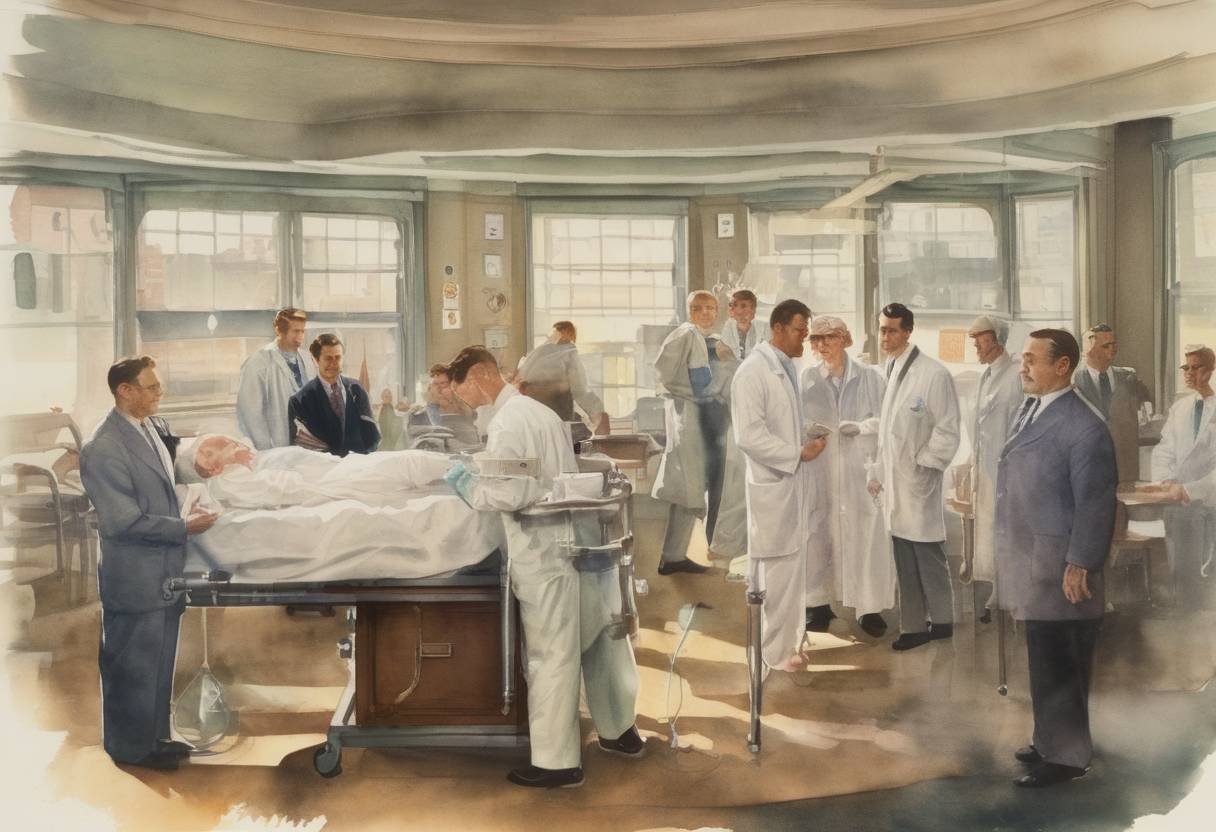
On December 23, 1954, a groundbreaking medical procedure took place at the Peter Bent Brigham Hospital in Boston, Massachusetts. Dr. Joseph Murray and his surgical team performed the first successful human kidney transplant, marking a significant milestone in the field of organ transplantation and medical history.
Before this landmark surgery, organ transplantation faced numerous challenges, primarily due to the body’s immune response, which often led to organ rejection. The concept of transplanting organs had been explored for decades, but success was limited due to the lack of understanding and technology to manage immune rejection.
The Patients: The transplant involved identical twin brothers, Ronald and Richard Herrick. Richard was suffering from chronic kidney failure, a condition that was life-threatening at the time due to the lack of effective treatments like dialysis.
The Decision: The use of identical twins was a strategic choice, as their genetic similarity minimized the risk of organ rejection, which was a major hurdle in transplantation procedures.
The Surgery: Dr. Joseph Murray, along with his team, performed the surgery by transplanting a healthy kidney from Ronald to Richard. The operation was meticulously planned and executed, taking into account the unique challenges of organ transplantation.
Medical Breakthrough: This successful transplant demonstrated that organ transplantation was a viable treatment option for patients with organ failure, paving the way for future advancements in the field.
Nobel Prize: Dr. Joseph Murray was awarded the Nobel Prize in Physiology or Medicine in 1990 for his pioneering work in organ and cell transplantation.
Advancements in Immunology: The success of this procedure spurred further research into immunosuppressive therapies, which eventually allowed for successful transplants between non-identical individuals.
The success of the 1954 kidney transplant marked the beginning of a new era in medicine. It laid the foundation for the development of more sophisticated immunosuppressive drugs, which have since made organ transplantation a routine procedure. This breakthrough has saved countless lives and continues to be a cornerstone of modern medical practice.
Dr. Joseph Murray’s work not only transformed the field of transplant surgery but also highlighted the importance of collaboration and innovation in overcoming complex medical challenges. The legacy of this first successful kidney transplant endures as a testament to the potential of medical science to improve and extend human life.
Source: www.nobelprize.org