February 21, 2014: Ukrainian Crisis Agreement
2014 · Kyiv, Ukraine
Ukrainian President Viktor Yanukovych and opposition leaders sign a deal to end the crisis in Ukraine, which includes a return to the 2004 constitution and early elections.
February 25, 2010
Viktor Yanukovych is inaugurated as President of Ukraine, marking a significant political shift in the country.
Kyiv, Ukraine | Ukrainian Government
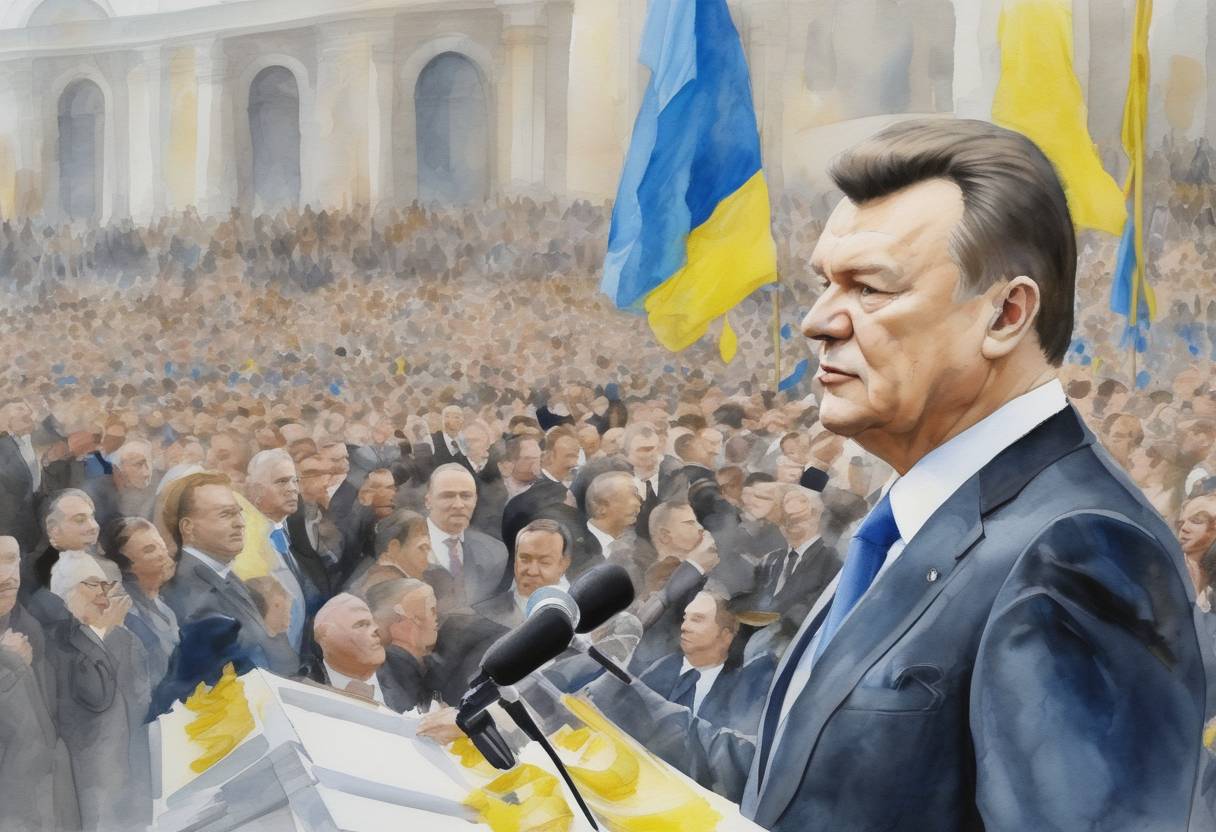
On February 25, 2010, Viktor Yanukovych was inaugurated as the President of Ukraine, marking a significant political shift in the country. This event was pivotal in Ukraine’s political landscape, reflecting a change in the nation’s direction both domestically and in its foreign policy orientation.
Viktor Yanukovych’s rise to the presidency came after a contentious election process. He was the leader of the Party of Regions, a political party that had strong support in the eastern and southern parts of Ukraine, areas with a significant Russian-speaking population. Yanukovych’s political career had been marked by controversy, including his previous defeat in the 2004 presidential election, which was marred by allegations of fraud and led to the Orange Revolution. This peaceful protest movement resulted in a re-run of the election, which Yanukovych lost to Viktor Yushchenko.
The 2010 presidential election was held in two rounds. In the first round, Yanukovych emerged as the front-runner but did not secure an outright majority, leading to a runoff against then-Prime Minister Yulia Tymoshenko. In the second round, held on February 7, 2010, Yanukovych won with approximately 48.95% of the vote compared to Tymoshenko’s 45.47%. The election was deemed free and fair by international observers, marking a departure from the controversies of 2004.
Yanukovych’s inauguration took place in the Verkhovna Rada, Ukraine’s parliament, in Kyiv. His presidency signaled a shift towards closer ties with Russia, contrasting with his predecessor Yushchenko’s pro-Western stance. Yanukovych’s administration focused on improving relations with Russia, which included negotiating the Kharkiv Pact in April 2010. This agreement extended Russia’s lease on the naval base in Sevastopol, Crimea, in exchange for discounted natural gas prices.
Yanukovych’s presidency was characterized by increasing centralization of power and allegations of corruption. His decision in late 2013 to suspend an association agreement with the European Union in favor of closer economic ties with Russia sparked widespread protests, known as the Euromaidan movement. These protests eventually led to Yanukovych’s ousting in February 2014 and his subsequent flight to Russia.
The political shift initiated by Yanukovych’s presidency had long-lasting effects on Ukraine’s domestic politics and its international relations. It set the stage for the ongoing conflict in Eastern Ukraine and the annexation of Crimea by Russia in 2014, events that have continued to shape the geopolitical landscape of the region.
Yanukovych’s inauguration as President of Ukraine on February 25, 2010, thus represents a critical juncture in the country’s history, with significant implications for its future trajectory.
Source: www.bbc.com