John Wesley Charters the First Methodist Church in the United States
1784 · Baltimore, United States
John Wesley charters the first Methodist Church in the United States, marking a key development in the spread of Methodism.
May 24, 1738
John Wesley experiences a spiritual rebirth at a Moravian meeting in Aldersgate Street, London, leading to the Methodist movement.
London, England | Methodist Church
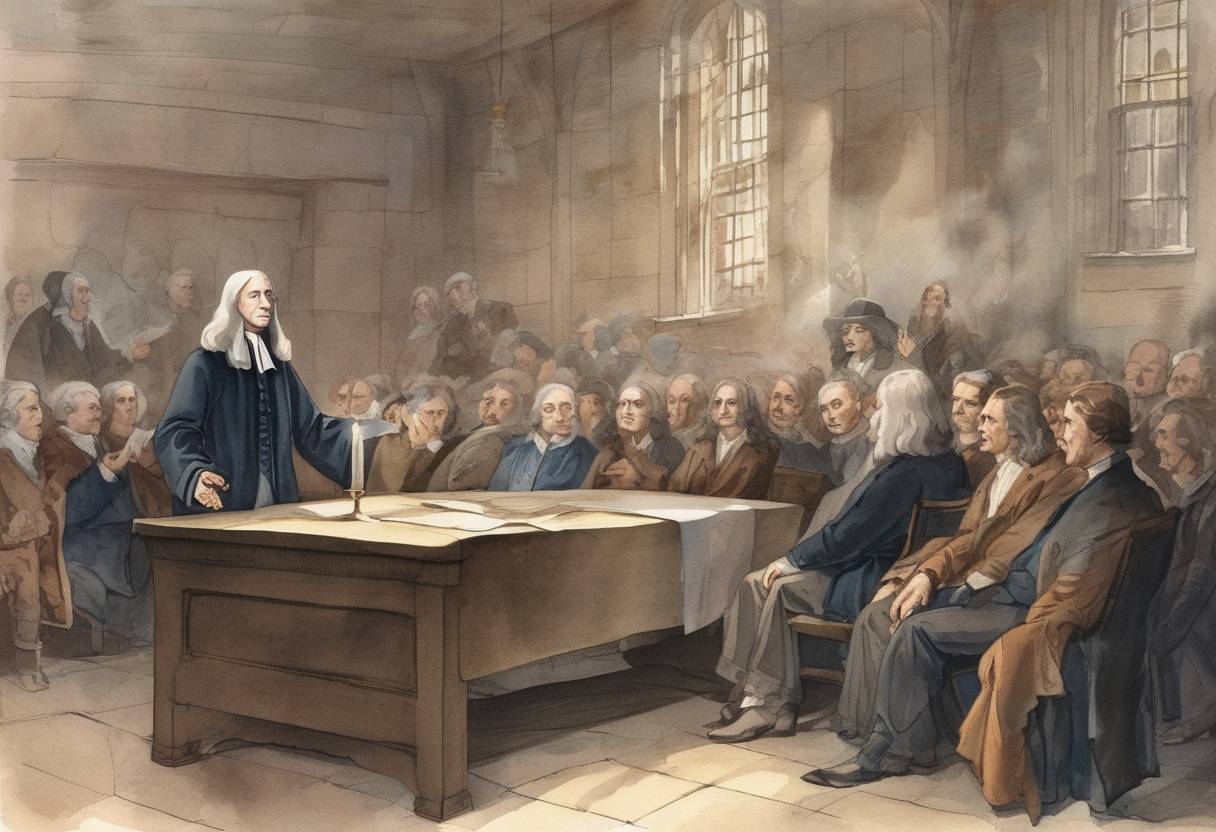
On May 24, 1738, a pivotal event occurred in the life of John Wesley, an Anglican cleric and theologian, which would eventually lead to the founding of the Methodist movement. This event, often referred to as Wesley’s “Aldersgate Experience,” took place during a meeting on Aldersgate Street in London.
John Wesley, born in 1703, was deeply influenced by his religious upbringing and education. He was ordained as a priest in the Church of England and, along with his brother Charles Wesley, founded the “Holy Club” at Oxford University, which emphasized piety and rigorous religious practice. Despite his devout lifestyle, Wesley struggled with a sense of spiritual dissatisfaction and doubt, particularly following a challenging mission to the American colony of Georgia.
On the evening of May 24, 1738, Wesley attended a Moravian meeting on Aldersgate Street. The Moravians, a Protestant group known for their emphasis on personal faith and piety, had a significant influence on Wesley. During the meeting, a passage from Martin Luther’s preface to the Epistle to the Romans was read aloud. Wesley later recounted the experience in his journal, noting that he felt his “heart strangely warmed.” He described this moment as a profound spiritual awakening, where he gained assurance of his salvation and a deep sense of peace.
Wesley’s Aldersgate Experience marked a turning point in his life and ministry. It provided him with the assurance and confidence to preach a message of personal salvation and faith in Christ. This experience laid the foundation for what would become the Methodist movement, characterized by its emphasis on personal holiness, social justice, and evangelical outreach.
Following this event, Wesley began to preach more widely, often outdoors, reaching people who were not attending church. His dynamic preaching and organizational skills helped spread Methodism throughout Britain and eventually to America. The movement emphasized small group meetings, known as “class meetings,” which fostered community and accountability among believers.
The Methodist movement had a significant impact on 18th-century British society and beyond. It contributed to religious revival and reform, influencing social issues such as abolitionism and education. Wesley’s emphasis on personal faith and social action resonated with many, leading to the establishment of Methodist churches worldwide.
In summary, John Wesley’s spiritual rebirth at Aldersgate was a transformative moment that not only changed his life but also sparked a religious movement that continues to influence Christianity today.
Source: en.wikipedia.org