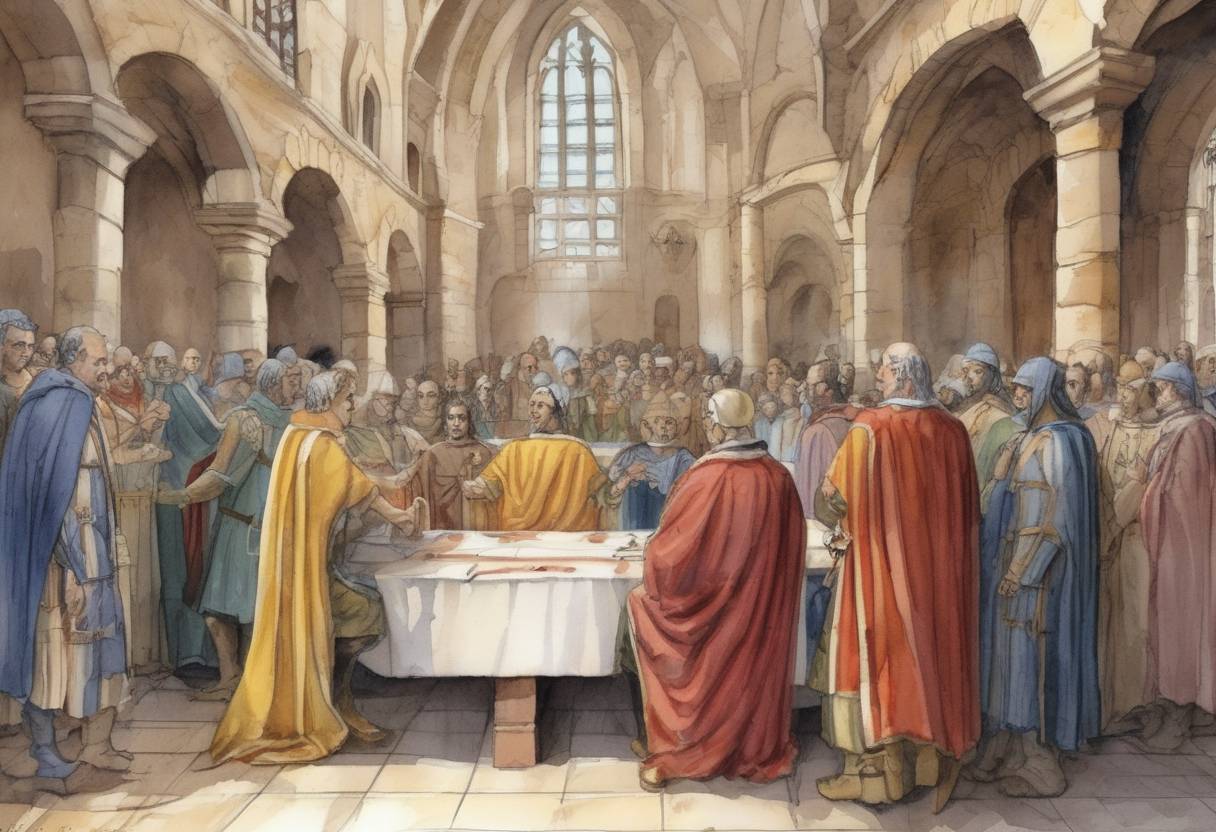
The Council of Agde (506)
The Council of Agde was a significant church synod convened on September 10, 506, in the city of Agde, located in what is now modern-day France. This council was organized under the leadership of Caesarius of Arles, a prominent bishop known for his influence in the early Christian church and his efforts to reform ecclesiastical practices.
Historical Context
The early 6th century was a period of considerable transformation and consolidation for the Christian church in the Western Roman Empire, which had recently fallen. The church was navigating its role in a landscape dominated by various Germanic kingdoms, including the Visigoths, who controlled much of Gaul at the time. The Council of Agde was part of a broader movement to establish uniformity and discipline within the church, addressing issues that had arisen due to the changing political and social environment.
Key Issues Addressed
The Council of Agde focused on several critical ecclesiastical issues, including:
Church Discipline: The council sought to enforce stricter discipline among the clergy and laity. It addressed issues such as the conduct of bishops, priests, and deacons, emphasizing the need for moral integrity and adherence to church teachings.
Clerical Conduct: Specific canons were established to regulate the behavior of clergy members. These included rules against clerical marriage, guidelines for the ordination of priests, and the prohibition of certain secular activities deemed inappropriate for church leaders.
Liturgical Practices: The council aimed to standardize liturgical practices across different regions, ensuring that worship and sacraments were conducted uniformly and reverently.
Church Property and Administration: The council addressed the management of church property and resources, emphasizing the need for transparency and accountability in financial matters.
Outcomes and Significance
The Council of Agde resulted in the formulation of 47 canons, which were intended to guide the conduct of the church and its members. These canons were influential in shaping the development of church law and governance in the subsequent centuries. The council’s decisions reflected the growing authority of the church in secular matters and its role in maintaining social order.
The synod also highlighted the leadership of Caesarius of Arles, who played a crucial role in the early medieval church’s efforts to adapt to the new political realities of post-Roman Europe. His influence extended beyond Agde, as he continued to be a key figure in subsequent councils and ecclesiastical reforms.
Broader Historical Impact
The Council of Agde is an example of how the early medieval church sought to assert its authority and maintain cohesion in a fragmented political landscape. The decisions made at the council had lasting implications for the governance of the church and its relationship with secular rulers. It also set a precedent for future synods and councils that would continue to shape the trajectory of Western Christianity.
In summary, the Council of Agde was a pivotal moment in the history of the Christian church, reflecting its efforts to establish order and discipline during a time of significant change and challenge.