Space Shuttle Columbia's Final Mission: STS-107
2003 · Cape Canaveral, United States
The Space Shuttle Columbia launched on its final mission, STS-107, which tragically ended in disaster upon re-entry on February 1, 2003.
August 25, 2003
The Spitzer Space Telescope, a space-borne observatory, was launched by NASA to study the universe in infrared light.
Cape Canaveral, United States | NASA
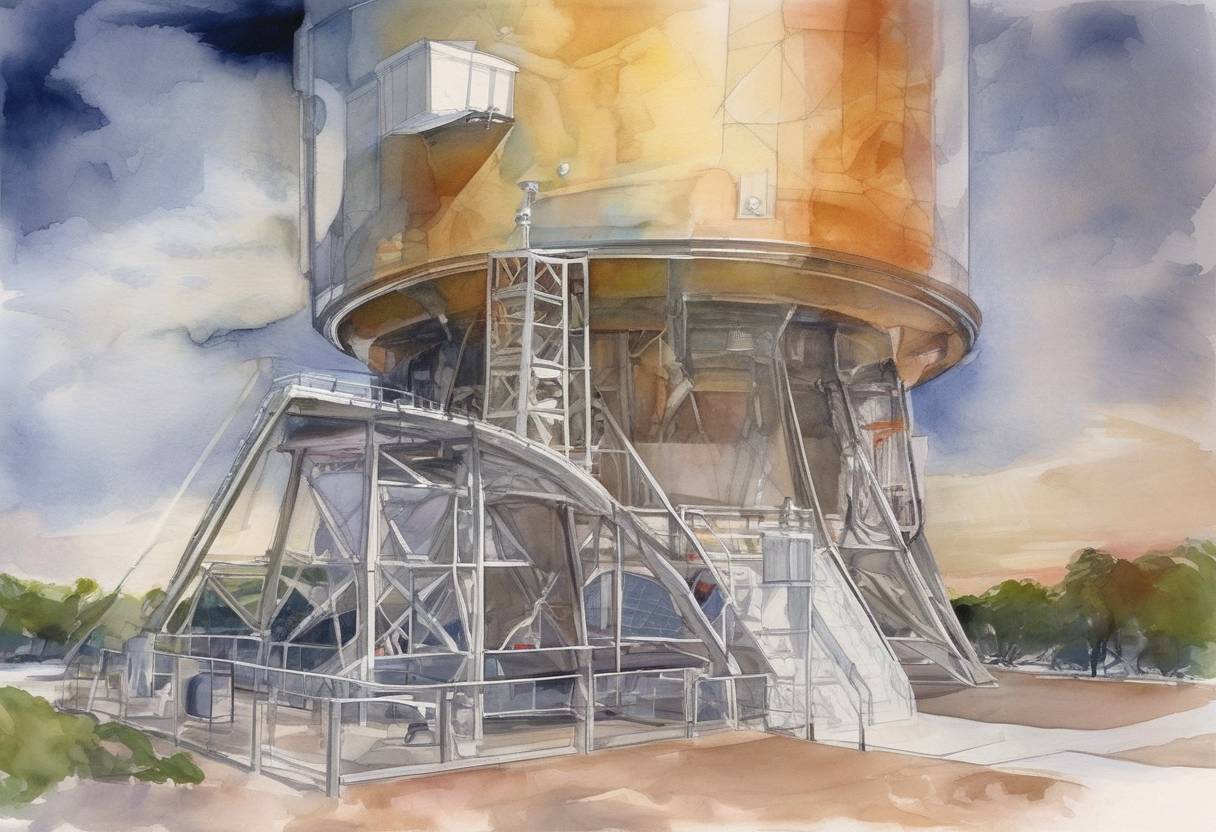
On August 25, 2003, NASA launched the Spitzer Space Telescope, a groundbreaking space-borne observatory designed to study the universe in infrared light. This launch marked a significant advancement in astronomical observation, allowing scientists to peer into regions of space that were previously obscured by dust and gas.
The Spitzer Space Telescope was the final mission of NASA’s Great Observatories program, which also included the Hubble Space Telescope, the Compton Gamma Ray Observatory, and the Chandra X-ray Observatory. Originally known as the Space Infrared Telescope Facility (SIRTF), it was renamed in honor of Lyman Spitzer, an astrophysicist who was a pioneer in the concept of space telescopes.
Development of the telescope began in the 1980s, with the goal of creating an observatory capable of observing the universe in the infrared spectrum. This capability was crucial for studying phenomena such as star formation, the centers of galaxies, and the composition of interstellar dust.
The Spitzer Space Telescope was launched aboard a Delta II rocket from Cape Canaveral Air Force Station in Florida. Its primary mission objectives included:
During its mission, the Spitzer Space Telescope made numerous significant discoveries:
The Spitzer Space Telescope operated for over 16 years, far exceeding its expected mission duration. It was officially retired on January 30, 2020, after its onboard supply of liquid helium, which was used to cool its instruments, was depleted.
Spitzer’s legacy continues to influence the field of astronomy, as its data remains a valuable resource for researchers. The telescope’s contributions have paved the way for future infrared observatories, such as the James Webb Space Telescope, which aims to build upon Spitzer’s achievements and further our understanding of the universe.
Source: www.jpl.nasa.gov