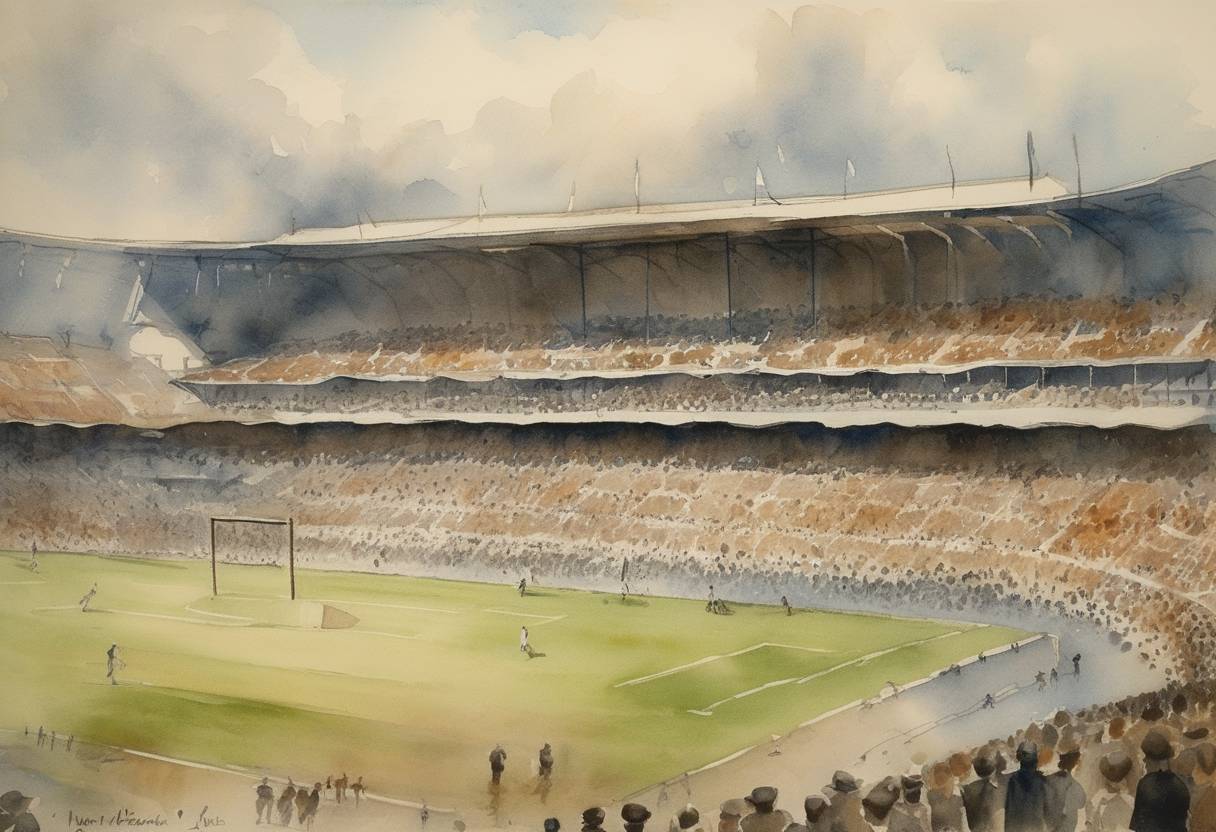
The Inaugural FIFA World Cup Begins - July 13, 1930
On July 13, 1930, the first-ever FIFA World Cup commenced in Montevideo, Uruguay, marking a significant milestone in the history of international football. This groundbreaking tournament, organized by the Fédération Internationale de Football Association (FIFA), laid the foundation for what would become the world’s most popular sporting event.
Background
- FIFA Formation and World Cup Concept: Founded in 1904, FIFA aimed to create a global football competition. After the Olympic football tournaments during the 1920s proved successful, the idea of an international championship was solidified, leading to the establishment of the World Cup.
- Host Selection: Uruguay was chosen as the host nation due to its strong footballing tradition and the celebration of the country’s centenary of independence. Additionally, Uruguay’s success in the 1924 and 1928 Olympics bolstered its candidacy.
The Tournament Structure
- Participants: Thirteen teams participated, including seven from South America, four from Europe, and two from North America. The European teams faced significant travel challenges, which included a long sea voyage, as air travel was not yet a feasible option for such distances.
- Venues: All matches were played in Montevideo’s three stadiums, with the majority held at the newly constructed Estadio Centenario, designed to accommodate the influx of spectators and completed just in time for the tournament.
Opening Day: July 13, 1930
- Matches Played: On this inaugural day, two matches were held. France defeated Mexico 4-1, while the United States secured a 3-0 victory over Belgium. These matches set the stage for a series of competitive and historic encounters among the participating nations.
Impact and Legacy
- Uruguay’s Victory: Uruguay emerged as the tournament winner after defeating Argentina 4-2 in the final on July 30, 1930, becoming the first nation to lift the World Cup trophy.
- Global Influence: The tournament not only showcased the rising popularity of football but also fostered international camaraderie. It highlighted the sport’s potential to unite diverse cultures and nations under a common passion.
- Recurring Event: Due to its success, the World Cup became a quadrennial event, offering a stage for showcasing extraordinary talent and fostering national pride.
The conclusion of the 1930 FIFA World Cup demonstrated the tournament’s potential as a major sporting event, significantly impacting both the cultural and social aspects of football worldwide.