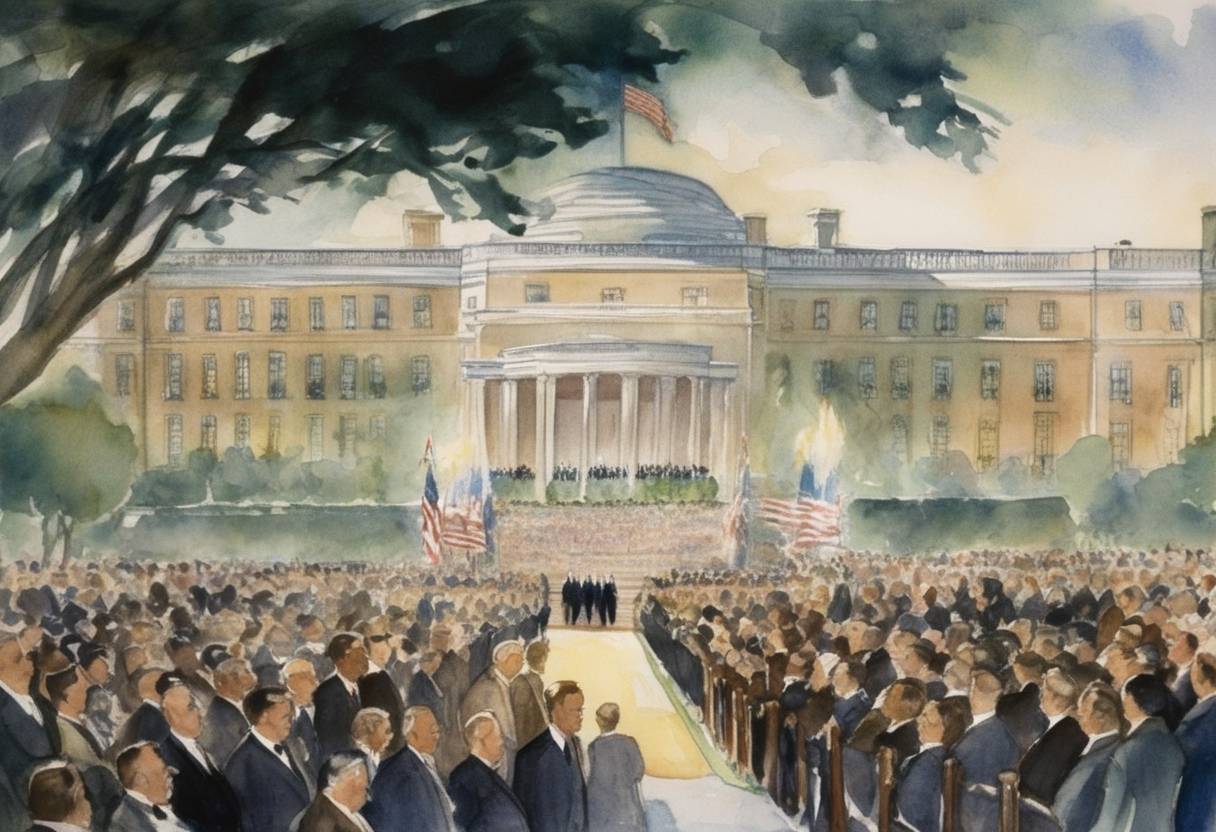
Herbert Hoover’s Inauguration as the 31st President of the United States
On March 4, 1929, Herbert Hoover was inaugurated as the 31st President of the United States, taking the oath of office at the East Portico of the United States Capitol in Washington, D.C. Hoover’s presidency began at the tail end of the prosperous era known as the “Roaring Twenties,” a time marked by significant economic growth and cultural change. Enthusiastic optimism surrounded his inauguration, as Hoover was seen as a capable and skilled administrator with a promise of continued prosperity.
Background
Herbert Hoover, a Republican, had built a reputation as an effective leader and humanitarian. He had previously served as the Secretary of Commerce under Presidents Warren G. Harding and Calvin Coolidge. His efforts in managing relief efforts in Europe after World War I and his tenure in the Commerce Department marked him as a progressive Republican, someone who believed in using efficiency and scientific approaches to tackle economic issues.
Inauguration Highlights
Address: In his inaugural address, Hoover highlighted themes of national unity, individualism, and the need for public service as a foundation for continued prosperity. He expressed his belief in limited government intervention, emphasizing the spirit of self-governance and the capability of the American people to solve their problems through voluntary cooperation.
Themes: His speech reflected optimism, with a focus on maintaining the economic dynamism of the era while addressing contemporary challenges such as government corruption and ensuring lasting peace.
The Onset of the Great Depression
Despite the initial optimism of Hoover’s presidency, the stock market crash in October 1929, just seven months into his term, marked the beginning of the Great Depression. This financial collapse drastically changed the economic landscape of the country and the world.
Hoover’s efforts to combat the economic downturn included public works projects and attempts to stabilize the banking system, yet his policies largely adhered to his belief in minimal government intervention and were deemed insufficient as the Depression worsened.
Historical Significance
Hoover’s presidency is often studied for its role in the early years of the Great Depression. His administration’s response, or perceived lack thereof, rendered significant political consequences, leading to a loss of faith among the American public and paving the way for Franklin D. Roosevelt’s election in 1932. Hoover’s term highlights the challenges of governmental response to economic crises and the shifts in public expectations during times of national hardship.