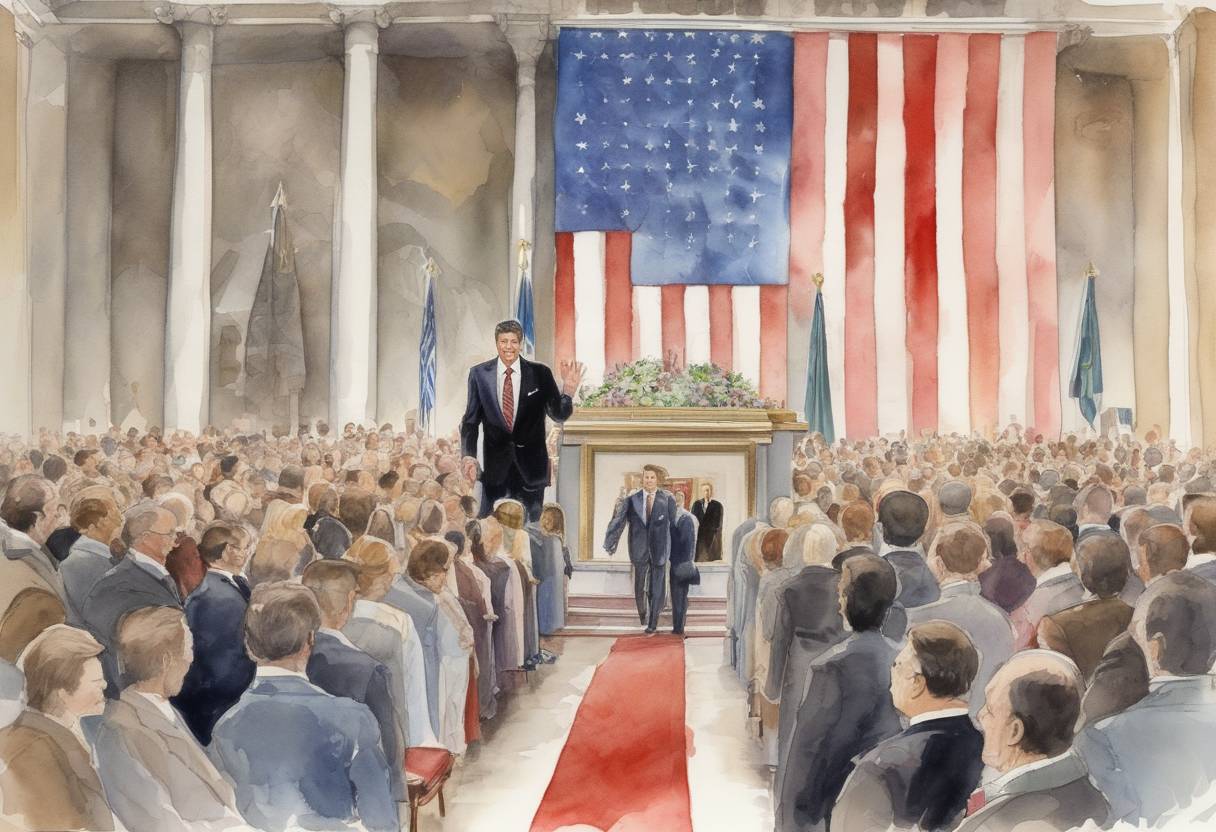
Ronald Reagan’s Inauguration
On January 20, 1981, Ronald Reagan was inaugurated as the 40th President of the United States. This event marked a significant political shift in the country, as Reagan, a Republican and former Governor of California, succeeded Democrat Jimmy Carter. Reagan’s presidency was characterized by a conservative agenda, focusing on reducing the size of the federal government, cutting taxes, and increasing defense spending.
Key Context and Events Leading Up to the Inauguration
- Economic Challenges: The United States was facing economic difficulties, including high inflation and unemployment, which contributed to Carter’s unpopularity and Reagan’s electoral victory.
- Political Climate: Reagan’s campaign capitalized on a message of optimism and a strong stance against the Soviet Union, appealing to voters seeking change after a tumultuous decade.
Inauguration Highlights
- Inaugural Address: Reagan’s speech emphasized themes of national renewal and strength, famously stating, “Government is not the solution to our problem; government is the problem.”
- Historical Significance: Reagan’s inauguration was the first to be held on the west front of the U.S. Capitol, a tradition that continues today.
Release of American Hostages from Iran
On the same day as Reagan’s inauguration, 52 American hostages were released from Iran, ending a 444-day ordeal that had begun on November 4, 1979, when Iranian militants seized the U.S. Embassy in Tehran.
Background and Key Events
- Iranian Revolution: The hostage crisis was rooted in the Iranian Revolution of 1979, which saw the overthrow of the Shah, a U.S. ally, and the rise of Ayatollah Khomeini.
- Diplomatic Efforts: The Carter administration engaged in prolonged and complex negotiations to secure the hostages’ release, which were ultimately finalized just as Reagan took office.
Release and Aftermath
- Timing: The hostages were freed minutes after Reagan was sworn in, a timing that underscored the end of Carter’s presidency and the beginning of Reagan’s.
- Impact on U.S.-Iran Relations: The crisis severely damaged U.S.-Iran relations, leading to decades of tension and mistrust that persist to this day.
Broader Historical Significance
The events of January 20, 1981, symbolized a pivotal moment in U.S. history, marking both a political transition and the resolution of a major international crisis. Reagan’s presidency would go on to shape the political landscape of the 1980s, while the hostage crisis left a lasting impact on American foreign policy and public perception of the Middle East.