Queen Elizabeth I Signs the Death Warrant for Mary, Queen of Scots
1587 · London, England
Queen Elizabeth I of England signs the death warrant for Mary, Queen of Scots.
January 13, 1559
Elizabeth I was crowned Queen of England in Westminster Abbey after the death of her half-sister, Queen Mary I. The coronation marked the beginning of her long and significant reign, known for the Elizabethan era, which saw flourishing English drama led by playwrights such as William Shakespeare and the seafaring exploits of figures such as Sir Francis Drake.
London, England | The Church of England
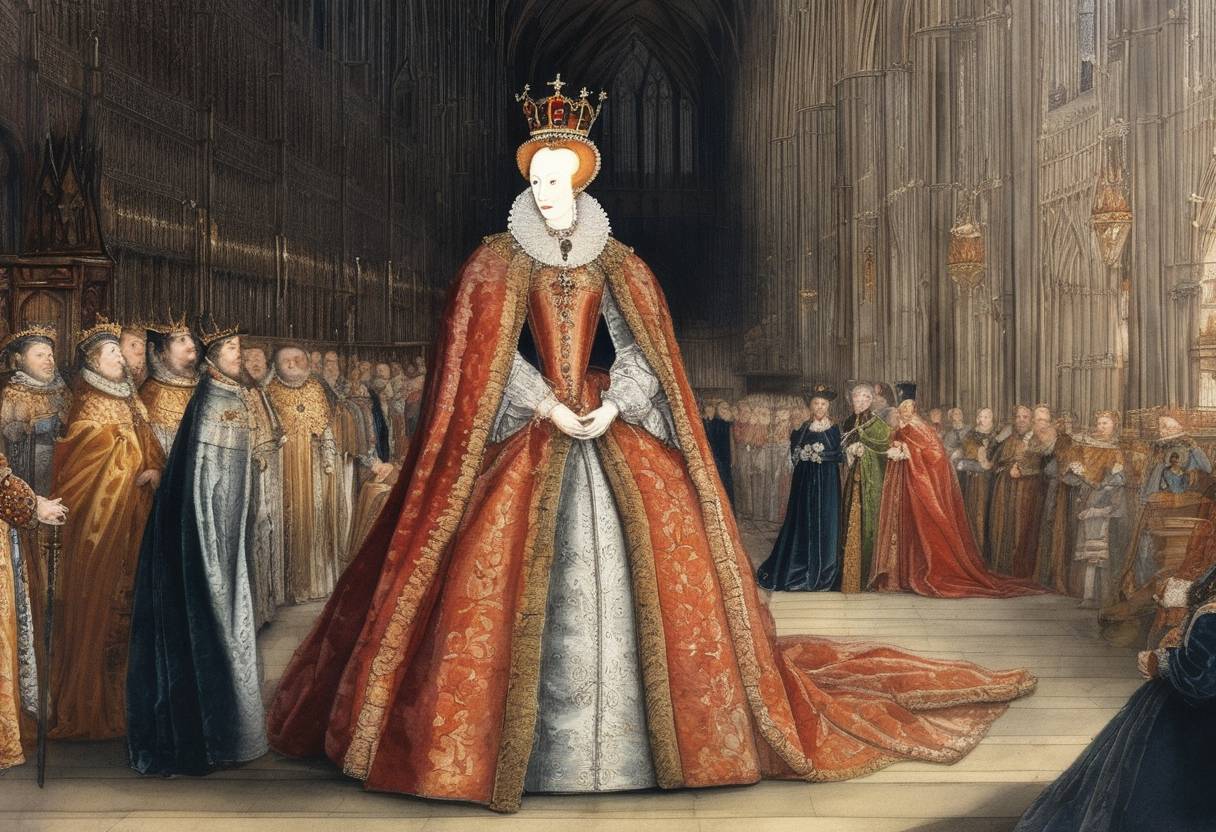
On January 15, 1559, Elizabeth I was crowned Queen of England in a grand ceremony at Westminster Abbey. This event marked the official beginning of her reign, which would become one of the most influential and celebrated in English history, signaling the start of what would be known as the Elizabethan Era.
Elizabeth’s ascension to the throne came after the death of her half-sister, Mary I, on November 17, 1558. Mary’s reign had been marked by efforts to restore Catholicism in England, including the persecution of Protestant reformers. Elizabeth, the daughter of Henry VIII and Anne Boleyn, inherited a kingdom rife with religious tension, but her ascendancy was welcomed by many who saw her as a Protestant figurehead.
The coronation took place at Westminster Abbey, a traditional location for the crowning of English monarchs. The ceremony was steeped in both the pageantry of royal tradition and the Protestant symbolism that would define Elizabeth’s policies. It also involved the participation of the nobility and clergy, and was attended by foreign dignitaries, emphasizing the legitimacy and international significance of Elizabeth’s rule.
Elizabeth I’s reign is distinguished by the flourishing of English culture, notably the works of playwrights such as William Shakespeare and Christopher Marlowe. Her era is marked by its military successes, including the defeat of the Spanish Armada in 1588, and significant expansion of English influence through exploration and trade, driven by figures like Sir Francis Drake and Sir Walter Raleigh.
The Elizabethan Age is often characterized by its contributions to the arts, exploration, and the strengthening of the Protestant Church of England. Elizabeth’s diplomatic acumen and political strategies helped stabilize and enrich the nation, earning her monikers such as “The Virgin Queen” and “Gloriana.” Her reign, lasting until 1603, left a profound legacy that shaped the subsequent centuries of English history.
Source: www.britannica.com