Coronation of Henry VII: The Dawn of the Tudor Dynasty
1485 · London, England
Henry VII of England was crowned at Westminster Abbey, marking the beginning of the Tudor dynasty.
August 17, 1399
King Richard II of England surrendered to his cousin, the future Henry IV, marking a significant event in the lead-up to the Lancaster takeover of the English throne.
Conway, United Kingdom | The English Monarchy
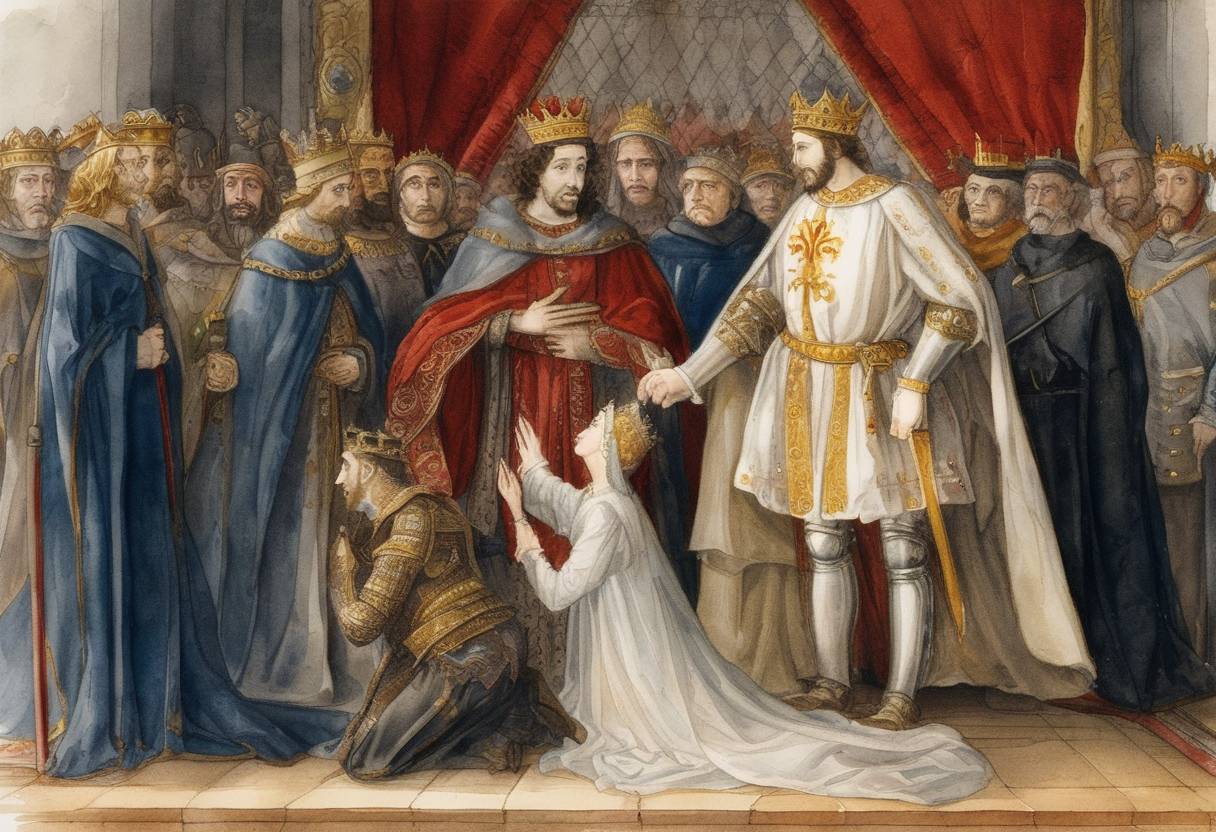
On August 17, 1399, a crucial event unfolded in the political landscape of England that significantly altered its monarchical lineage. King Richard II, then ruling England, surrendered to his cousin, Henry Bolingbroke, the future Henry IV. This moment was a pivotal step toward the usurpation of the English throne by the House of Lancaster.
Richard II’s reign, which began in the late 14th century, was characterized by political instability and growing discontent among the noble classes. After his successful suppression of the Peasants’ Revolt in 1381, Richard faced ongoing challenges, including disputes with powerful nobles and financial strains due to military campaigns and failed political strategies.
Tensions rose significantly in the late 1390s, particularly following Richard’s exile of Henry Bolingbroke, the Duke of Hereford, in 1398. Bolingbroke was initially forced into exile after a conflict with Thomas Mowbray, Duke of Norfolk. When John of Gaunt, Henry’s father, died in 1399, Richard seized Bolingbroke’s Lancaster estates, fueling further antagonism.
In June 1399, Henry Bolingbroke returned to England while Richard was campaigning in Ireland. Bolingbroke’s return initially claimed the purpose of regaining his rightful Lancastrian inheritance. However, with growing support from disaffected barons and the politically sidelined populace, Bolingbroke gathered substantial military momentum.
By August, Bolingbroke’s forces had effectively taken control, and Richard returned to an England significantly hostile to his rule. With his support crumbling, Richard was compelled to capitulate on August 17, 1399.
Following his surrender, Richard II was deposed in September 1399, marking the end of the Plantagenet line from which he hailed. Henry Bolingbroke ascended the throne as King Henry IV, initiating the Lancastrian era and altering the trajectory of English monarchy. Richard was imprisoned and eventually died under mysterious circumstances in 1400.
The events of August 17, 1399, not only symbolize the fall of Richard II but also underscore the volatile factionalism of late medieval England and the enduring struggle for power among its nobility. The transition also set historical precedents for how legitimacy and lineage could be challenged through political and military means.
Source: en.wikipedia.org