Death of Pope Innocent VI - January 5, 1362
1362 · Avignon, France
Pope Innocent VI passed away in Avignon, France. His papacy, which began in 1352, was marked by efforts to reform the clergy and administration of the papal court.
January 10, 1376
Pope Gregory XI issued a papal bull condemning the teachings of John Wycliffe, an English theologian who had challenged the authority of the Catholic Church, laying groundwork for later church reforms.
Avignon, France | Catholic Church
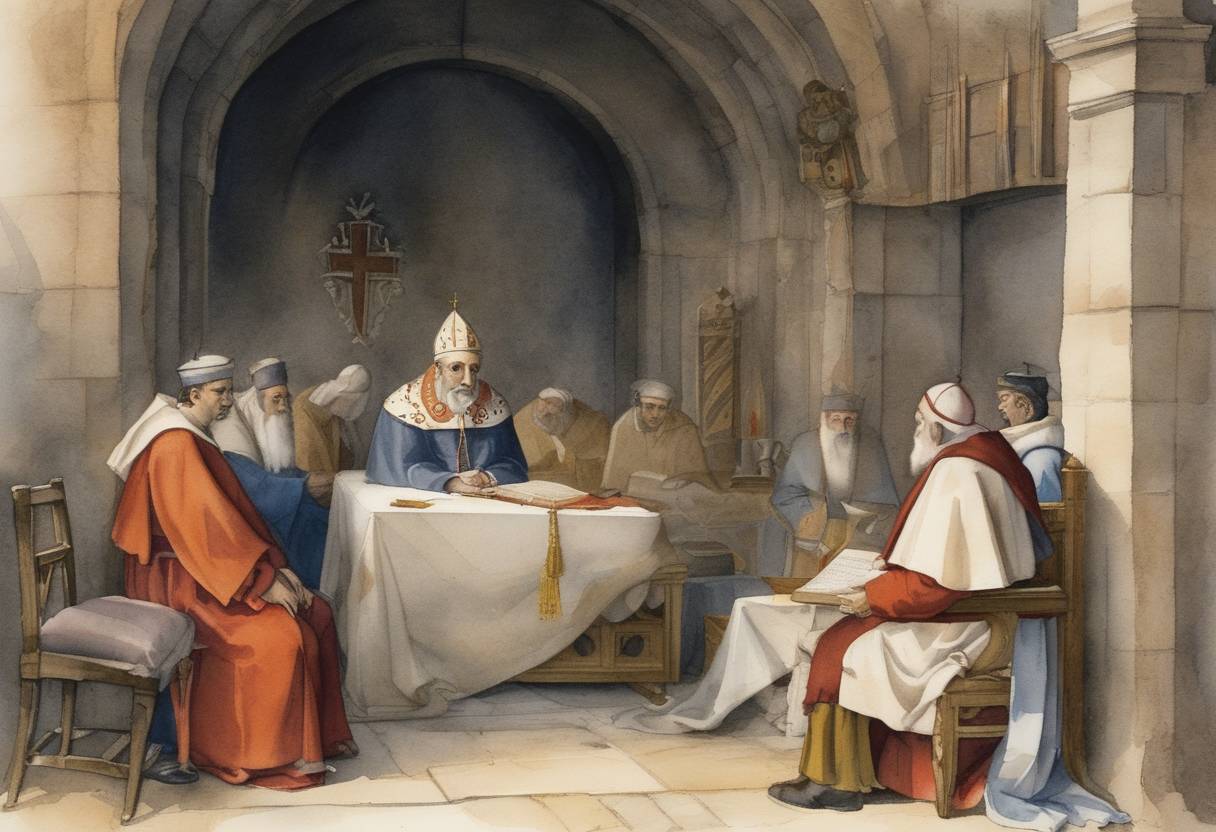
On January 10, 1377, Pope Gregory XI issued five papal bulls condemning the teachings of John Wycliffe, an English theologian and reformer whose ideas challenged the established doctrines of the Catholic Church. This event marked a significant moment in the Church’s struggle to maintain its religious authority and laid important groundwork for future reform movements.
John Wycliffe was an Oxford scholar known for his critical views on the wealth and power of the Catholic Church. He argued for the primacy of Scripture over the teachings of the Church and questioned the legitimacy of the papal authority. His views on ecclesiastical reform gained traction amidst the political turmoil of 14th-century Europe, particularly during the period of the Avignon Papacy that was marked by perceived moral and administrative corruption within the Church.
The issuing of these papal bulls by Gregory XI was a direct response to Wycliffe’s increasing influence and a formal attempt to curtail the spread of his ideas. By condemning Wycliffe’s teachings, the Pope sought to reinforce the authority of the Church and suppress the emerging dissent that threatened its established institutional structure.
The papal bulls explicitly criticized Wycliffe’s views on several doctrinal points, including his rejection of the divine right of the clergy and his beliefs regarding the nature of the Eucharist. The Church perceived Wycliffe’s arguments as heretical, and the bulls demanded that Wycliffe appear before ecclesiastical councils to defend his teachings.
While Wycliffe faced censure and his works were condemned, his ideas continued to resonate and inspired later reformers, most notably Jan Hus in Bohemia and Martin Luther during the Protestant Reformation in the 16th century. Wycliffe’s emphasis on Scripture’s accessibility influenced the movement towards Bible translations in vernacular languages, contributing to the broader demand for ecclesiastical reform.
Pope Gregory XI’s condemnation of Wycliffe thus represents a crucial episode in the historical tensions between emerging reformist ideas and the medieval Church’s efforts to maintain doctrinal control, setting the stage for the widespread religious transformations of the following centuries.