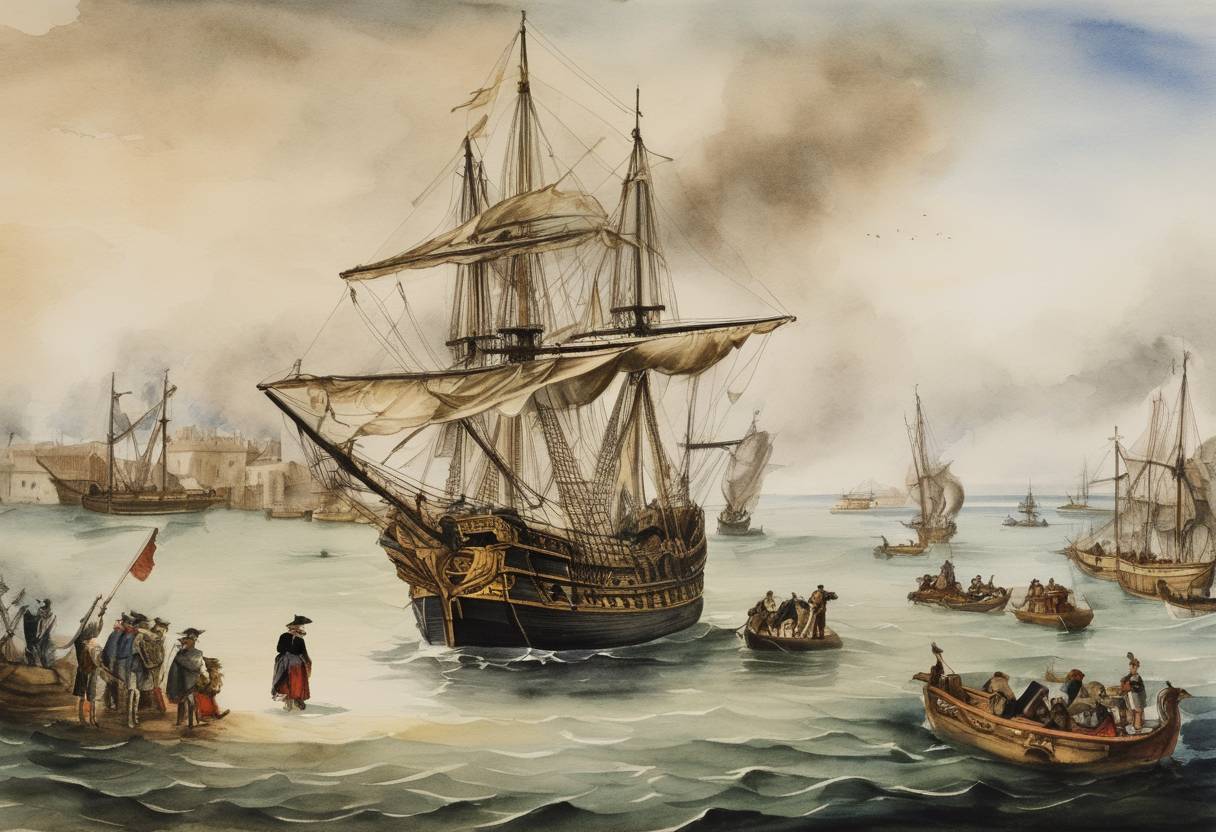
Francis Drake’s Expedition in St. Augustine - June 6, 1586
On June 6, 1586, English privateer Sir Francis Drake, under the banner of Queen Elizabeth I, landed at St. Augustine in what is now Florida. This marked a significant event in the struggle between Spain and England for influence in the New World. Drake, revered for his naval prowess, had embarked on a campaign to disrupt Spanish interests in the Americas, a plan spurred by tensions between the two maritime nations.
Context and Objectives
The late 16th century was marked by intense colonial rivalry. Spain, motivated by previous successes in the Western Hemisphere, held a dominant position with its vast territories and treasure fleets. England, less established in the Americas, sought to challenge Spanish supremacy through a combination of privateering and exploration.
Drake’s 1586 expedition was part of this broader conflict, an extension of Elizabethan policy that leveraged private sailors to weaken Spanish resources. This campaign aimed to plunder Spanish holdings and damage their morale by attacking key settlements and ports in the Caribbean and the Gulf of Mexico.
The Landing at St. Augustine
Drake’s fleet, after a series of raids in the Caribbean, sailed north and arrived at St. Augustine. At the time, St. Augustine was a fortified settlement under Spanish control, having been established in 1565. Recognized as the oldest continuously occupied European settlement in the continental United States, it held strategic importance as part of Spain’s defensive network protecting its colonies from foreign incursions.
Upon arrival, Drake and his forces launched an assault on the settlement. The Spanish, taken by surprise and potentially undermanned, eventually abandoned St. Augustine, allowing the English to capture and plunder the town. Given the settlement’s fledgling status and the expeditions’ primary intent of disruption rather than colonization, Drake did not strive for occupation. Instead, he burned the fort and several structures, effectively leaving a clear mark of English aggression before continuing his privateering activities.
Aftermath and Historical Significance
While Drake’s claim did not result in a long-term English presence in St. Augustine, the incursion was significant. It showcased English resolve to challenge Spanish hegemony and highlighted the vulnerability of Spanish territories in the Americas. Furthermore, it foreshadowed future conflicts that would eventually reshape colonial boundaries.
Drake’s raid on St. Augustine exemplifies the strategic raids that characterized the Elizabethan “sea dog” era and contributed to the broader narrative of European colonial rivalry, advancing the geopolitical dialogue that would continue in the succeeding centuries.