Henry Ford Patents a Plastic Automobile - January 13, 1942
1942 · Dearborn, United States
Henry Ford patents a plastic automobile, which is 30% lighter than a regular car.
May 26, 1927
The Ford Motor Company ceases its production of the Model T, marking the end of the first mass-production automobile era.
Dearborn, United States | Ford Motor Company
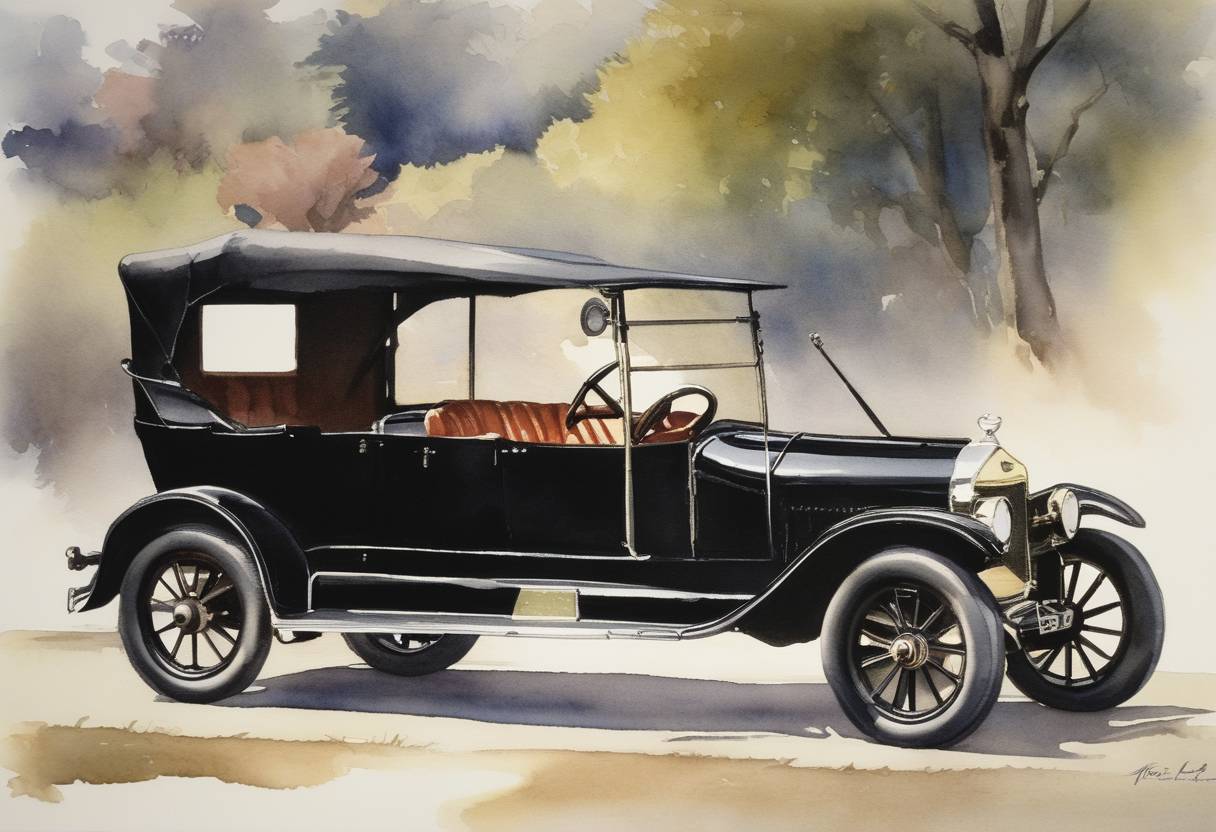
On May 26, 1927, the Ford Motor Company ceased production of the Model T, an automobile that had revolutionized the auto industry and the way people lived and worked. This decision marked the end of an era defined by the first true mass-production automobile, which had an immense impact on American society and the global automotive landscape.
The Model T, introduced by Henry Ford in October 1908, was a breakthrough in automobile manufacturing. Utilizing assembly line production techniques, Ford drastically reduced manufacturing times and costs, making the car affordable for many Americans. This model was designed with simplicity and durability in mind, with a versatile engine powering a lightweight, yet sturdy vehicle capable of traversing the rough roads of the early 20th century.
The affordability and reliability of the Model T democratized car ownership and was pivotal in promoting the growth of a car culture in America. It facilitated increased mobility, enabling people to live farther from their workplaces and contributing to urban sprawl and the development of suburbs. The Model T also influenced numerous industries, as the demand for fuel, roads, and related services surged.
By the 1920s, the automotive market had evolved, with competitors offering more features, style, and comfort than the by-then archaic Model T. To remain competitive, Henry Ford finally decided to halt its production on May 26, 1927. That day, the 15 millionth Model T rolled off the assembly line at the Highland Park Ford Plant—a demonstration of the model’s monumental production achievement.
Following the end of the Model T production, Ford briefly closed its plants, retooling them to manufacture its successor, the Ford Model A, which debuted later in 1927. The transition highlighted the necessity for innovation and adaptation in a rapidly changing market.
The Model T’s impact endured well beyond its production run. It symbolized the dawn of modern consumer culture and facilitated economic transformations. The production techniques refined during its production paved the way for future manufacturing processes, influencing various sectors globally. The Model T remains a profound testament to innovation and its capacity to reshape society.
Source: www.history.com