The Siege of Puebla: November 21, 1847
1847 · Puebla, Mexico
The Siege of Puebla during the Mexican-American War begins.
September 13, 1847
The American victory at the Battle of Chapultepec during the Mexican-American War facilitated the U.S. capture of Mexico City.
Mexico City, Mexico | United States Army and Mexican Army
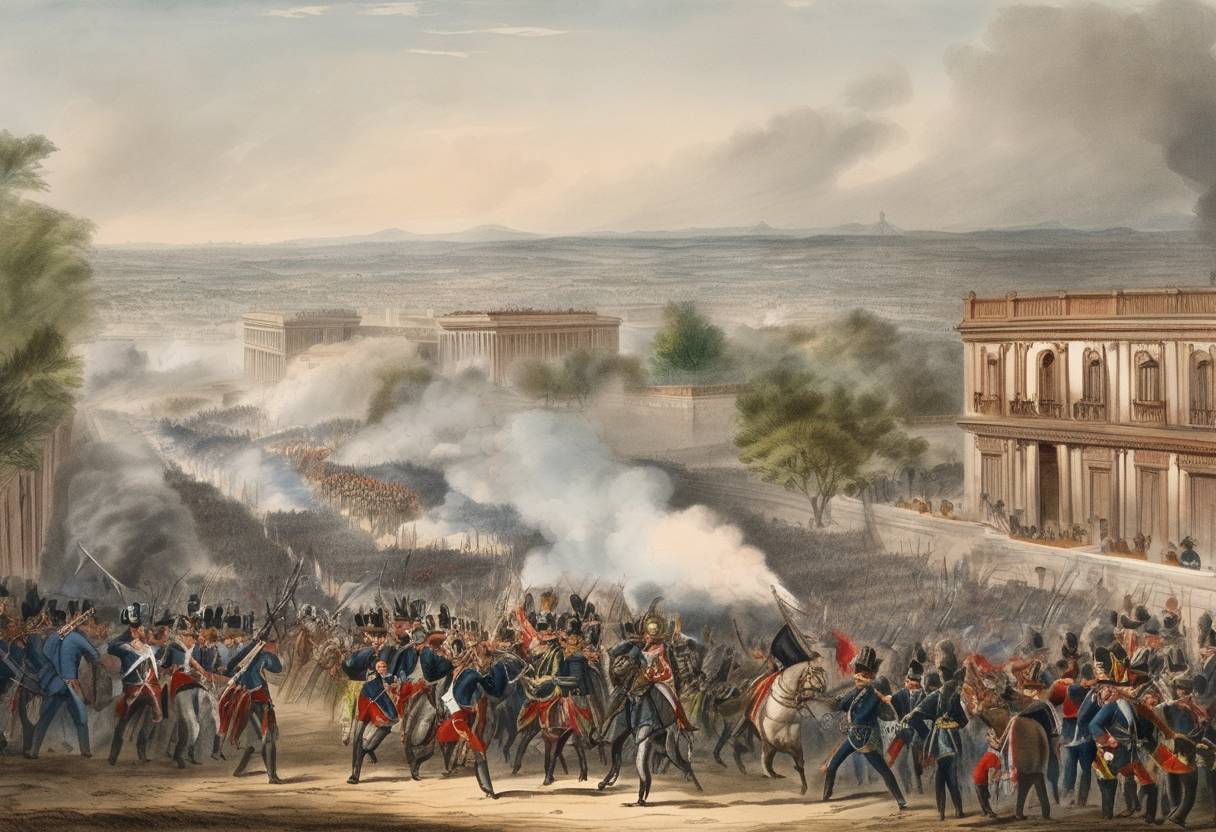
The Battle of Chapultepec, fought on September 13, 1847, was a pivotal engagement during the Mexican-American War, facilitating the U.S. capture of Mexico City. This battle was crucial in the American military campaign against Mexico, as it cleared the path to the Mexican capital.
The Mexican-American War (1846–1848) was primarily driven by the United States’ territorial expansion desires, particularly regarding Texas and parts of Mexico. By mid-1847, U.S. forces had made significant advances in Mexican territory. The capture of Mexico City was seen as a critical objective to compel Mexican authorities to negotiate peace on terms favorable to the United States.
Chapultepec Castle, located on a hill in Mexico City, was a strategic fortress overlooking key routes into the city. It served as the Mexican military academy and was defended by Mexican General Nicolás Bravo along with a small garrison that included military cadets, known as the “Niños Héroes,” and several hundred troops.
U.S. forces were led by General Winfield Scott, a seasoned commander who orchestrated a coordinated assault on Chapultepec. On the morning of September 13, after intense artillery bombardment, American troops launched their infantry attack. Notable American units included the Fourth U.S. Infantry, led by Captain James Magruder, and the Marine Corps under Major Levi Twiggs.
Despite their valiant resistance, the Mexican defenders, significantly outnumbered, couldn’t hold their position. Accounts highlight the bravery of the young cadets, particularly the “Niños Héroes,” six of whom became legendary for their sacrifice during the defense, with one, Juan Escutia, reputedly wrapping himself in the Mexican flag before leaping from the ramparts to prevent its capture.
The fall of Chapultepec effectively demoralized the Mexican defense and paved the way for U.S. forces to enter Mexico City, which was occupied on September 14, 1847. The capture of the capital was a decisive moment in the war and directly led to negotiations that culminated in the Treaty of Guadalupe Hidalgo in 1848. This treaty significantly expanded U.S. territory but also left a legacy of tension and resentment between the two nations.
The Battle of Chapultepec and the subsequent capture of Mexico City underscored the tactical prowess and aggressive territorial ambitions of the United States in the mid-19th century. The events demonstrated the strategic importance of leadership, planning, and execution in military campaigns and highlighted the profound, lasting consequences of territorial expansion. Moreover, it marked a critical juncture in North American history, transforming the geopolitical landscape and setting the stage for future U.S. domestic and foreign policy directions.
Source: www.battlefields.org