Publication of 'The Sign of Four' by Arthur Conan Doyle
1890 · London, United Kingdom
The British science fiction writer, Arthur Conan Doyle, publishes his second Sherlock Holmes novel, 'The Sign of Four', adding more depth to the detective genre.
December 1, 1887
Sherlock Holmes, a fictional detective created by Arthur Conan Doyle, was introduced in 'A Study in Scarlet' published in Beeton's Christmas Annual for 1887.
London, United Kingdom | Ward, Lock & Co.
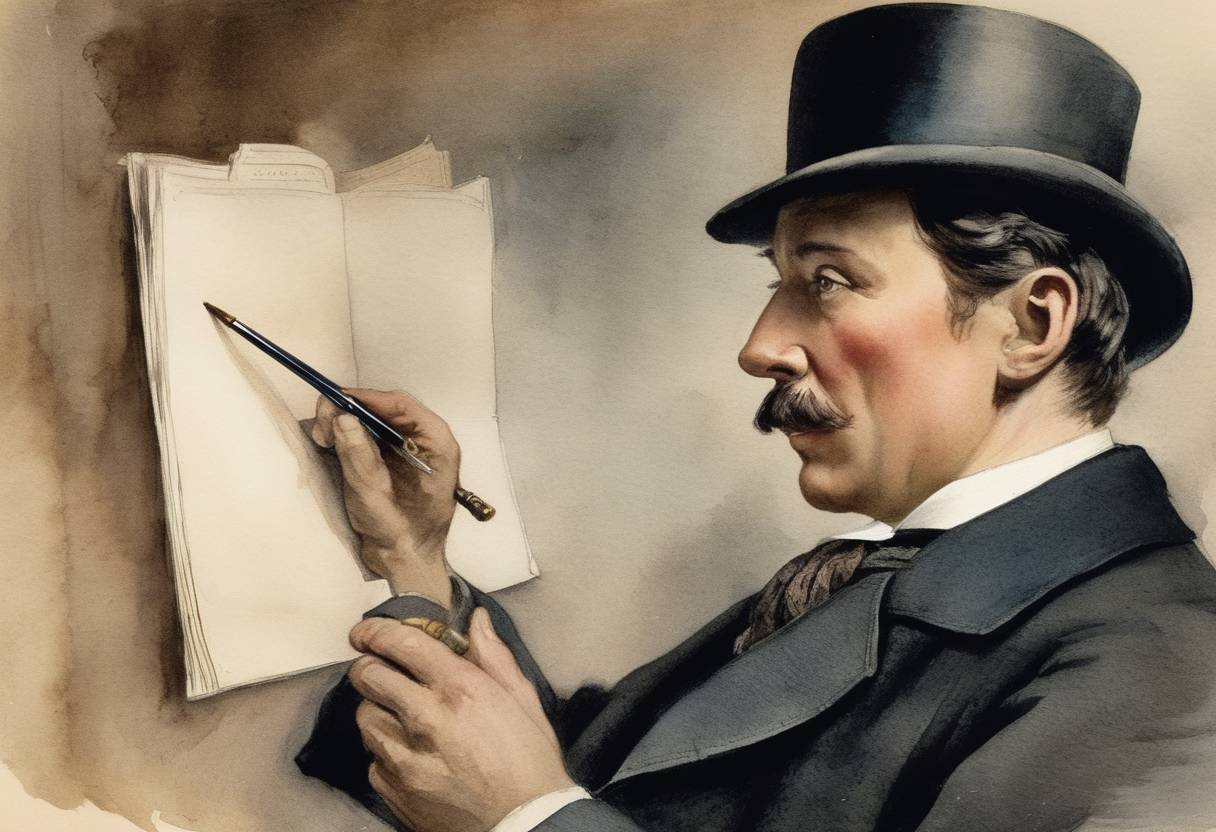
On December 1, 1887, the world was introduced to one of fiction’s most enduring characters, Sherlock Holmes, through the publication of “A Study in Scarlet” in Beeton’s Christmas Annual. Created by Scottish author Arthur Conan Doyle, Holmes would become an iconic figure in literary history and a template for the detective genre.
In the late 19th century, detective fiction was gaining popularity, marked by works like Edgar Allan Poe’s stories featuring C. Auguste Dupin. Doyle, influenced by these stories and his medical training, crafted a character that combined keen observational skills and logical reasoning. Holmes became known for his astute use of forensic science, rather uncommon at the time, to solve crimes.
“A Study in Scarlet” marked Sherlock Holmes’s first appearance, alongside his companion, Dr. John H. Watson, who narrates most of the stories. The novel’s structure is distinctive, with two parts: the first set in London, detailing the investigation of a mysterious murder; the second a flashback recounting the events leading to the crime, set in the United States.
The novel begins with Watson, a war veteran recently returned from Afghanistan, meeting Holmes through a mutual acquaintance. They decide to share a flat at 221B Baker Street. Holmes’s skills stun Watson, as he deciphers complex cases with apparent ease.
Holmes is soon engaged in a murder investigation, following the discovery of a body in an abandoned house. The word “RACHE” is found scrawled in blood. The investigation leads Holmes to uncover a tale of revenge rooted in the deserts of Utah, involving the Mormons, as detailed in the lengthy flashback. Holmes’s deduction and the eventual capture of the murderer showcase the principles of deduction and forensic acumen that define the series.
“A Study in Scarlet” set the stage for further adventures, although initial sales were modest. The character of Sherlock Holmes, however, captured the public’s imagination, leading to three more novels and 56 short stories by Doyle.
Holmes has since become a cultural icon, featured in countless adaptations across multiple media. His methods inspired real-life forensic techniques, and his stories continue to influence the thriller and mystery genres. The introduction of Sherlock Holmes in “A Study in Scarlet” remains a landmark in literary history, symbolizing the lasting appeal of well-crafted detective narratives.
Source: www.sherlockian.net