Execution of Giordano Bruno: February 17, 1600
1600 · Rome, Italy
Philosopher Giordano Bruno was executed for heresy in Rome.
August 31, 1535
Pope Clement VII issued a papal bull ordering a Spanish Inquisition into character defamation, intensifying the Spanish Inquisition's impact.
Rome, Italy | Roman Catholic Church
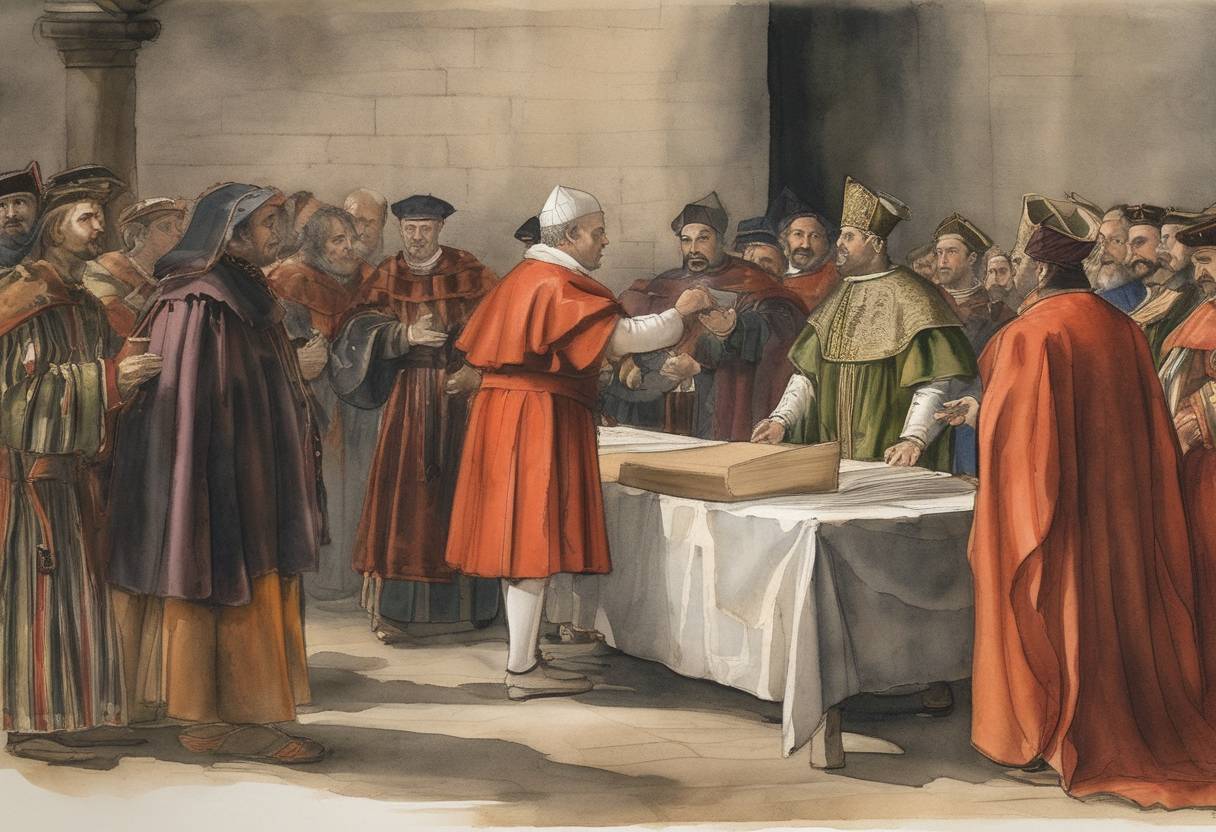
On August 31, 1535, Pope Clement VII issued a papal bull that intensified the Spanish Inquisition’s reach and impact. This decree specifically addressed the issue of character defamation, broadening the scope of the Inquisition’s authority. The papal bull was a significant development in the history of the Inquisition—an institution established to identify and punish heresy within the Catholic Church—which had already been active in Spain since 1478.
The Spanish Inquisition, originally founded by Catholic Monarchs Ferdinand II of Aragon and Isabella I of Castile with papal approval from Pope Sixtus IV in 1478, aimed to maintain Catholic orthodoxy in their realms. It especially targeted converted Jews (conversos) and Muslims (Moriscos) suspected of secretly practicing their former faiths. Over time, it evolved to address various forms of heresy and other crimes against the Catholic Church.
By the 1530s, the Protestant Reformation was spreading across Europe, sparking significant religious upheaval and heightening the Church’s concerns about heresy. In Spain, the monarchy and the Church were particularly vigilant in preventing the spread of Protestant ideas. The papal bull issued on August 31, 1535, was a reaction to these concerns, expanding the inquisitorial scope to include the assessment and punishment of character defamation and moral offenses.
The papal bull of August 31, 1535, reinforced the Inquisition’s power by:
Addressing Character Defamation: This included not just heretical practices but also false accusations or rumors that could damage individuals’ reputations, especially those that could undermine faith or Church authority.
Broadening Jurisdiction: By including character defamation within its purview, the Inquisition could now target individuals involved in slanderous or libelous activity, perceived as threats to religious and social order.
Strengthening Church Authority: The decree reinforced the Church’s influence over issues of morality and personal conduct, aligning with broader efforts to control and correct behavior deemed sinful or detrimental to the religious community.
The impact of Pope Clement VII’s decree added a new dimension to the Inquisition’s operations, causing fear among populations wary of being accused not just of heresy, but also of slander or false witness. This expansion further centralized religious control and discouraged the spread of dissenting views.
In the broader historical context, this period of the Inquisition served as a prelude to later institutional control efforts during the Counter-Reformation. The papal bull of 1535 is an exemplar of how the Catholic Church sought to maintain cohesion and authority in the face of external and internal challenges.
Source: en.wikipedia.org