The First Saint Patrick's Day Parade in New York City - March 17, 1762
1762 · New York City, United States
The first Saint Patrick's Day parade is held in New York City by Irish soldiers serving in the British army.
March 17, 1756
St. Patrick's Day was celebrated in New York City for the first time at the Crown and Thistle Tavern.
New York City, United States | Crown and Thistle Tavern
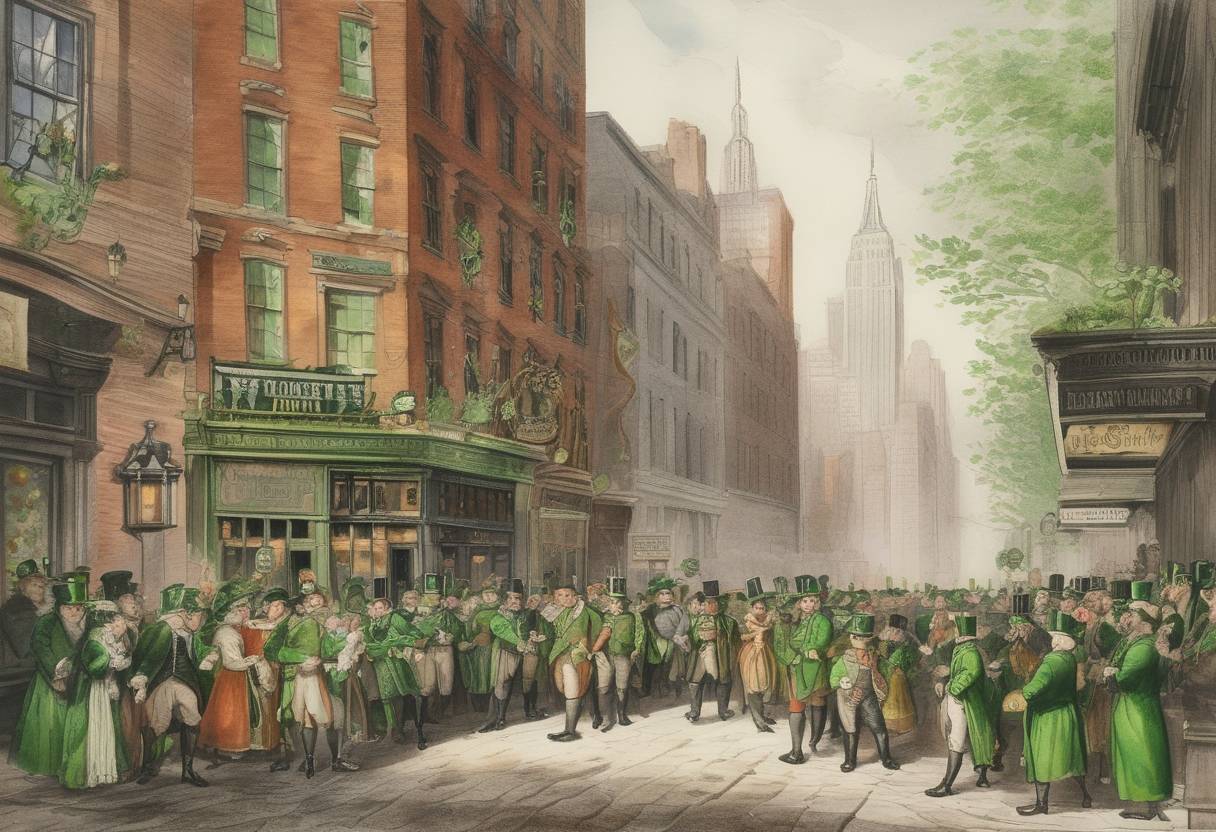
The first recorded celebration of St. Patrick’s Day in New York City took place on March 17, 1756, at the Crown and Thistle Tavern. This event marked an early instance of what would become a long-standing tradition in the city, reflecting the growing presence and influence of Irish immigrants in America.
Irish Immigration: By the mid-18th century, Irish immigrants were increasingly settling in the American colonies. Many were fleeing economic hardship and seeking new opportunities in the New World. This growing community began to bring their cultural traditions with them, including the celebration of St. Patrick’s Day.
St. Patrick’s Day: Originally a religious feast day commemorating St. Patrick, the patron saint of Ireland, March 17th gradually evolved into a celebration of Irish culture and heritage. In Ireland, it was traditionally observed with church services and feasting.
Location: The Crown and Thistle Tavern, a popular gathering place for the city’s Irish community, hosted the event. Taverns during this period were central to social life, serving as venues for public meetings, celebrations, and community gatherings.
Activities: While specific details of the 1756 celebration are scarce, it likely included traditional Irish music, dancing, and possibly a communal meal. Such gatherings provided an opportunity for Irish immigrants to connect with one another and celebrate their shared heritage.
Cultural Expression: The celebration at the Crown and Thistle Tavern was significant as an early expression of Irish identity and community in America. It set a precedent for future St. Patrick’s Day celebrations in New York City and beyond.
Legacy: Over time, St. Patrick’s Day would grow into a major cultural event in New York City, featuring parades, public festivities, and widespread participation from people of all backgrounds. The annual St. Patrick’s Day Parade in New York City, which began in 1762, is now one of the largest and most famous in the world.
Irish-American Identity: The celebration of St. Patrick’s Day in New York City contributed to the development of a distinct Irish-American identity. It provided a platform for Irish immigrants to assert their cultural presence and foster a sense of community in their new homeland.
Cultural Integration: Over the centuries, St. Patrick’s Day has evolved from a primarily Irish celebration to a broader cultural event embraced by diverse communities, symbolizing the integration and influence of Irish culture in American society.
The 1756 celebration at the Crown and Thistle Tavern was a modest beginning to what would become a vibrant and enduring tradition, reflecting the resilience and cultural contributions of the Irish in America.
Source: en.wikipedia.org