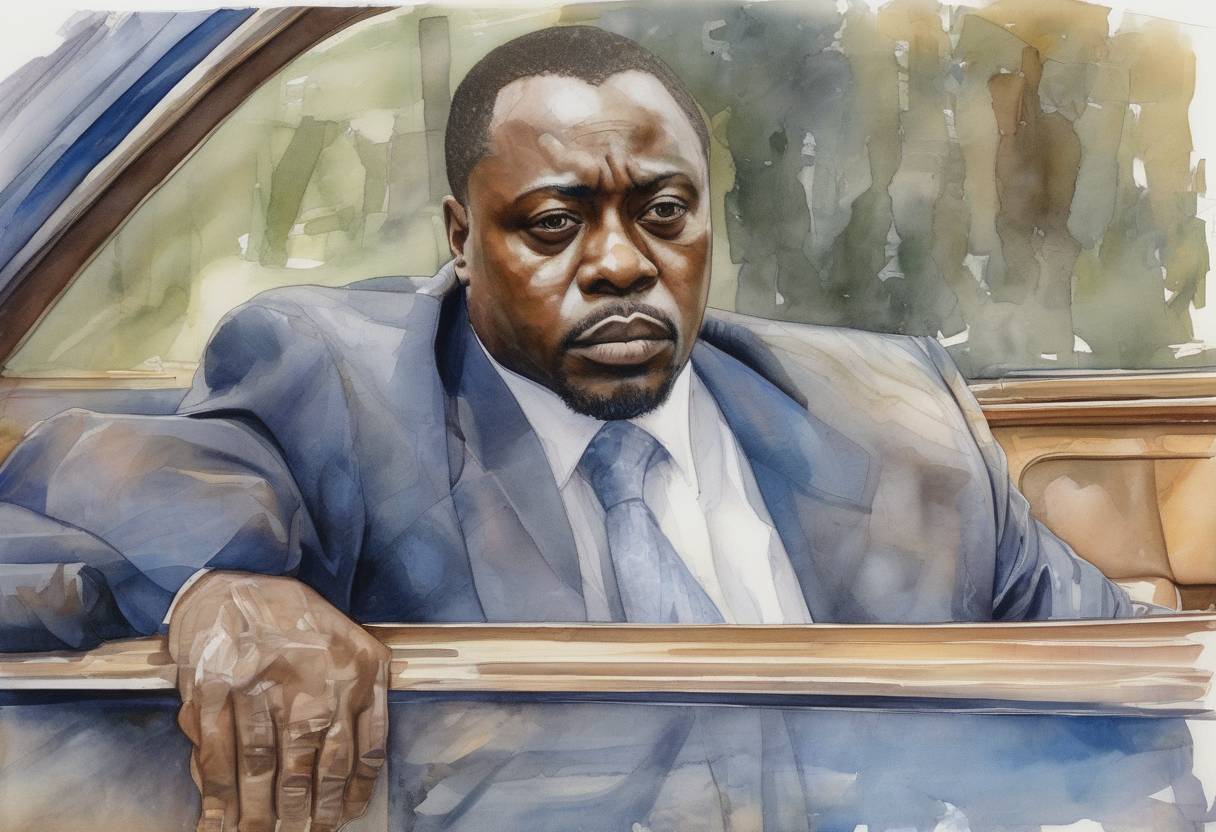
Assassination of President Laurent-Désiré Kabila
On January 16, 2001, Laurent-Désiré Kabila, the President of the Democratic Republic of the Congo (DRC), was assassinated in the capital city of Kinshasa. This event marked a significant turning point in the nation’s tumultuous history, which had been characterized by political instability and conflict.
Background
Laurent-Désiré Kabila came to power in May 1997 after leading a successful rebellion against the long-standing dictator Mobutu Sese Seko. Kabila’s rise was part of the First Congo War, which saw the overthrow of Mobutu’s regime with the support of neighboring countries like Rwanda and Uganda. Once in power, Kabila renamed the country from Zaire to the Democratic Republic of the Congo.
Despite initial hopes for reform and stability, Kabila’s presidency was marked by continued conflict and political challenges. The Second Congo War, which began in 1998, involved multiple African nations and was one of the deadliest conflicts since World War II. Kabila’s relationships with his former allies, particularly Rwanda and Uganda, deteriorated, leading to further regional instability.
The Assassination
On January 16, 2001, President Kabila was shot by one of his bodyguards, Rashidi Kasereka, in his presidential palace in Kinshasa. The assassination occurred amidst a backdrop of internal dissent and external pressures. Kabila was reportedly meeting with his economic adviser when the attack happened. He succumbed to his injuries shortly after the shooting.
The motives behind the assassination remain a subject of speculation and controversy. Various theories suggest internal power struggles, foreign involvement, or personal grievances as potential reasons for the attack. The exact circumstances and the extent of any conspiracy remain unclear.
Aftermath
Following Kabila’s assassination, his son, Joseph Kabila, was swiftly appointed as the head of state. Joseph Kabila, who was relatively unknown at the time, faced the daunting task of leading a nation embroiled in conflict and political turmoil. His presidency initially focused on negotiating peace and stabilizing the country.
The assassination of Laurent-Désiré Kabila had significant implications for the DRC and the region. It underscored the fragility of political power in the country and highlighted the complex interplay of internal and external forces shaping its history. Joseph Kabila’s subsequent efforts to broker peace eventually led to the Sun City Agreement in 2002, which aimed to end the Second Congo War and establish a transitional government.
Historical Significance
The assassination of Laurent-Désiré Kabila is a pivotal moment in the history of the Democratic Republic of the Congo. It illustrates the challenges of leadership in a nation grappling with the legacies of colonialism, dictatorship, and regional conflict. The event also set the stage for Joseph Kabila’s long tenure as president, during which he navigated the complexities of post-conflict reconstruction and democratization efforts.
Overall, the assassination remains a critical event in understanding the political dynamics of the DRC and the broader Great Lakes region of Africa.