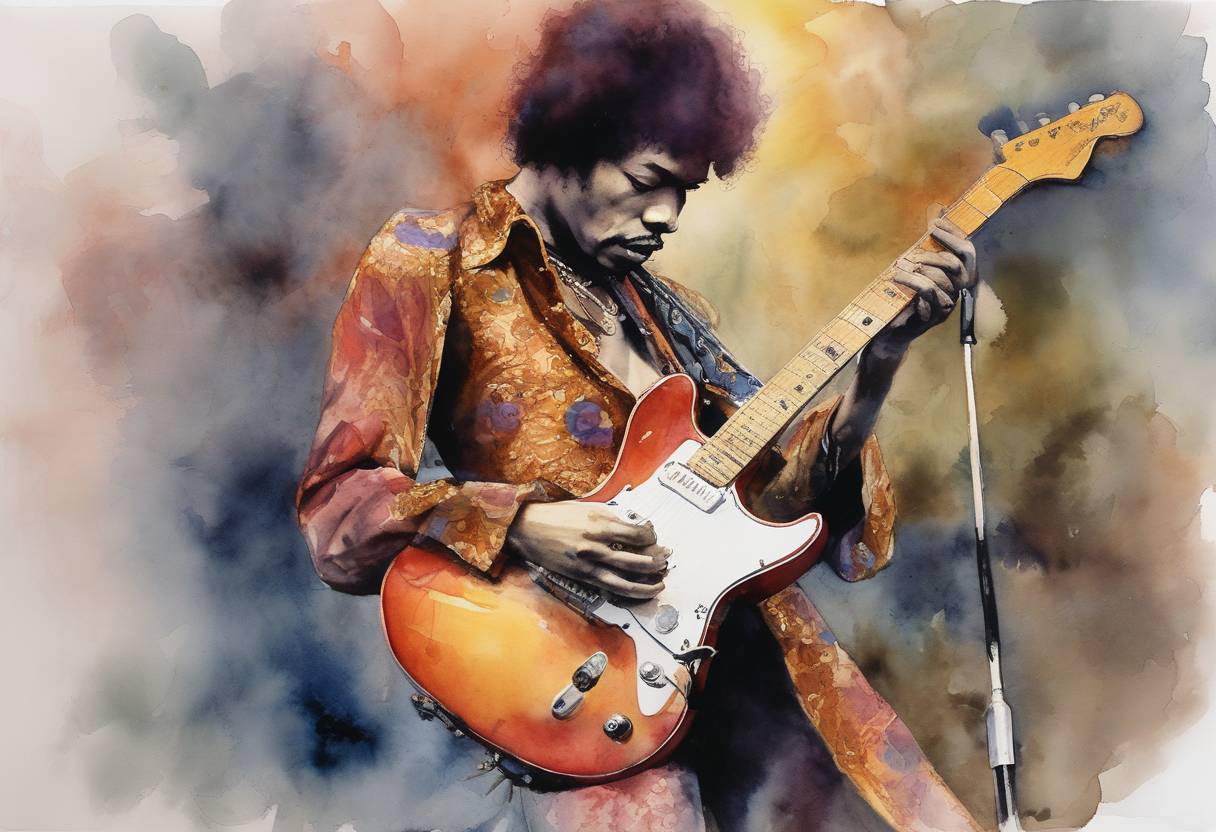
Jimi Hendrix Sets Fire to His Guitar: March 31, 1967
On March 31, 1967, an iconic moment in rock music history unfolded at the Astoria Theatre in London. Jimi Hendrix, a rising star in the music world, set fire to his guitar on stage for the first time, creating a legendary image that would become synonymous with his name and the spirit of rock and roll.
Context and Background
Jimi Hendrix’s Rise: By early 1967, Jimi Hendrix had already begun to make waves in the music scene with his innovative guitar techniques and electrifying performances. Born in Seattle, Washington, Hendrix moved to London in 1966, where he formed the Jimi Hendrix Experience with bassist Noel Redding and drummer Mitch Mitchell. The band quickly gained popularity in the UK.
The Astoria Theatre: Located in Finsbury Park, London, the Astoria Theatre was a prominent venue for music performances. Hendrix’s performance there was part of a package tour that included other notable acts like The Walker Brothers and Cat Stevens.
The Event
The Performance: During the performance at the Astoria Theatre, Hendrix concluded his set with the song “Fire.” As the song reached its climax, Hendrix poured lighter fluid over his Fender Stratocaster and set it alight. The spectacle was both shocking and mesmerizing, capturing the audience’s attention and cementing Hendrix’s reputation as a daring and innovative performer.
Symbolism and Impact: The act of setting his guitar on fire was not just a stunt; it symbolized Hendrix’s rebellious spirit and his desire to push the boundaries of musical expression. This moment became a defining image of the 1960s rock scene, representing the era’s countercultural movements and the explosive energy of rock music.
Aftermath and Legacy
Media Coverage: The event received significant media attention, further propelling Hendrix into the spotlight. Photographs of the burning guitar became iconic, contributing to his mythos as a rock legend.
Influence on Rock Music: Hendrix’s fiery performance influenced countless musicians and performers, inspiring them to explore new artistic expressions and stagecraft. It highlighted the potential of live performances as a form of art and spectacle.
Continued Legacy: Jimi Hendrix continued to innovate and captivate audiences until his untimely death in 1970. His influence on music and culture remains profound, with the guitar-burning incident often cited as a pivotal moment in his career and in rock history.
In summary, Jimi Hendrix’s decision to set his guitar on fire at the Astoria Theatre on March 31, 1967, was a bold and unforgettable act that left an indelible mark on the history of rock music. It showcased his creativity and willingness to challenge norms, solidifying his status as one of the most influential musicians of the 20th century.