U.S. Formal Recognition of Israel: May 4, 1949
1949 · Washington D.C., United States
The United States formally recognizes the newly-established state of Israel, following its declaration of independence the previous year.
June 23, 1961
The Antarctic Treaty, which regulates international relations with respect to Antarctica, came into force, establishing the region as a scientific preserve and banning military activity.
Washington D.C., United States | Antarctic Treaty System
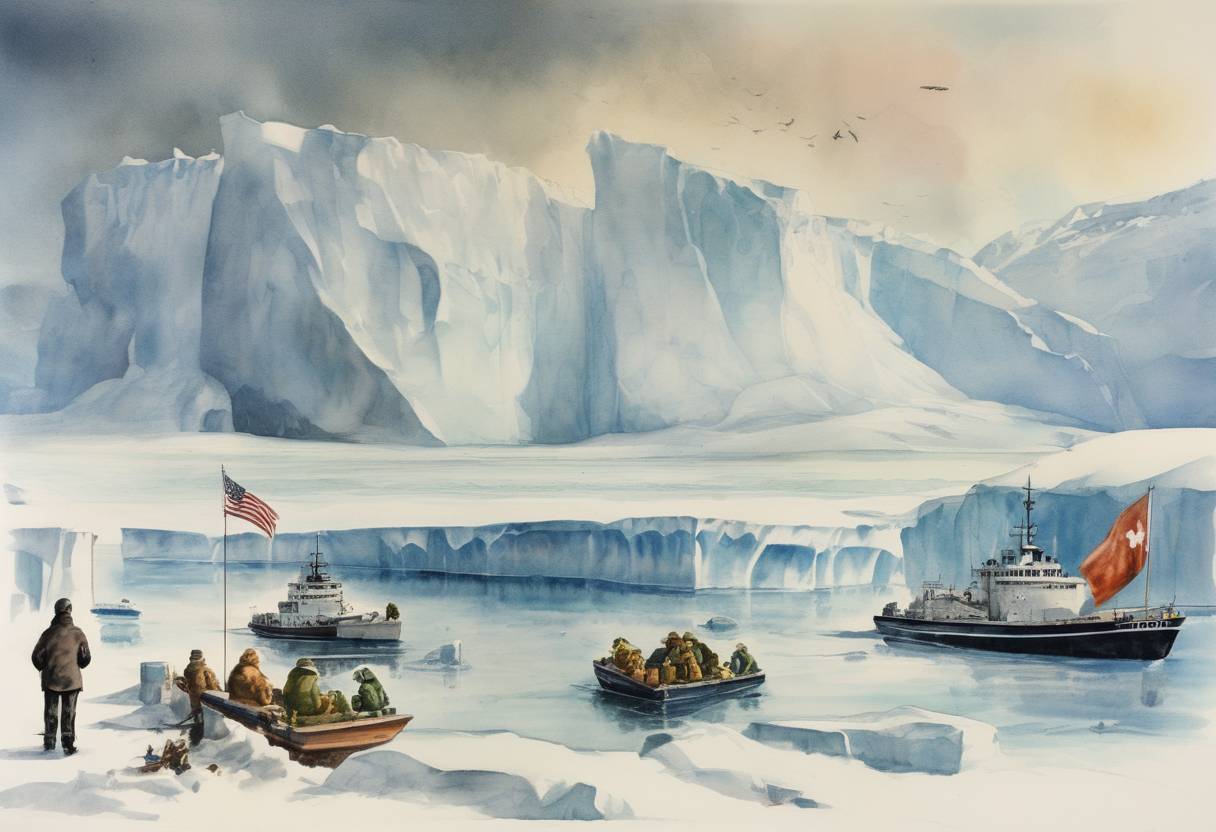
On June 23, 1961, the Antarctic Treaty officially came into force, marking a significant milestone in international cooperation and environmental preservation. This treaty established Antarctica as a scientific preserve and prohibited military activity on the continent, setting a precedent for peaceful collaboration in a region dedicated to scientific research.
The origins of the Antarctic Treaty can be traced back to the International Geophysical Year (IGY) of 1957-1958, a period during which scientists from 12 countries conducted extensive research in Antarctica. The success of the IGY highlighted the potential for international scientific collaboration and underscored the need for a formal agreement to govern activities on the continent.
The Antarctic Treaty was signed on December 1, 1959, in Washington, D.C., by 12 countries: Argentina, Australia, Belgium, Chile, France, Japan, New Zealand, Norway, South Africa, the Soviet Union, the United Kingdom, and the United States. The treaty came into effect on June 23, 1961, after being ratified by all signatory nations. Its key provisions include:
The Antarctic Treaty was groundbreaking as it was the first arms control agreement established during the Cold War, setting a framework for the peaceful use of an entire continent. It has been successful in maintaining Antarctica as a zone of peace and science, with no military conflicts occurring there since the treaty’s inception.
The treaty has grown over the years, with additional countries acceding to it, bringing the total number of parties to over 50. It has also been supplemented by additional agreements, collectively known as the Antarctic Treaty System, which address issues such as environmental protection and the conservation of marine living resources.
The Antarctic Treaty remains a remarkable example of international cooperation, demonstrating how nations can come together to preserve a region for the common good of humanity. Its success continues to inspire similar agreements in other parts of the world, highlighting the importance of diplomacy and collaboration in addressing global challenges.
Source: en.wikipedia.org