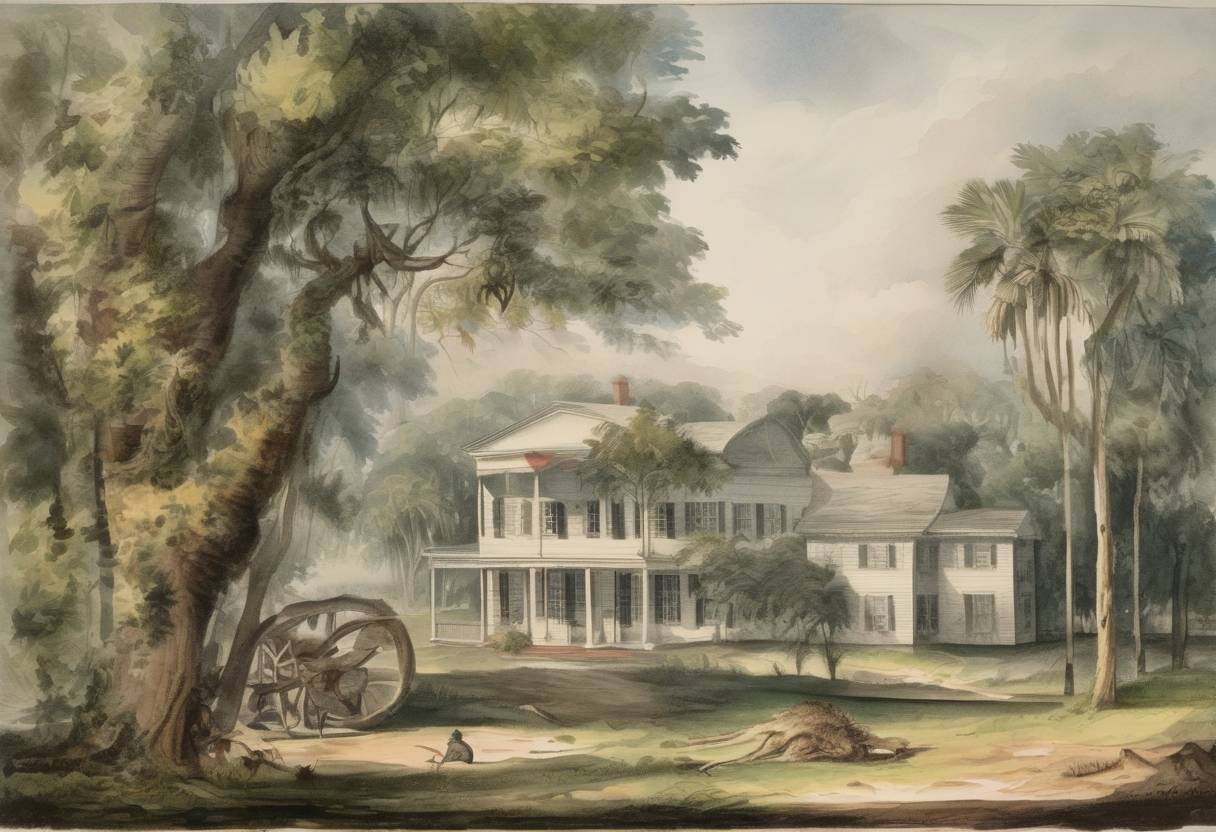
Florida’s Admission as the 27th U.S. State
On March 3, 1845, Florida was officially admitted to the United States as the 27th state. This event marked a significant expansion of the U.S. territory and played a crucial role in the nation’s growth during the 19th century.
Historical Context
Spanish and British Rule: Before becoming a U.S. state, Florida had a complex colonial history. It was initially explored by the Spanish in the early 16th century and became a Spanish colony. In 1763, Florida was ceded to Britain, only to be returned to Spain in 1783 after the American Revolutionary War.
U.S. Acquisition: The United States acquired Florida from Spain through the Adams-Onís Treaty, which was signed in 1819 and took effect in 1821. This treaty was part of a broader U.S. strategy to expand its territory and influence.
Territorial Status: Florida was organized as a U.S. territory in 1822. During this period, it experienced significant population growth and development, driven by settlers moving into the region.
Path to Statehood
Population Growth: By the 1840s, Florida’s population had grown sufficiently to consider statehood. The influx of settlers, particularly from southern states, brought about economic development and increased political activity.
Statehood Movement: The push for statehood was driven by the desire for greater political representation and control over local affairs. Floridians sought the benefits of statehood, including the ability to elect their own governor and have representation in Congress.
Congressional Approval: The U.S. Congress approved Florida’s admission as a state on March 3, 1845. This decision was part of a broader pattern of admitting new states to balance the interests of free and slave states, as Florida was admitted as a slave state.
Significance and Aftermath
Political Balance: Florida’s admission was significant in maintaining the delicate balance between free and slave states in the U.S. Senate. This balance was a critical issue leading up to the Civil War.
Economic Development: Statehood facilitated further economic development in Florida, particularly in agriculture, as settlers established plantations and farms.
Cultural Impact: The admission of Florida also contributed to the cultural and demographic diversity of the United States, as it brought in a mix of Native American, Spanish, African, and Anglo-American influences.
Florida’s journey to statehood reflects the broader themes of American expansion and the complex interplay of political, economic, and cultural factors that shaped the nation’s history.